
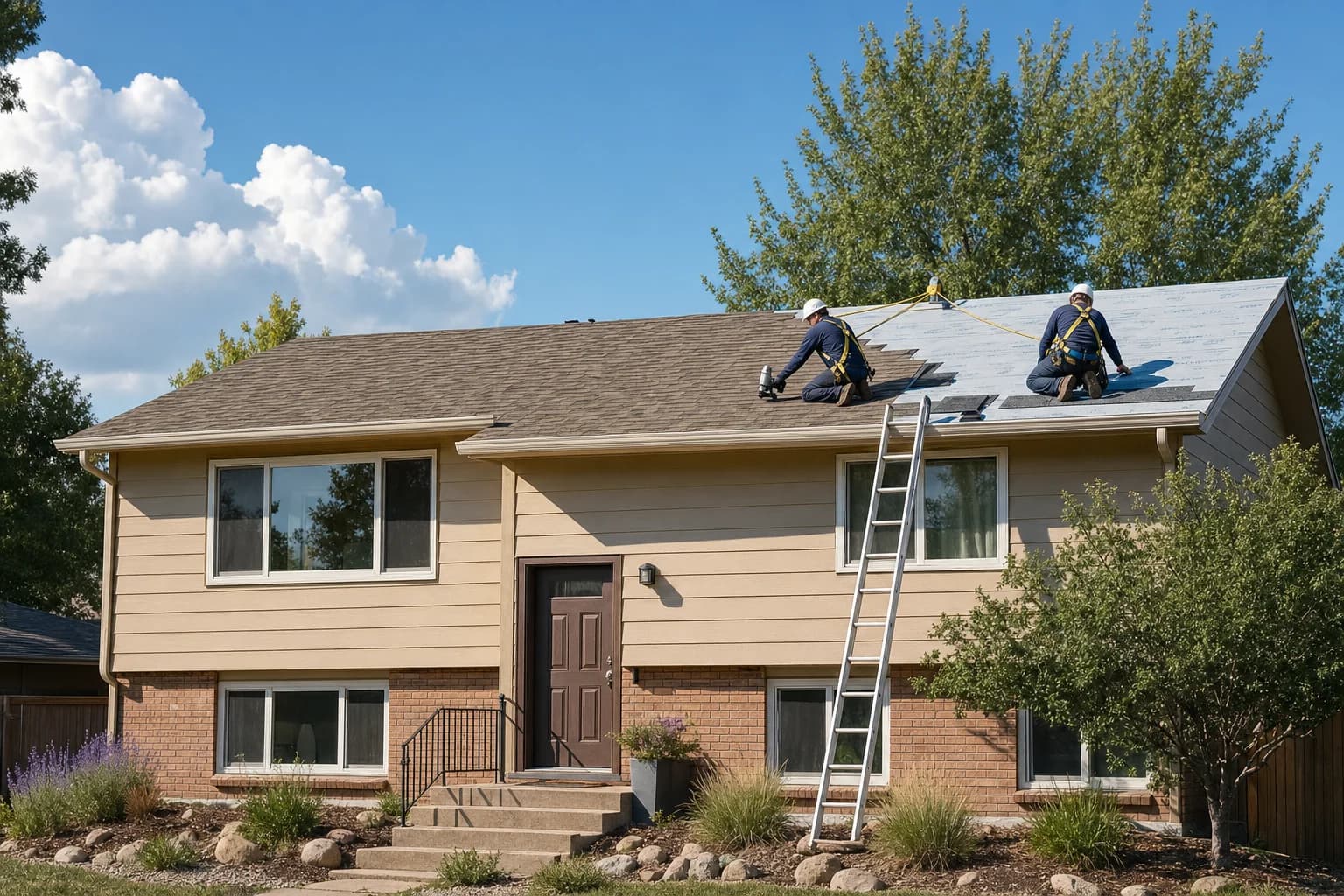
In Colorado, roof permits and contractor licenses are handled by cities, counties and regional building departments, not one state office. Before a hail repair or roof replacement, check whether your building department requires a roof permit, confirm the roofer holds the license that department requires, and ask for an insurance certificate that covers re-roofing.
Hail is a repeat risk
NOAA's list of the costliest U.S. weather disasters includes 42 severe storm events that affected Colorado from 1980 to 2024. Hailstorms on that list struck the Denver metro area in May 2017, Colorado Springs and Pueblo in June 2018, northern Denver to Boulder and Fort Collins in June 2018, and Denver and Fort Collins in July 2019. Roofing, siding, gutter and window choices should account for hail.
Roof permit rules differ by city
- Denver: a roof permit is always applied for separately, even for new construction. Repairs over 10 percent of the roof area or two squares, whichever is smaller, need a roof permit. Roofing on a landmark or in a historic district must first be approved by Landmark Preservation.
- Pikes Peak region: the Pikes Peak Regional Building Department (PPRBD) requires permits for roofing. Homeowner permits are only for the owner's primary residence, and PPRBD says it is illegal to get one for a hired contractor.
- Fort Collins: roofing repairs up to 100 square feet per building are on the city's list of work exempt from a permit, and the city notes that historic review is required for some exempt exterior work on buildings 50 years or older.
Check the roofer's local license
A license in one city may not carry over to the next. Look up the roofer with the building department that covers your address.
- Denver issues its own contractor licenses and does not accept or reciprocate licenses from other counties or states. Its contractor licensing page links to a license verification tool.
- PPRBD licenses and registers contractors for Colorado Springs, El Paso County, Fountain, Woodland Park, Manitou Springs, Monument, Green Mountain Falls, Palmer Lake and Calhan, and offers a contractor search.
- Aurora requires an Aurora license to build, alter, repair or demolish structures, and provides a contractor lookup tool.
- Fort Collins requires a city license for all contractors, with a limited exception for owners working on their own single-family home.
Ask for the right insurance certificate
PPRBD requires the contractor's insurance certificate for a re-roofing permit to state that re-roofing is included in, or not excluded from, coverage. Wherever you live, ask to see a certificate and check that roofing work is covered.
Snow loads and wildfire rules
The roof has to meet local design criteria, not just stand up to hail. PPRBD's design criteria set a ground snow load of 43 pounds per square foot below 7,000 feet and 57 at or above 7,000 feet. In the wildland-urban interface, state law SB23-166 requires local governments to adopt a code that meets or exceeds the state Wildfire Resiliency Code Board's minimum standards. Colorado Springs added those requirements to its fire code effective June 30, 2026.
Sources (12)
- NOAA National Centers for Environmental Information, Billion-Dollar Weather and Climate Disasters · checked 2026-09-24
- City and County of Denver, Community Planning and Development · checked 2026-09-24
- Pikes Peak Regional Building Department · checked 2026-09-24
- City of Fort Collins Building Services · checked 2026-09-24
- City and County of Denver, Community Planning and Development · checked 2026-09-24
- Pikes Peak Regional Building Department · checked 2026-09-24
- City of Aurora Building Division · checked 2026-09-24
- City of Fort Collins Building Services · checked 2026-09-24
- Pikes Peak Regional Building Department · checked 2026-09-24
- Pikes Peak Regional Building Department · checked 2026-09-24
- Colorado General Assembly, SB23-166 Establishment of a Wildfire Resiliency Code Board · checked 2026-09-24
- City of Colorado Springs Fire Department · checked 2026-09-24