Connecticut Construction Pros
Construction & Remodeling Experts in Connecticut
Connecticut Construction Pros plans and builds kitchen and bathroom remodels, roofing, repairs, commercial projects and new homes for Connecticut homeowners and businesses. Much of the work starts in older buildings: only about 42% of the state's housing units were built since 1970. Hartford reports that half of its units were built before 1950, and Bridgeport says about 40% of its housing predates 1940. Every project is planned against one statewide building code, a 42-inch frost line, town-by-town wind and snow design values, and the permit steps of the town where the work happens.
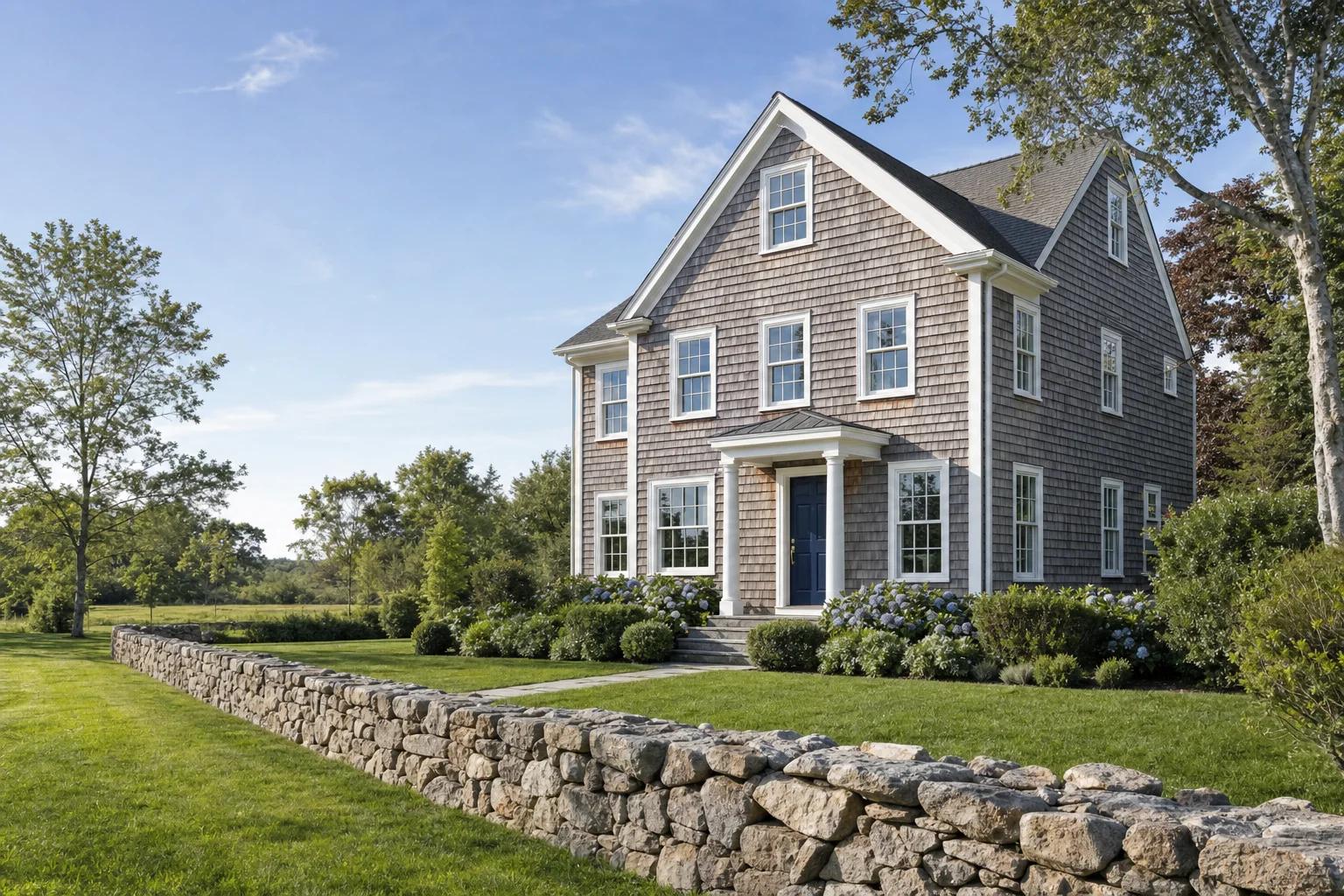
Connecticut
Construction Pros
Remodeling, roofing, repairs and new construction planned for Connecticut's older homes, frost-deep footings and coastal wind.
Serving communities across Connecticut
Service areasBuilding in Connecticut
What shapes a project in Connecticut

One state building code, enforced by each town
Connecticut's State Building Code is the building code for all towns, cities and boroughs, and each municipality appoints a building official to administer it. The current 2022 Connecticut State Building Code is based on the 2021 International Codes and applies to permit applications filed from October 1, 2022. A 2024-based update was expected on July 1, 2026, but the state says it is still awaiting approval by the Legislative Regulation Review Committee, so the code in force is confirmed for each project.
Climate zone 5A and cold-weather design
Connecticut enforces the 2021 IECC with state amendments for homes and the 2021 IECC or ASHRAE 90.1-2019 for commercial buildings. The state's residential design table puts all of Connecticut in climate zone 5A, sets the frost line at 42 inches, rates weathering as severe and requires ice barrier underlayment on roofs. It also lists termite damage risk as moderate to heavy and seismic design category B.
Wind and snow values set town by town
Appendix AY of the state code lists design wind speed, ground snow load and hurricane-prone status for each municipality. Hartford, Bridgeport and Stamford are listed at 120 mph and 30 psf, New Haven and Norwich at 125 mph, and northern towns such as Norfolk, Salisbury and Putnam at 40 psf. Most towns are marked hurricane-prone, while a group of northwestern towns such as Salisbury, Sharon and Kent are not.
Crumbling foundations in northeastern Connecticut
Some foundations in northeastern Connecticut were poured with concrete containing pyrrhotite, a mineral that makes concrete deteriorate when exposed to oxygen and water. FEMA reports that homes built between 1983 and 2000 in that area are at risk and that as many as 34,000 residential properties may be affected. The Capitol Region Council of Governments reimburses core testing or visual inspections, and CFSIC, the state's captive insurer, handles foundation replacement claims.
An older housing stock
Hartford's Affordable Housing Plan reports that only 42% of housing units statewide were built since 1970 and that 64% of the state's occupied units are single-family homes. Older homes often need lead-safe work: federal rules require paid renovators who disturb paint in homes built before 1978 to be certified and follow lead-safe practices.
Sources (10)
- Connecticut General Assembly · checked 2026-09-24
- Connecticut Department of Administrative Services · checked 2026-09-24
- Connecticut Department of Administrative Services, Office of the State Building Inspector · checked 2026-09-24
- Connecticut Department of Administrative Services, Office of the State Building Inspector · checked 2026-09-24
- U.S. Department of Energy, Building Energy Codes Program · checked 2026-09-24
- Federal Emergency Management Agency · checked 2026-09-24
- Capitol Region Council of Governments · checked 2026-09-24
- U.S. Environmental Protection Agency · checked 2026-09-24
- City of Hartford · checked 2026-09-24
- Town of Manchester Assessment Department · checked 2026-09-24
Licensing & permits
Verify any contractor in Connecticut
Contractor licensing
Connecticut Department of Consumer Protection
Connecticut requires home improvement contractors, new home construction contractors and home improvement salespeople to register with the Department of Consumer Protection. Registration applies when a contractor works for a consumer on residential property, such as roofs, siding, insulation, flooring, porches, doors and windows. Contracts under $200, a homeowner's own work, work on commercial property and work within the scope of a trade license are exempt; plumbing, for example, is done under a state plumbing license. The state says a home improvement contract must be signed by both parties before work starts, list the contractor's registration number and include a notice of the three-day right to cancel. Before hiring anyone, check the registration or license at elicense.ct.gov.
Check a contractor’s status (opens the official Connecticut site in a new tab)Building permits
Permits in Connecticut
Building permits in Connecticut are issued by the building official of each town or city under the statewide building code. For work subject to zoning, the code bars a building permit until the zoning official certifies in writing that it conforms. Exterior changes in a local historic district or on a designated historic property need a certificate of appropriateness first, and work covered by the State Fire Safety Code needs written sign-off from the local fire marshal. State law requires a permit to be issued or refused within 30 days of the application. Each town sets its own application portal and document list, so permit needs are confirmed with the local building department during planning.
Sources (7)
- Connecticut General Assembly · checked 2026-09-24
- Connecticut Department of Administrative Services, Office of the State Building Inspector · checked 2026-09-24
- Connecticut General Assembly · checked 2026-09-24
- Connecticut Department of Consumer Protection · checked 2026-09-24
- Connecticut Department of Consumer Protection · checked 2026-09-24
- Connecticut Department of Consumer Protection · checked 2026-09-24
- City of Bridgeport Building Department · checked 2026-09-24
Our services
Construction & Remodeling Services in Connecticut

Illustrative image Kitchen Remodeling
Kitchen remodels that update the layout, cabinets, counters, lighting and finishes, planned around how you cook and use the room.

Illustrative image Bathroom Remodeling
Bathroom remodels built on sound waterproofing and ventilation, with fixtures and finishes that fit who uses the room.

Illustrative image Repairs & Maintenance
Planned repair visits for the small and mid-size problems that build up in a home or building, from sticking doors to rotted trim and loose railings.
Inspiration
Design inspiration for Connecticut projects
Styles, materials and layouts suited to Connecticut homes and businesses, to help you picture your own project.
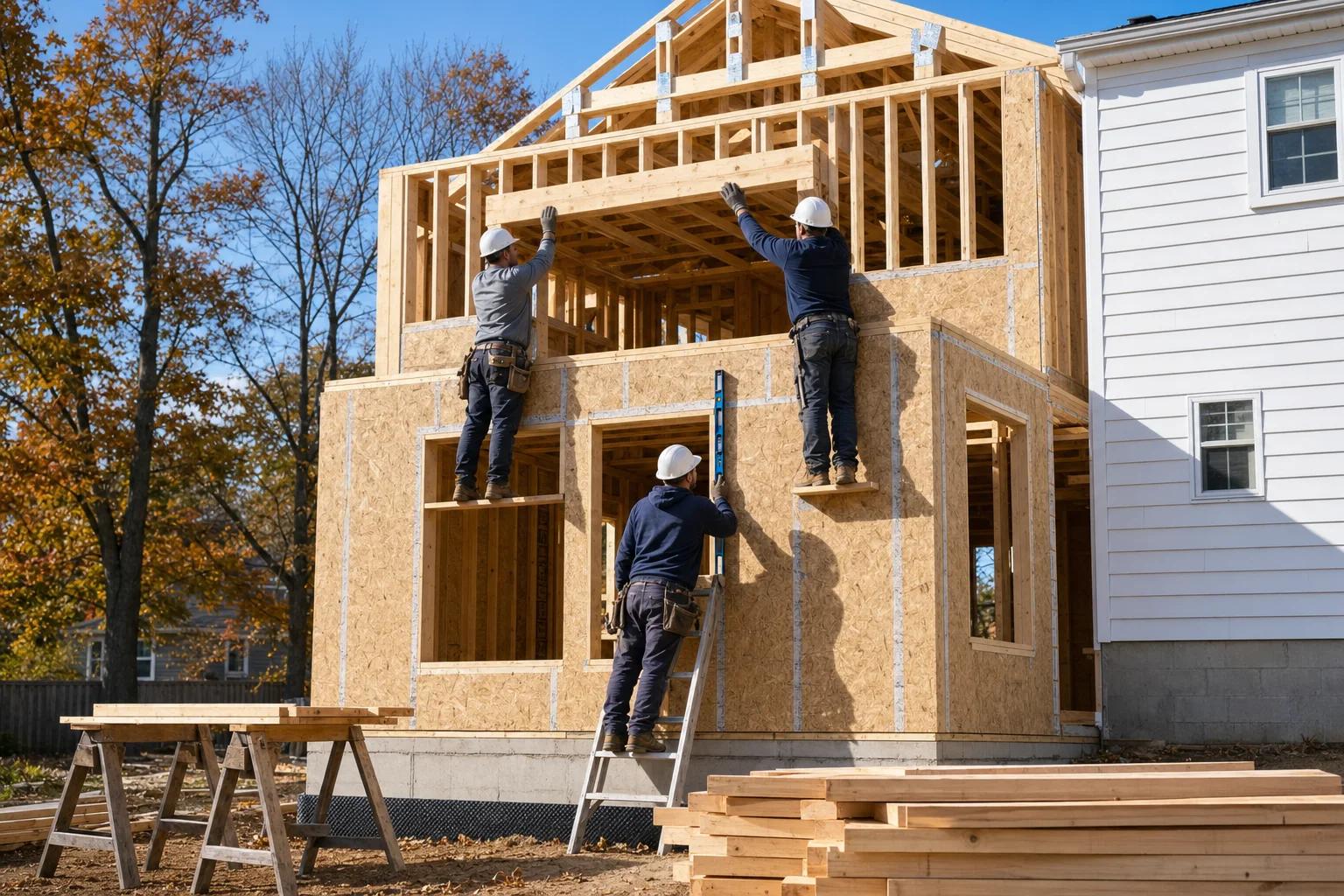
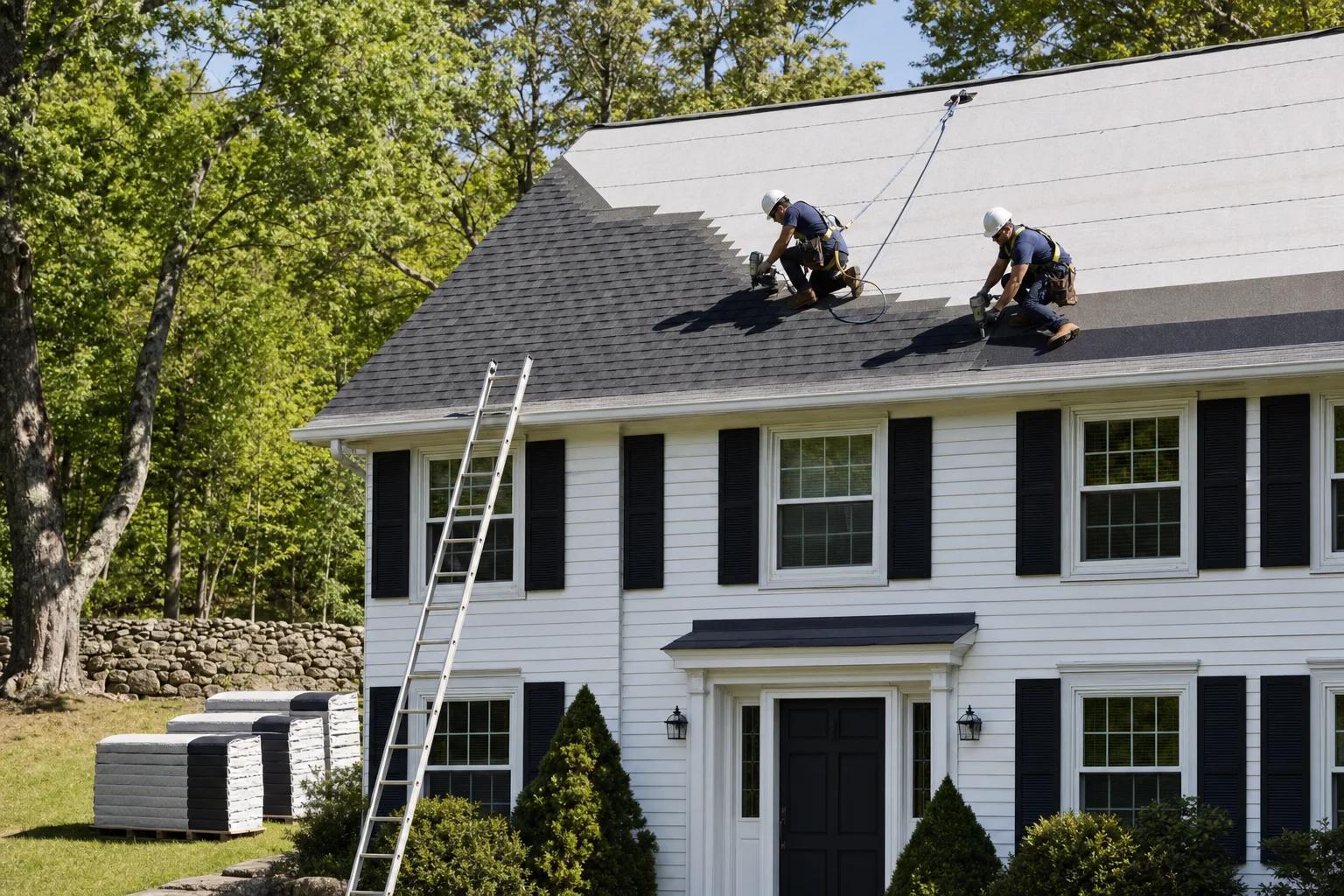
Images are illustrative and created for this website. They are not photographs of completed customer projects.
How it works
Our Simple 4-Step Process
- 1
Consult
Tell us about your project and goals. We review the location, scope and any constraints.
- 2
Plan
We define the scope in writing, confirm selections and identify permits the work may need.
- 3
Build
Work proceeds against the agreed plan, with updates when decisions or changes come up.
- 4
Enjoy
We walk through the finished work with you and hand over care and warranty information.
Questions
Connecticut Project FAQs
Do I need a permit to remodel a kitchen or bathroom in Connecticut?
Connecticut's residential code exempts painting, papering, tiling, carpeting, cabinets, countertops and similar finish work that does not involve structural changes. Moving plumbing, adding circuits or changing walls usually needs building and trade permits. The local building official decides what your scope requires.
How do I check a contractor's registration in Connecticut?
The Department of Consumer Protection registers home improvement and new home construction contractors. Look up the name or registration number on elicense.ct.gov and confirm it is active. The registration number should also appear on your written contract.
What should a Connecticut home improvement contract include?
The state says the contract should list the contractor's registration number, describe the work, give the date signed and the start date, and set out the cost, payment method and payment schedule. Both parties sign it before work begins. You can cancel up to midnight on the third business day after signing, and no work should start during that period.
Does a roof replacement need a permit in Connecticut?
The state's residential code exempts repairs limited to 25 percent of the roof covering and siding within one calendar year. A full replacement goes beyond that and needs a permit. The code also requires ice barrier underlayment on roofs across the state.
My house is in a local historic district. What changes need approval?
Under Connecticut law, exterior changes visible from a public street, way or place need a certificate of appropriateness from the historic district commission. That can include windows, doors, light fixtures and building materials. Paint color is expressly excluded. The building permit cannot be issued until the certificate is approved.
How does Connecticut's winter affect foundation and exterior work?
The state code sets a 42-inch frost line and a winter design temperature of 7°F, and it rates weathering as severe. Foundations must be protected from frost, most often by extending them below the frost line, and footings may not bear on frozen soil. Severe weathering can call for higher-strength concrete or masonry.
Sources (4)
- Connecticut Department of Administrative Services, Office of the State Building Inspector · checked 2026-09-24
- Connecticut General Assembly · checked 2026-09-24
- Connecticut Department of Consumer Protection · checked 2026-09-24
- Connecticut Department of Consumer Protection · checked 2026-09-24
Local resources
Planning guides for Connecticut
Ready to Start Your Connecticut Project?
Tell us what you are planning and where. We'll confirm availability for your address and follow up to talk through scope and next steps.