
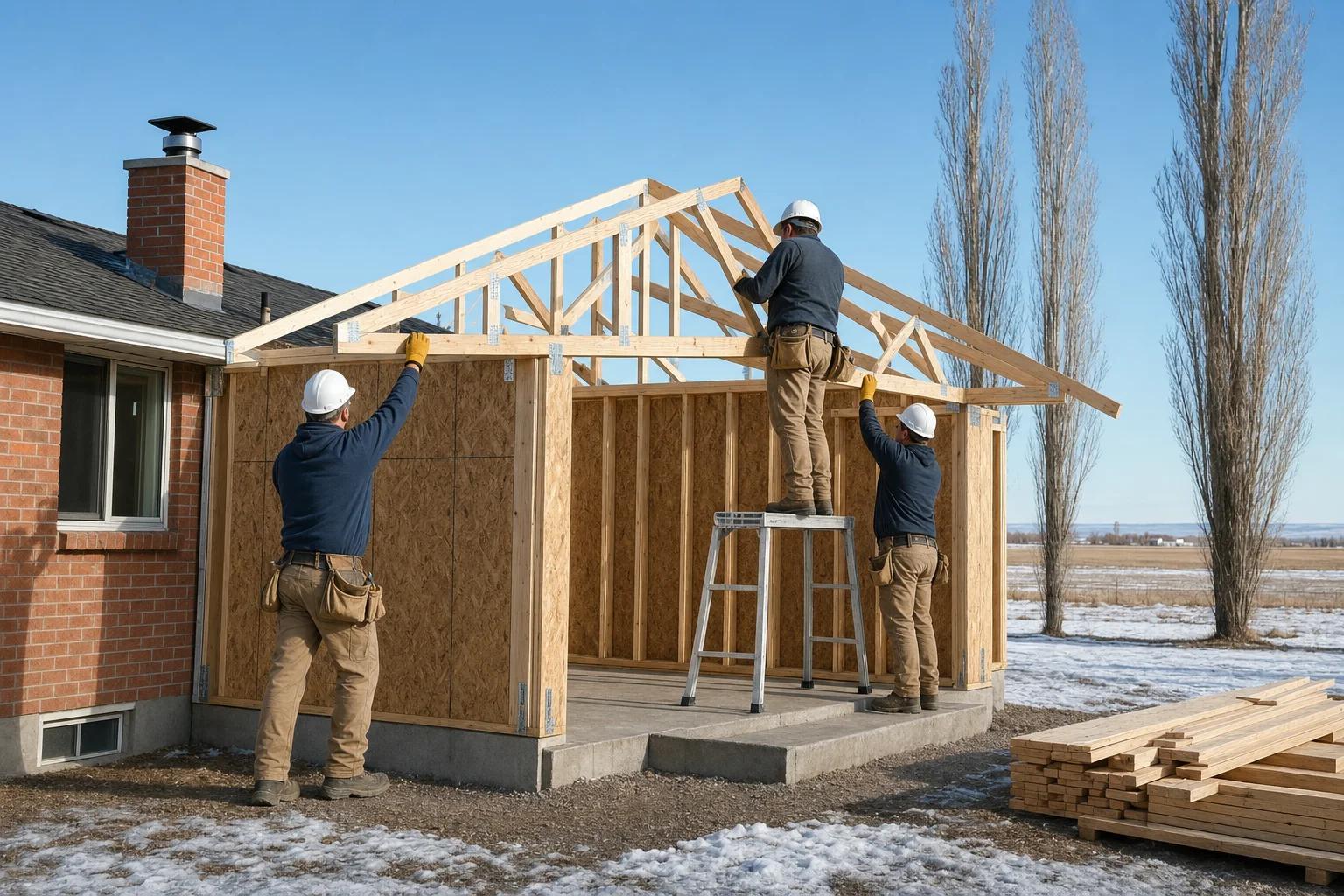
In Idaho, the snow load and frost depth your roof and footings must meet are set by the local building department, and they vary a lot. Before you plan an addition, new home or roof change, get the design criteria sheet for your city or county.
Why the numbers change from city to city
University of Idaho researchers publish ground snow load studies for the state. They note that final design snow loads are the responsibility of the engineer, architect, local building official or contractor in charge of the project. Idaho Falls, for example, calculates its ground snow load from the city's 4,710-foot elevation.
Published criteria in three cities
- Meridian: 20 psf ground snow load, with a design roof load of at least 25 psf. Roof ice barriers are not required. Footings must be at least 24 inches deep.
- Idaho Falls: 47.1 psf ground snow load. The city has historically mandated a minimum 30 psf roof snow load. Frost depth is 30 inches.
- Coeur d'Alene: 60 psf ground snow load and 40 psf roof snow load. Ice barrier underlayment is required. Minimum frost depth is 24 inches.
What this means for your project
- Roof framing on an addition is designed to the local snow load, not to a statewide number.
- Idaho Falls says that if drifting, site exposure or roof slope lead a structural engineer to a higher load, that is the load the city will use.
- Footings go below the local frost depth, measured from finished grade to the bottom of the footing.
- Whether ice barrier underlayment is required depends on the city.
Seismic and soils criteria come with it
The same sheets list seismic design categories: C in Meridian and Coeur d'Alene, and D in Idaho Falls. Meridian requires a geotechnical report for structures in seismic areas and for basements.
Permit rules for roofs differ too
Boise requires a building permit to reroof an existing structure. Twin Falls lists reroofing as work that does not need a permit, but new built-up roofs or trusses do. Permit needs for your address are confirmed with the local office during planning.
Sources (8)
- University of Idaho Library and Department of Civil Engineering · checked 2026-09-24
- City of Meridian Community Development, Building Services · checked 2026-09-24
- City of Idaho Falls Building Department · checked 2026-09-24
- City of Coeur d'Alene Building Services Department · checked 2026-09-24
- City of Boise Planning and Development Services, Building Division · checked 2026-09-24
- City of Twin Falls Building Safety Department · checked 2026-09-24
- Idaho Division of Occupational and Professional Licenses (DOPL), Building Program · checked 2026-09-24
- Idaho Legislature (Idaho Code 39-4116) · checked 2026-09-24