New Jersey Construction Pros
Construction & Remodeling Experts in New Jersey
New Jersey Construction Pros plans and builds kitchen and bathroom remodels, roofing, repairs, commercial fit-outs and new homes for New Jersey homeowners and businesses. Every town in the state works under one Uniform Construction Code, enforced by the local construction office, and about three in five of the state's housing units were built before 1980. We plan each project around the building's age and type, the town's permit process, and local flood and storm conditions. Service in each area is still being confirmed, so availability is checked for your address before anything is scheduled.
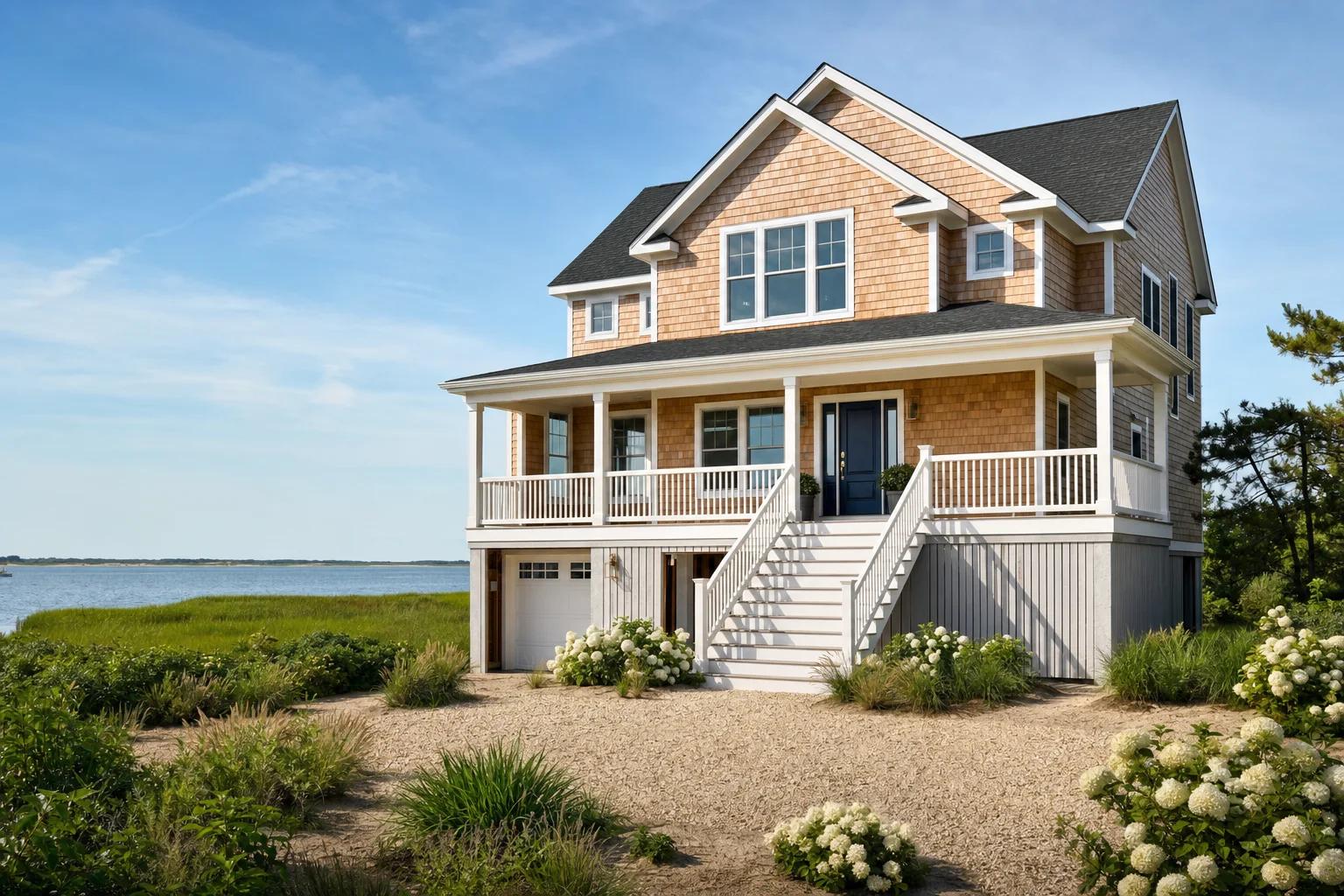
New Jersey
Construction Pros
Remodeling, repairs and new construction planned around New Jersey's statewide code, older homes and coastal weather.
Serving communities across New Jersey
Service areasBuilding in New Jersey
What shapes a project in New Jersey

One statewide code, enforced by each town
New Jersey's Uniform Construction Code (N.J.A.C. 5:23) applies statewide, and the Department of Community Affairs says there are no separate, local requirements. The state lists the 2024 New Jersey editions of the International Building Code and International Residential Code with an adoption date of August 17, 2026. Municipal construction officials, subcode officials and inspectors, all state-licensed, review plans, issue permits and inspect the work.
Two energy-code climate zones
State energy subcode guidance (DCA Bulletin 22-1) places Atlantic, Burlington, Camden, Cape May, Cumberland, Essex, Gloucester, Hudson, Mercer, Middlesex, Monmouth, Ocean, Salem and Union counties in climate zone 4A. Bergen, Hunterdon, Morris, Passaic, Somerset, Sussex and Warren counties are in zone 5A. New buildings and additions must show energy compliance with the permit application, while repairs, renovations and alterations need only meet the Rehabilitation Subcode (N.J.A.C. 5:23-6).
Coastal storms and higher flood elevations
The Office of the New Jersey State Climatologist notes that nor'easters are most frequent from October through April and that tropical storms and hurricanes are a special concern along the coast. The Department of Environmental Protection adopted the REAL rule amendments on January 20, 2026. As the Borough of Highlands summarizes them, they add a climate-adjusted flood elevation four feet above FEMA's 100-year flood elevation in tidal flood hazard areas, and substantially improved or substantially damaged homes must be raised to the new standard. FEMA treats work costing 50 percent or more of a building's market value before the work starts as a substantial improvement.
Older housing stock
The Census Bureau's 2024 American Community Survey counts about 61 percent of New Jersey housing units as built before 1980 and about 17 percent before 1940. Just over half of units (52 percent) are detached single-family homes. The EPA requires firms paid to disturb painted surfaces in homes built before 1978 to be lead-safe certified and to follow lead-safe work practices.
Radon areas and regional weather differences
In radon Tier 1 municipalities listed by the state, new residential buildings and schools must use radon-resistant construction techniques. The list covers every municipality in Sussex and Warren counties, all but one in Hunterdon County, and parts of other counties. Snowfall also varies widely: the state climatologist reports 40 to 50 inches a year in the Northern zone and 10 to 15 inches in the far south, and notes forest fire risk in the Pine Barrens.
Sources (10)
- New Jersey Department of Community Affairs, Division of Codes and Standards · checked 2026-09-24
- New Jersey Department of Community Affairs, Division of Codes and Standards · checked 2026-09-24
- New Jersey Department of Community Affairs, Division of Codes and Standards · checked 2026-09-24
- New Jersey Department of Community Affairs (N.J.A.C. 5:23-10 Radon Hazard Subcode) · checked 2026-09-24
- Office of the New Jersey State Climatologist, Rutgers University · checked 2026-09-24
- Borough of Highlands · checked 2026-09-24
- Federal Emergency Management Agency · checked 2026-09-24
- U.S. Environmental Protection Agency · checked 2026-09-24
- U.S. Census Bureau, American Community Survey 2024 1-year, table B25034 (via Census Reporter) · checked 2026-09-24
- U.S. Census Bureau, American Community Survey 2024 1-year, table B25024 (via Census Reporter) · checked 2026-09-24
Licensing & permits
Verify any contractor in New Jersey
Contractor licensing
New Jersey Division of Consumer Affairs
New Jersey's Contractor's Registration Act requires home improvement contractors to register with the Division of Consumer Affairs and display their registration number (NJHIC#). The state business guide lists proof of commercial general liability insurance among the registration requirements. Builders of new homes register separately with the Department of Community Affairs' New Home Warranty Program, and no certificate of occupancy is issued until the builder shows the local construction official that the home has warranty coverage. Trade work is licensed on its own: the state construction rules refer to licensed electrical contractors, licensed master plumbers and licensed HVACR contractors. The Division of Consumer Affairs verification site lets you look up home improvement contractor registrations and electrical contractor business licenses.
Check a contractor’s status (opens the official New Jersey site in a new tab)Building permits
Permits in New Jersey
Construction permits in New Jersey come from the local enforcing agency, the municipal construction office run by a state-licensed construction official. The state handles plan review for a few building types, such as casinos, hospitals and state-owned buildings. The code is the same statewide, but each town sets its own permit fees and zoning rules, and some sites need zoning or other prior approvals before a permit is issued. Ordinary maintenance needs no permit. Minor work still needs a permit, but it can start once you notify the construction office. Emergency work can also start first, with a permit applied for within 72 hours. Most other construction, renovation and demolition needs a permit before work begins. Permit needs vary by town and scope, so they are confirmed during planning for each project.
Sources (5)
- New Jersey Department of Community Affairs, Division of Codes and Standards · checked 2026-09-24
- New Jersey Department of Community Affairs (N.J.A.C. 5:23-2) · checked 2026-09-24
- New Jersey Business Action Center · checked 2026-09-24
- New Jersey Division of Consumer Affairs · checked 2026-09-24
- New Jersey Department of Community Affairs, New Home Warranty Program · checked 2026-09-24
Our services
Construction & Remodeling Services in New Jersey
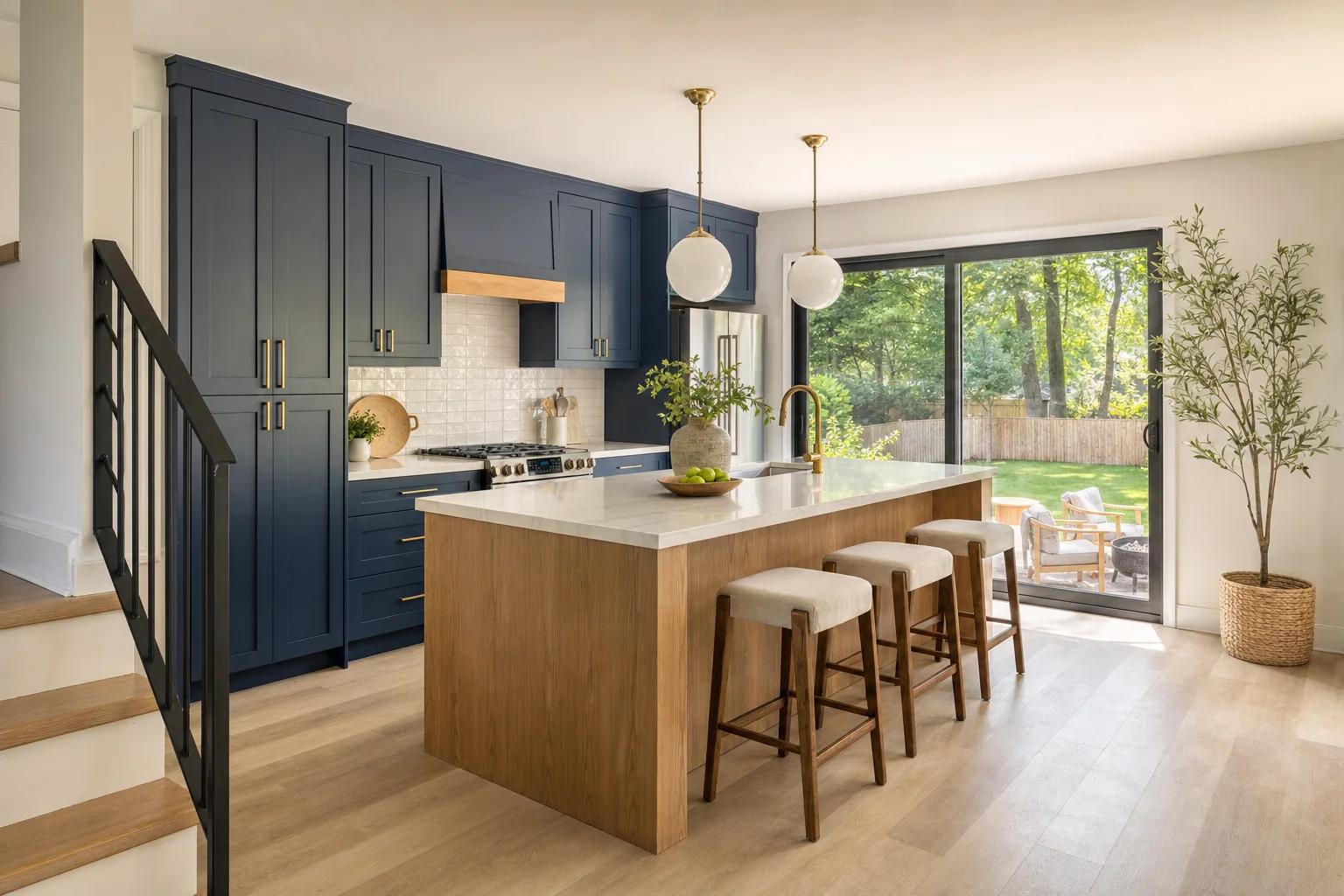
Illustrative image Kitchen Remodeling
Kitchen remodels that update the layout, cabinets, counters, lighting and finishes, planned around how you cook and use the room.
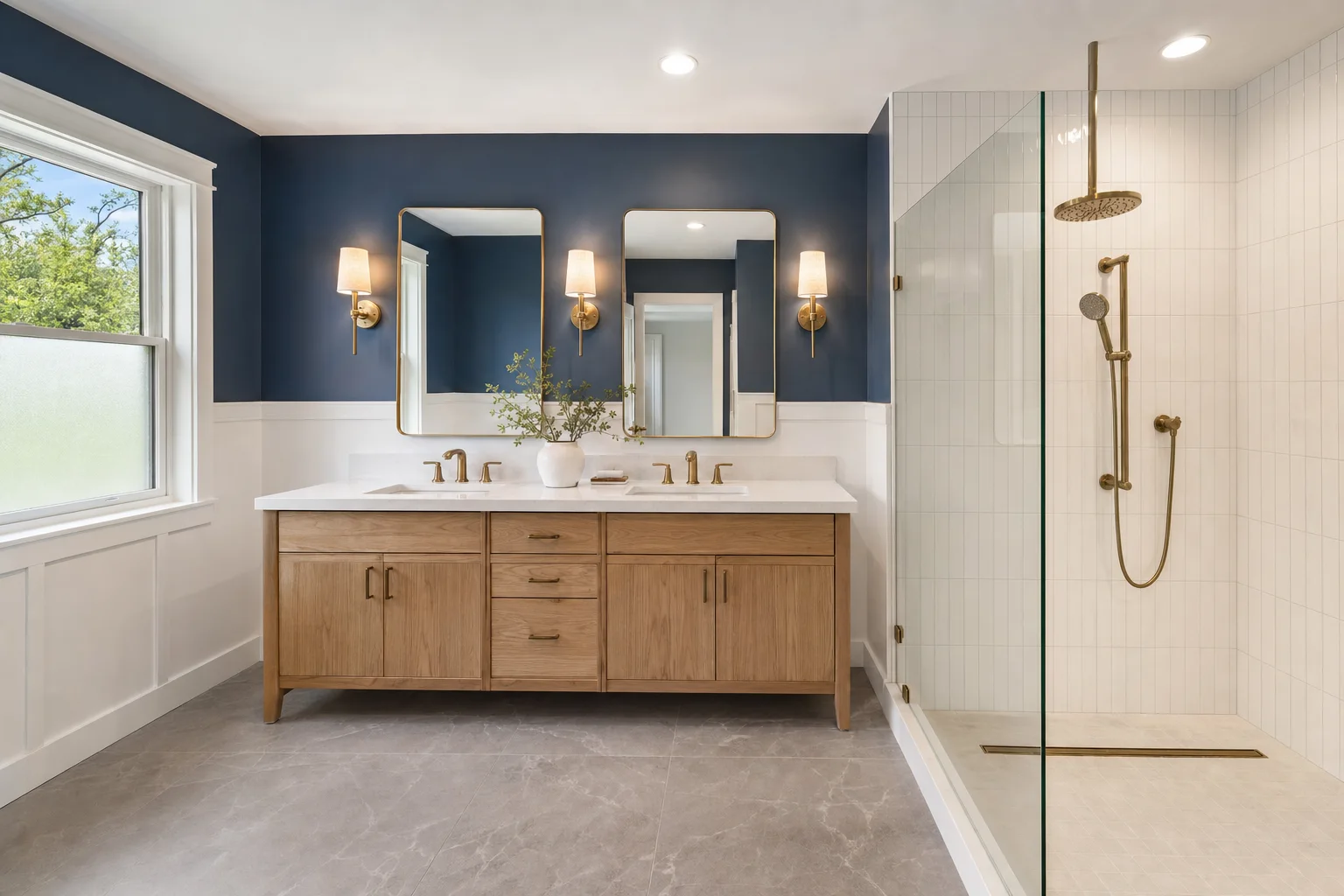
Illustrative image Bathroom Remodeling
Bathroom remodels built on sound waterproofing and ventilation, with fixtures and finishes that fit who uses the room.
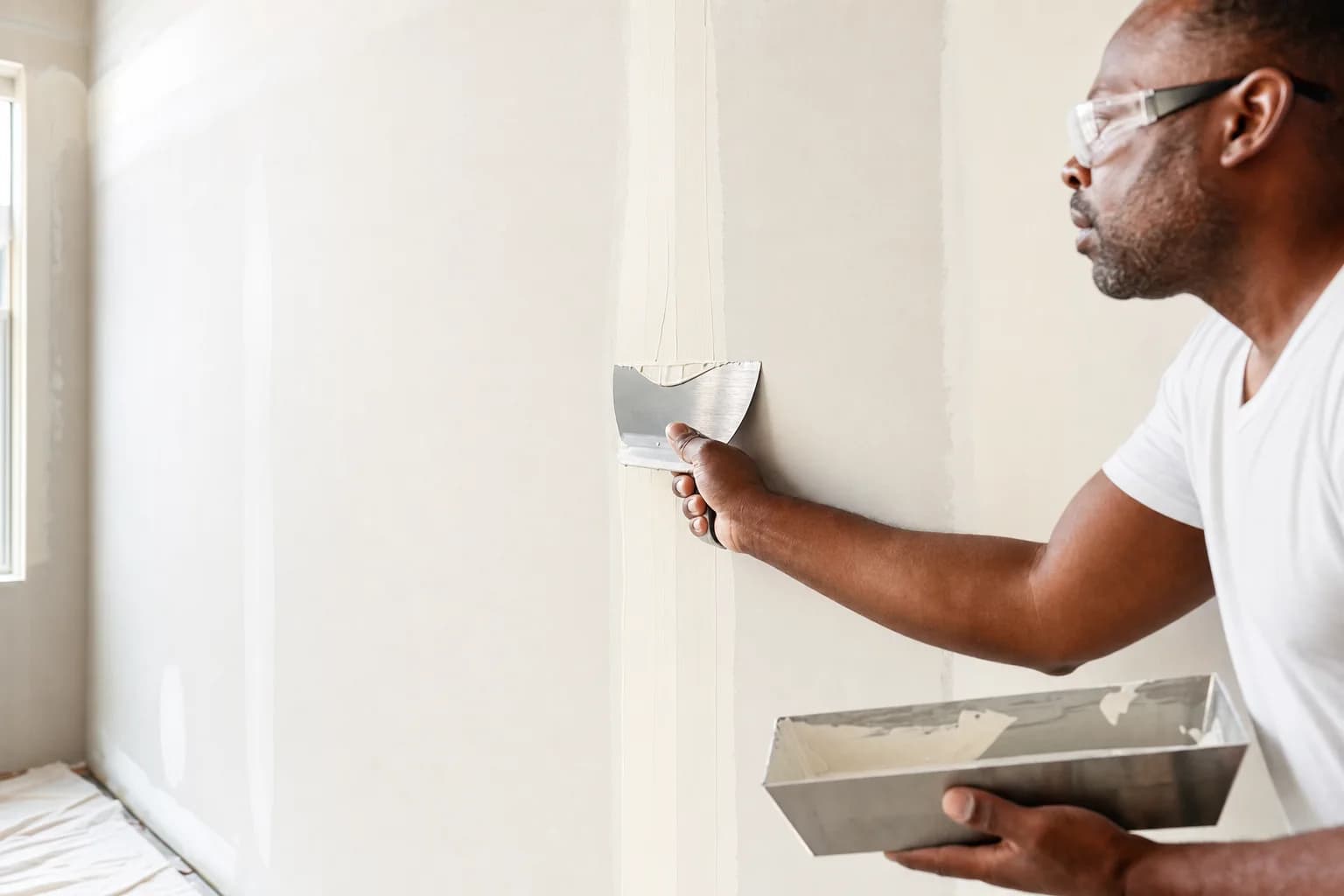
Illustrative image Repairs & Maintenance
Planned repair visits for the small and mid-size problems that build up in a home or building, from sticking doors to rotted trim and loose railings.
Inspiration
Design inspiration for New Jersey projects
Styles, materials and layouts suited to New Jersey homes and businesses, to help you picture your own project.
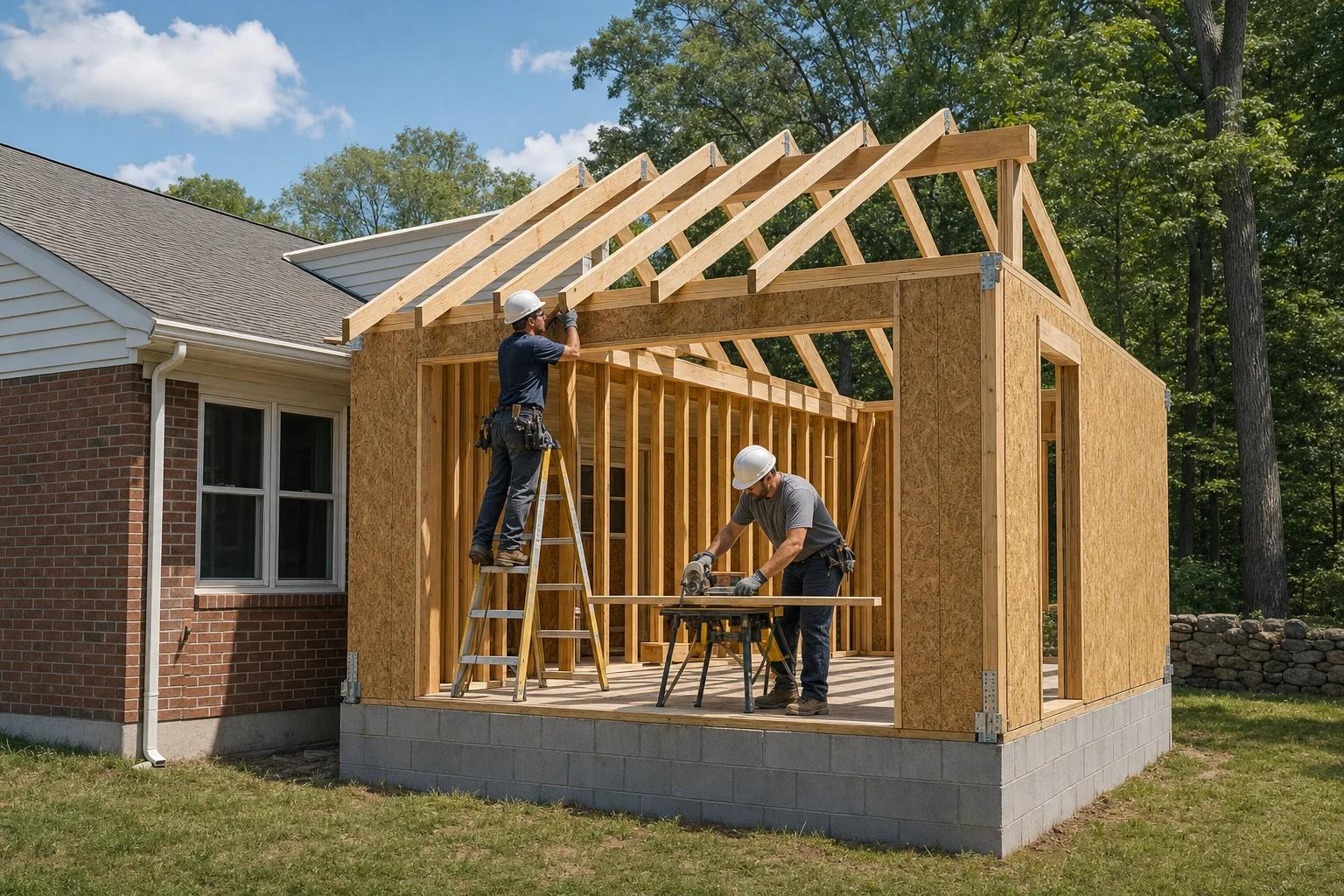
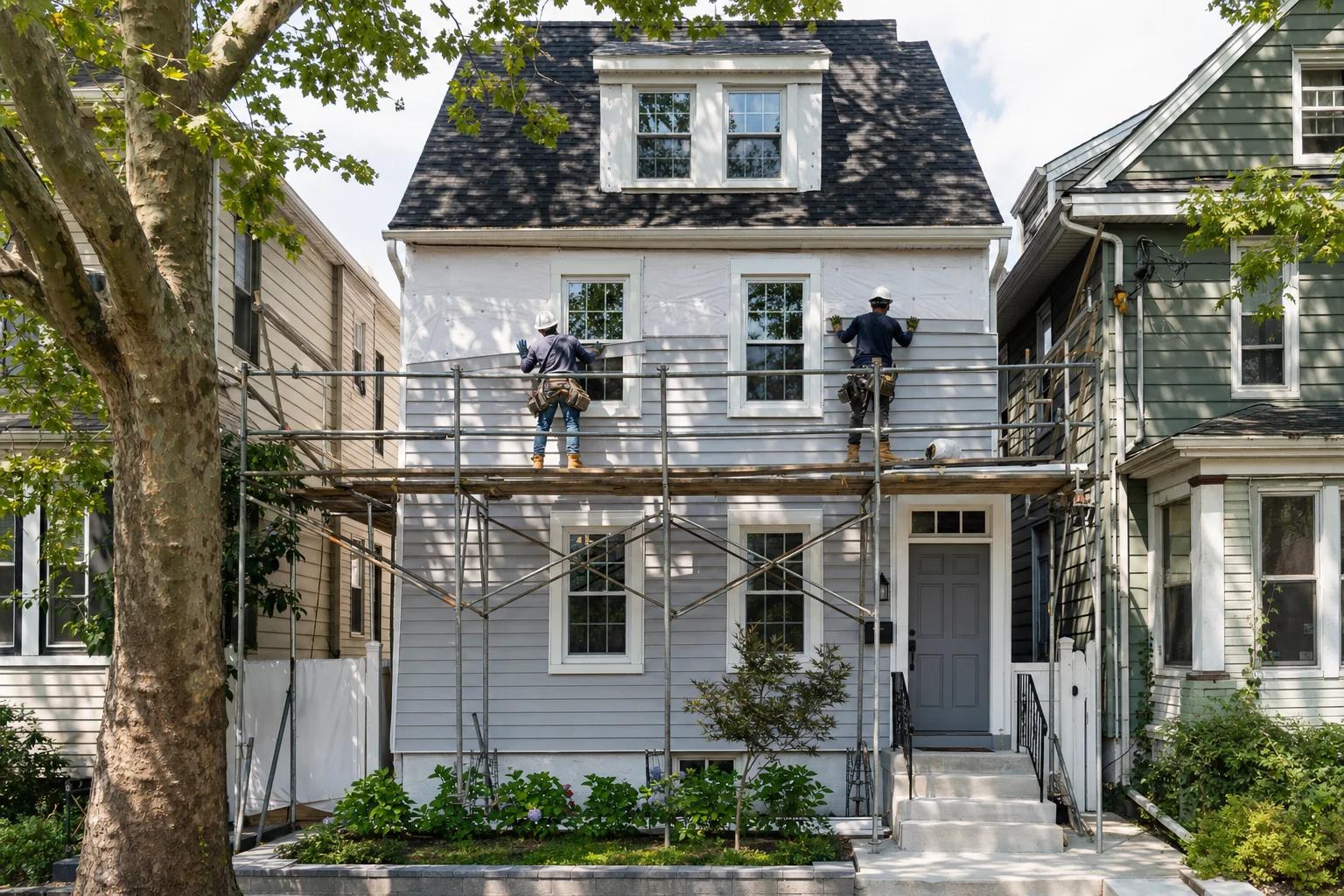
Images are illustrative and created for this website. They are not photographs of completed customer projects.
How it works
Our Simple 4-Step Process
- 1
Consult
Tell us about your project and goals. We review the location, scope and any constraints.
- 2
Plan
We define the scope in writing, confirm selections and identify permits the work may need.
- 3
Build
Work proceeds against the agreed plan, with updates when decisions or changes come up.
- 4
Enjoy
We walk through the finished work with you and hand over care and warranty information.
Questions
New Jersey Project FAQs
Do I need a permit to remodel a kitchen or bathroom in New Jersey?
It depends on the scope. State rules treat replacing cabinets and flooring, and swapping a fixture for a similar one without changing the piping, as ordinary maintenance with no permit. Moving or adding piping or electrical wiring, or touching structural members, needs a permit. Renovation in an existing one- or two-family home that does not alter primary structural members counts as minor work: you notify the construction office before starting and file the permit application within five business days.
How do I check a contractor's registration in New Jersey?
Home improvement contractors must register with the New Jersey Division of Consumer Affairs and show their NJHIC registration number. You can look up home improvement contractors and electrical contractor businesses on the Division's license verification site. Builders of new homes register with the Department of Community Affairs under the New Home Warranty program.
Does my town have its own building code?
No. The Uniform Construction Code applies in every New Jersey municipality, and the state says there are no separate local requirements. Towns do run their own zoning and set their own permit fees, and some sites need zoning or other prior approvals before a construction permit is issued.
Which code edition will my project be reviewed under?
The state lists the 2024 New Jersey editions of the building and residential codes, the 2024 IECC for low-rise residential energy and ASHRAE 90.1-2022 for other buildings, all adopted August 17, 2026. When the 2021 codes were adopted in 2022, the state allowed a six-month grace period during which complete applications could be reviewed under the prior codes. Ask the local construction office which edition applies when you apply.
When is a good time to schedule exterior work?
Nor'easters are most frequent from October through April. In the north, the average last spring frost falls around May 4, and the southwest sees spring frosts about four weeks earlier. Late spring through early fall usually gives the most reliable windows for roofing, siding and concrete. Winter projects need a plan for storm and cold-weather delays.
What should I gather before planning a project?
Have the property address, photos of the area, any existing survey or plans, and your HOA or condo association rules. If the home was built before 1978, expect lead-safe work practices on any painted surfaces you disturb. If the property is in a flood zone, find out the market value of the building itself, because work costing 50 percent or more of it counts as a substantial improvement and can require raising the home.
Sources (11)
- New Jersey Department of Community Affairs, Division of Codes and Standards · checked 2026-09-24
- New Jersey Department of Community Affairs, Division of Codes and Standards · checked 2026-09-24
- New Jersey Department of Community Affairs (N.J.A.C. 5:23-2) · checked 2026-09-24
- New Jersey Department of Community Affairs, Construction Code Communicator (Fall 2022) · checked 2026-09-24
- New Jersey Business Action Center · checked 2026-09-24
- New Jersey Division of Consumer Affairs · checked 2026-09-24
- New Jersey Department of Community Affairs, New Home Warranty Program · checked 2026-09-24
- Office of the New Jersey State Climatologist, Rutgers University · checked 2026-09-24
- Borough of Highlands · checked 2026-09-24
- Federal Emergency Management Agency · checked 2026-09-24
- U.S. Environmental Protection Agency · checked 2026-09-24
Local resources
Planning guides for New Jersey
Ready to Start Your New Jersey Project?
Tell us what you are planning and where. We'll confirm availability for your address and follow up to talk through scope and next steps.