
Texas Construction Pros
Construction & Remodeling Experts in Texas
Texas Construction Pros plans and builds kitchen and bathroom remodels, roofing, repairs, commercial projects and new homes for Texas homeowners and businesses. Work here is shaped by building codes that each city adopts and amends, hail and severe storms, hurricane exposure along the Gulf Coast and clay soils that shrink and swell. Each project starts by confirming the permit path, any windstorm or historic review and any association rules that apply to your address. Service areas in Texas are still being confirmed, so availability is checked before anything is scheduled.
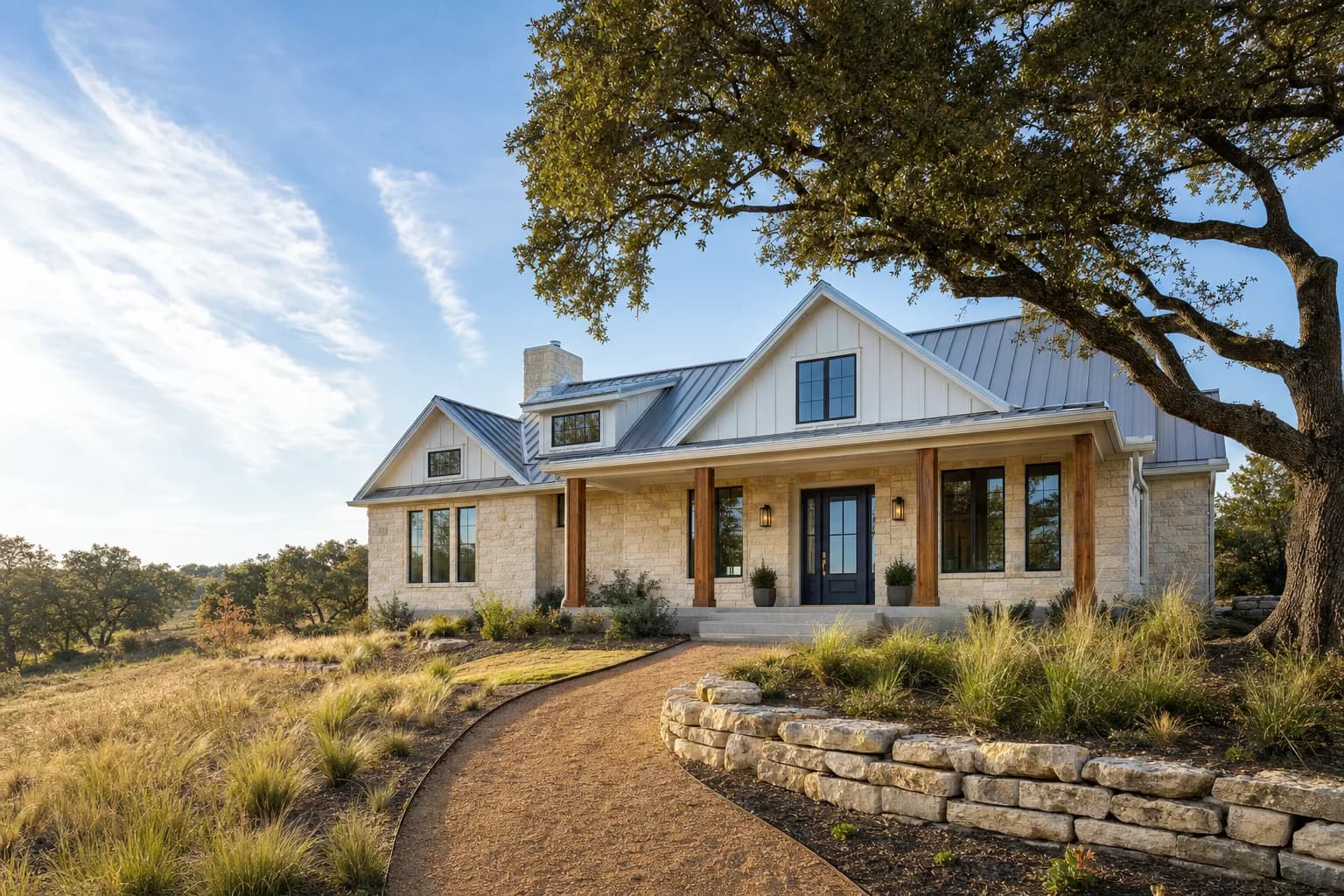
Texas
Construction Pros
Remodeling, roofing, repairs and new construction planned around Texas city codes, storms, clay soils and permit rules.
Serving communities across Texas
Service areasBuilding in Texas
What shapes a project in Texas
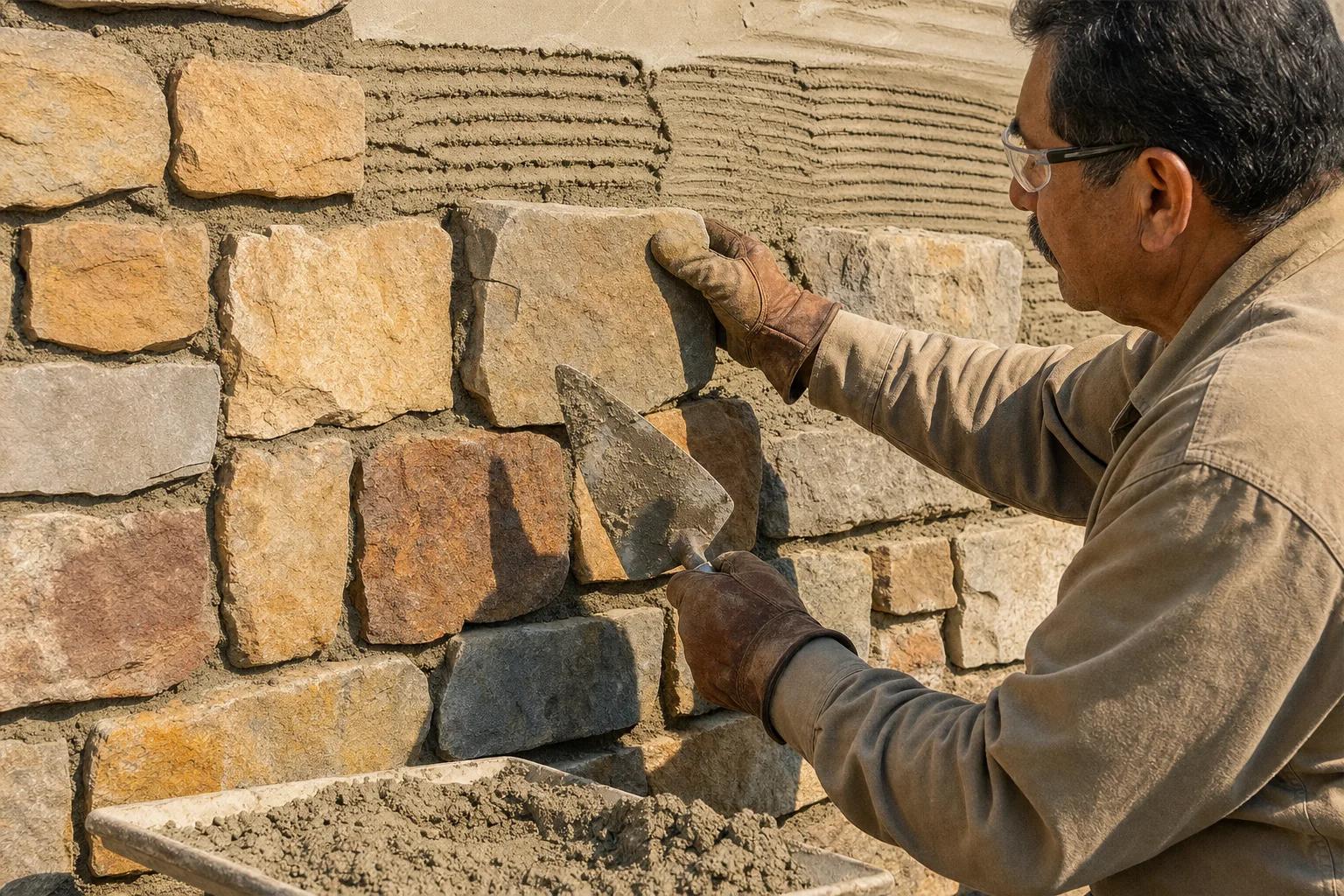
State baseline codes, adopted and amended by each city
State law makes the International Residential Code the municipal code for building, remodeling and repairing homes, and the International Building Code the municipal code for commercial buildings. Each city may adopt local amendments by ordinance after a public hearing, so editions and rules differ from city to city. Houston, for example, has enforced 2021 editions with local amendments since January 1, 2024. Outside city limits, new single-family homes and duplexes in counties covered by state law must follow the IRC.
Energy code and climate zones 2, 3 and 4
The state energy standard for one- and two-family homes of three stories or fewer is Chapter 11 of the 2015 International Residential Code, in effect since September 1, 2016. Builders can also comply through an Energy Rating Index path with separate limits for climate zones 2, 3 and 4. Commercial buildings and residential buildings over three stories follow the 2015 IECC, in effect since November 1, 2016. Cities can adopt newer editions; Houston, for example, enforces the 2021 IECC, so the local code decides what a project must meet.
Hurricanes and coastal windstorm rules
The Atlantic hurricane season runs from June 1 to November 30, with most activity between mid-August and mid-October. Fourteen coastal counties and the parts of Harris County east of State Highway 146 are in the Texas Windstorm Insurance Association's designated catastrophe area. There, most new construction, roof replacements, major repairs and other alterations need a windstorm inspection and certificate of compliance, and most properties need that certificate to buy a TWIA policy. The TDI windstorm program lists the 2024 IRC and IBC with an effective date of April 1, 2026.
Hail, severe storms and winter weather
NOAA counted 190 weather and climate disasters with losses over one billion dollars each that affected Texas from 1980 to 2024. Severe storms, which include hail, made up 126 of them, and several were hailstorms in the Dallas-Fort Worth area and San Antonio. The same record includes 11 winter storms and one freeze, so exterior work and roof choices should account for both hail and cold snaps.
Clay soils and a mostly post-1980 housing stock
Houston Black clay, found widely across the Blackland Prairies of east-central Texas, has high shrink-swell potential and opens cracks up to about 4 inches wide when dry. The 2020-2024 American Community Survey counted about 12.1 million housing units in Texas, with a median year built of 1992. About 64 percent were single-family detached homes and about 6 percent were mobile homes. About 33 percent were built before 1980 and about 39 percent in 2000 or later.
Sources (14)
- Texas Legislature, Local Government Code section 214.212 (text via FindLaw) · checked 2026-09-24
- Texas Legislature, Local Government Code section 214.216 (text via FindLaw) · checked 2026-09-24
- Texas Legislature, Local Government Code section 233.153 (text via FindLaw) · checked 2026-09-24
- Texas Comptroller, State Energy Conservation Office · checked 2026-09-24
- Texas Comptroller, State Energy Conservation Office · checked 2026-09-24
- NOAA National Centers for Environmental Information · checked 2026-09-24
- NOAA National Hurricane Center · checked 2026-09-24
- Texas Windstorm Insurance Association · checked 2026-09-24
- Texas Department of Insurance · checked 2026-09-24
- Texas Department of Insurance, Windstorm Inspection Program · checked 2026-09-24
- USDA Natural Resources Conservation Service, Official Soil Series Description · checked 2026-09-24
- U.S. Census Bureau, American Community Survey 2020-2024 5-year estimates (tables B25034 and B25035, via Census Reporter) · checked 2026-09-24
- U.S. Census Bureau, American Community Survey 2020-2024 5-year estimates (table B25024, via Census Reporter) · checked 2026-09-24
- City of Houston, Houston Permitting Center · checked 2026-09-24
Licensing & permits
Verify any contractor in Texas
Contractor licensing
Texas Department of Licensing and Regulation (TDLR) and Texas State Board of Plumbing Examiners (TSBPE)
Texas licenses construction work by trade. TDLR licenses electricians and electrical contractors, and anyone who performs non-exempt electrical work must be licensed and work through a licensed electrical contractor. TDLR also licenses contractors who install, repair or maintain air conditioning, refrigeration and heating systems. Plumbers are licensed by the Texas State Board of Plumbing Examiners. The Texas Residential Construction Commission was abolished on September 1, 2009, and some cities have their own contractor registration; Dallas, for example, posts a homeowner's exemption form for it. You can check trade licenses with the TDLR license search and the TSBPE public license search, and ask the city about any local registration.
Check a contractor’s status (opens the official Texas site in a new tab)Building permits
Permits in Texas
Building permits in Texas are issued by cities, which enforce the International Residential Code and International Building Code with their own adopted editions and local amendments. Outside city limits, state law sets IRC standards for new single-family homes and duplexes in covered counties. In the coastal catastrophe area, many projects also need a Texas Department of Insurance windstorm inspection. Permit needs vary by jurisdiction and project, so they are confirmed for your address during planning.
Sources (10)
- Texas Legislature, Local Government Code section 214.212 (text via FindLaw) · checked 2026-09-24
- Texas Legislature, Local Government Code section 214.216 (text via FindLaw) · checked 2026-09-24
- Texas Legislature, Local Government Code section 233.153 (text via FindLaw) · checked 2026-09-24
- Texas Department of Insurance · checked 2026-09-24
- Texas Department of Licensing and Regulation · checked 2026-09-24
- Texas Department of Licensing and Regulation · checked 2026-09-24
- Texas Department of Licensing and Regulation · checked 2026-09-24
- Texas State Board of Plumbing Examiners · checked 2026-09-24
- Texas Sunset Advisory Commission · checked 2026-09-24
- City of Dallas Permitting and Inspections · checked 2026-09-24
Our services
Construction & Remodeling Services in Texas

Illustrative image Kitchen Remodeling
Kitchen remodels that update the layout, cabinets, counters, lighting and finishes, planned around how you cook and use the room.

Illustrative image Bathroom Remodeling
Bathroom remodels built on sound waterproofing and ventilation, with fixtures and finishes that fit who uses the room.

Illustrative image Repairs & Maintenance
Planned repair visits for the small and mid-size problems that build up in a home or building, from sticking doors to rotted trim and loose railings.
Inspiration
Design inspiration for Texas projects
Styles, materials and layouts suited to Texas homes and businesses, to help you picture your own project.
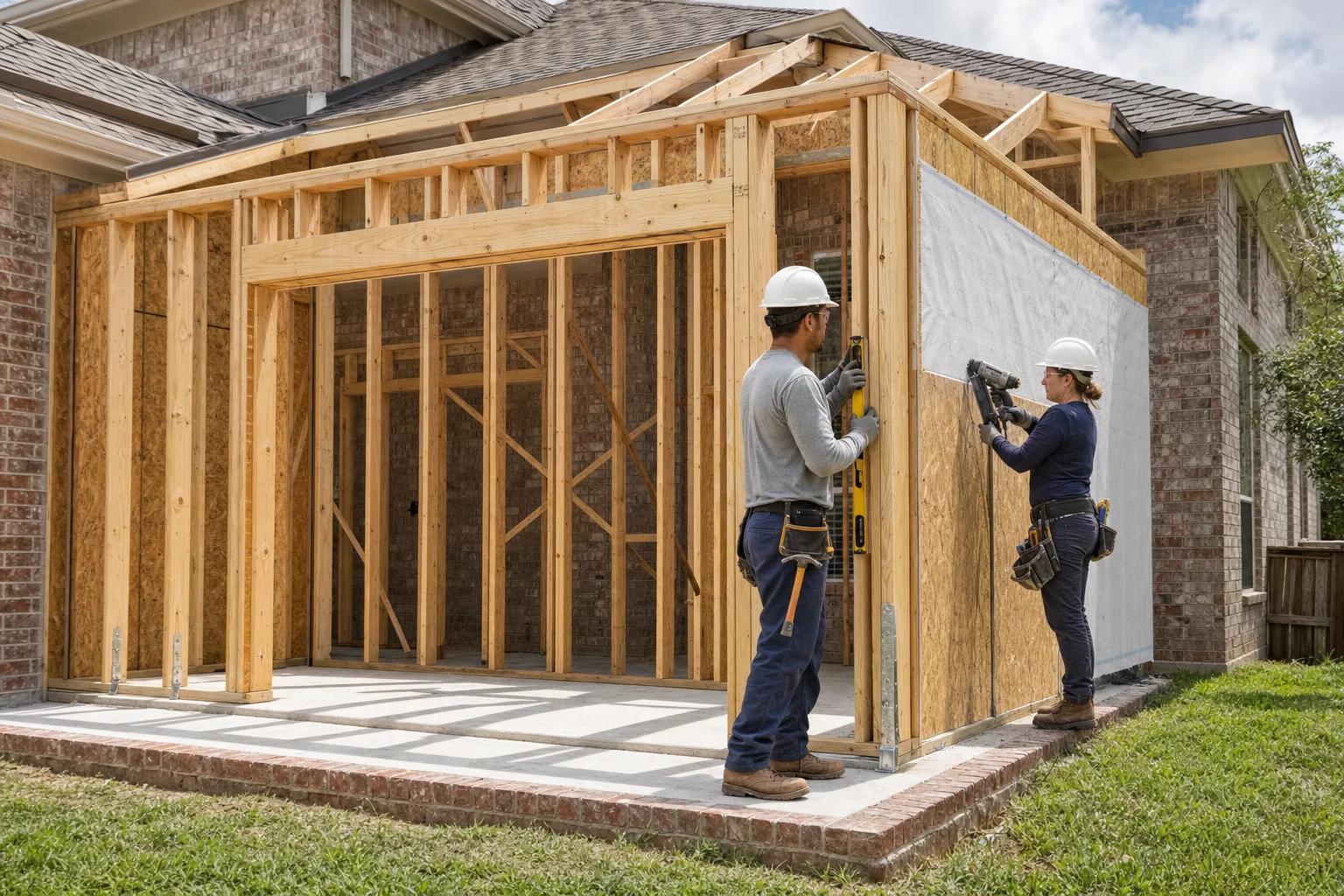
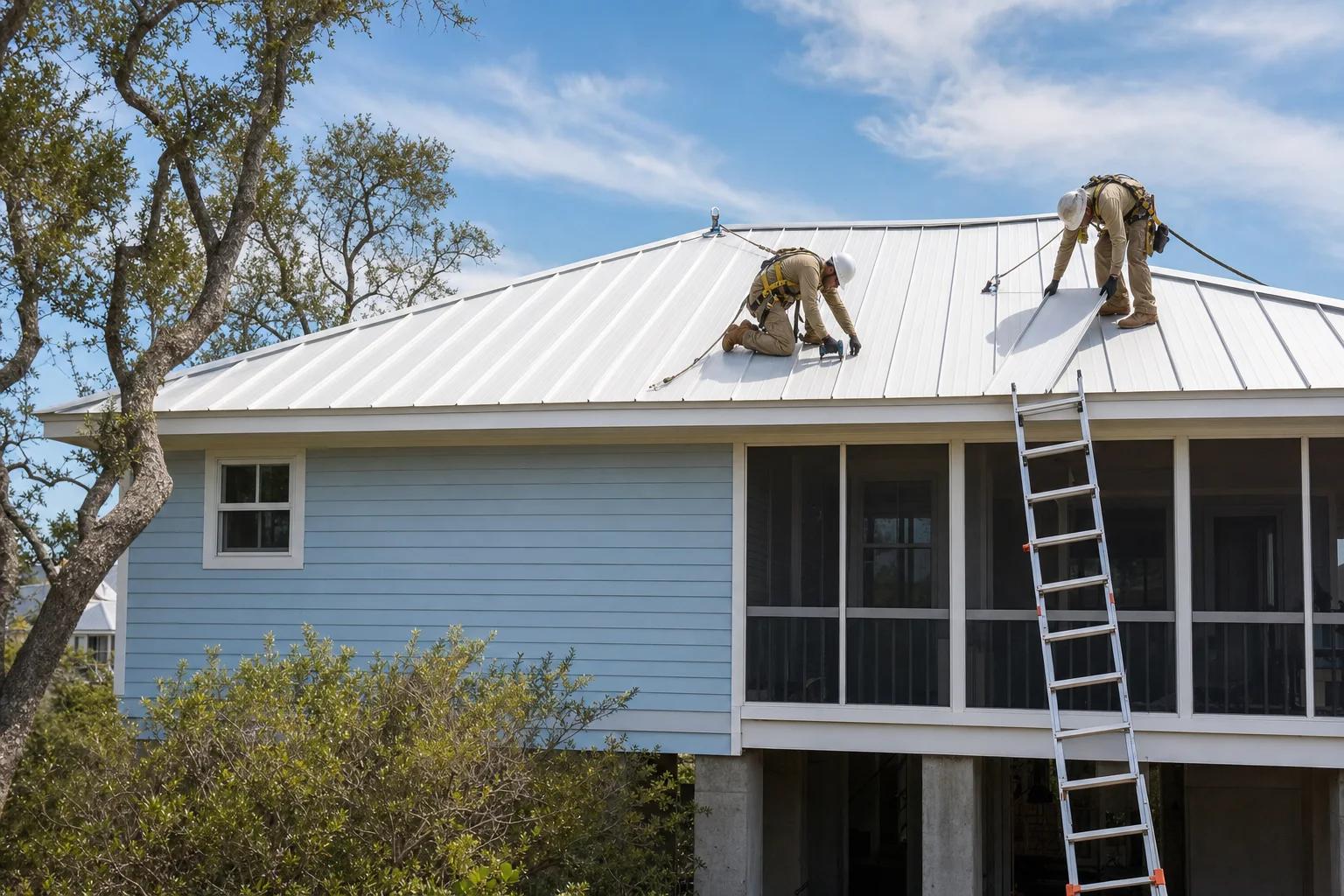
Images are illustrative and created for this website. They are not photographs of completed customer projects.
How it works
Our Simple 4-Step Process
- 1
Consult
Tell us about your project and goals. We review the location, scope and any constraints.
- 2
Plan
We define the scope in writing, confirm selections and identify permits the work may need.
- 3
Build
Work proceeds against the agreed plan, with updates when decisions or changes come up.
- 4
Enjoy
We walk through the finished work with you and hand over care and warranty information.
Questions
Texas Project FAQs
Who issues building permits in Texas?
Cities issue building permits. State law makes the International Residential Code and International Building Code the baseline for cities, and each city can adopt local amendments by ordinance after a public hearing. In unincorporated areas of counties covered by state law, new single-family homes and duplexes must follow the IRC. The permit office for your address is confirmed during planning.
How do I check a contractor's license in Texas?
Texas licenses trades. Use the TDLR license search for electricians, electrical contractors and air conditioning and refrigeration contractors, and the Texas State Board of Plumbing Examiners public license search for plumbers. For general remodeling or roofing, ask your city whether it requires contractor registration. The Texas Department of Insurance also advises getting written bids, checking references and never signing a contract with blank spaces.
When is a good time to schedule roofing or exterior work in Texas?
On the coast, the Atlantic hurricane season runs from June 1 to November 30, and most activity falls between mid-August and mid-October. Severe storms, including hail, are the most frequent type of billion-dollar disaster in Texas in NOAA's records, with 126 of the 190 events counted from 1980 to 2024. Plan tear-offs so the roof can be closed up quickly, and build weather days into the schedule.
Can my HOA stop me from installing impact-resistant or energy-efficient shingles?
Texas law limits this. A property owners' association may not prohibit or restrict shingles designed to resist wind and hail, improve heating and cooling efficiency, or generate solar power, if they resemble the shingles the association already allows, are more durable and of equal or better quality, and match the look of the surrounding properties. Share your association's rules early so the product choice can be checked against them.
Do projects on the Texas coast need a windstorm inspection?
In the 14 coastal counties and the parts of Harris County east of State Highway 146, most new construction, roof replacements, major repairs and other alterations need a windstorm inspection and certificate of compliance, and most properties need that certificate to buy a TWIA policy. Roof repairs under 100 square feet that do not involve decking, non-structural items such as painting, carpet and cabinets, and plumbing and electrical repairs are exempt. A WPI-8 certificate is issued for work inspected during construction.
Can a roofing contractor pay or waive my insurance deductible?
No. The Texas Department of Insurance says it is illegal for contractors to waive your deductible or help you avoid paying it. TDI also warns that after a disaster, out-of-town contractors may not ask for a down payment before they start work.
Sources (14)
- Texas Legislature, Local Government Code section 214.212 (text via FindLaw) · checked 2026-09-24
- Texas Legislature, Local Government Code section 214.216 (text via FindLaw) · checked 2026-09-24
- Texas Legislature, Local Government Code section 233.153 (text via FindLaw) · checked 2026-09-24
- Texas Legislature, Property Code section 202.011 (text via FindLaw) · checked 2026-09-24
- NOAA National Centers for Environmental Information · checked 2026-09-24
- NOAA National Hurricane Center · checked 2026-09-24
- Texas Windstorm Insurance Association · checked 2026-09-24
- Texas Department of Insurance · checked 2026-09-24
- Texas Department of Insurance · checked 2026-09-24
- Texas Department of Insurance · checked 2026-09-24
- Texas Department of Licensing and Regulation · checked 2026-09-24
- Texas Department of Licensing and Regulation · checked 2026-09-24
- Texas Department of Licensing and Regulation · checked 2026-09-24
- Texas State Board of Plumbing Examiners · checked 2026-09-24
Local resources
Planning guides for Texas
Ready to Start Your Texas Project?
Tell us what you are planning and where. We'll confirm availability for your address and follow up to talk through scope and next steps.