Washington Construction Pros
Construction & Remodeling Experts in Washington
Washington Construction Pros plans and builds kitchen and bathroom remodels, roofing, repairs, commercial projects and new homes for Washington homeowners and businesses. The state has two energy-code climate zones: marine Zone 4C west of the Cascades and dry Zone 5B to the east, where cities like Spokane and Yakima design for deeper frost and require ice-barrier underlayment on roofs. Earthquake hazard reaches every region of the state, so structural work gets a close look. Service areas are still being confirmed, so every project starts with your address and a check of local permit rules.
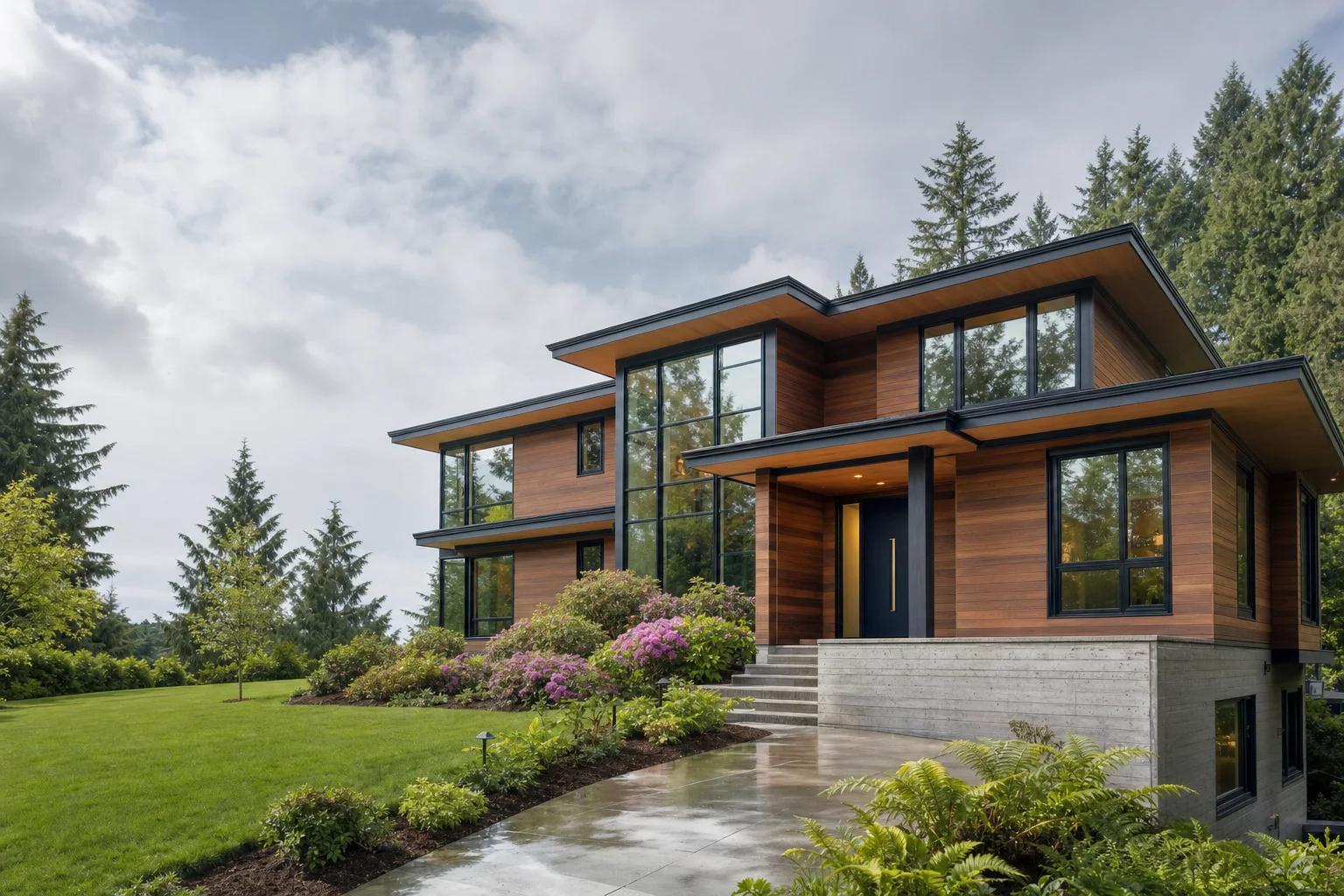
Washington
Construction Pros
Remodeling, roofing, repair and new-build planning for Washington's marine west side and its dry, snowier east side.
Serving communities across Washington
Service areasBuilding in Washington
What shapes a project in Washington
One state building code, amended locally
Washington's state building code applies in every city and county and is built on the International Building, Residential, Mechanical and Fire Codes plus the Uniform Plumbing Code. The 2021 editions with Washington amendments took effect March 15, 2024. Cities and counties may amend the code for their area but may not lower its minimum performance standards. The State Building Code Council's revised schedule lists May 3, 2027 as the implementation date for the 2024 editions, so long projects should confirm which edition applies when the permit is submitted.
Two energy-code climate zones
The Washington State Energy Code assigns every county a climate zone. King, Pierce, Snohomish, Clark, Whatcom and the other western counties are in marine Zone 4C, while Spokane, Yakima, Benton and the other eastern counties are in dry Zone 5B. The code uses the zone to decide which energy requirements apply, so a similar remodel can carry different rules on each side of the Cascades. Seattle has its own energy code, which largely matches the state code.
Earthquake hazard in every region
The Washington Geological Survey says all regions of the state have some seismic hazard, from moderate in the east to high near the coast. The Cascadia subduction zone last produced a roughly magnitude 9 earthquake in 1700, and more than one magnitude 5.5 or larger deep earthquake is expected each century. The Seattle fault lies beneath West Seattle, Bellevue and Bremerton. When structural work is planned on an older wood-framed house, it is a good time to review foundation anchoring and wall bracing.
Wildfire mapping and a future WUI code
Under Senate Bill 6120, the Department of Natural Resources is building statewide wildfire hazard and risk maps that rate areas from low to very high. DNR says the maps will support adoption of a wildland-urban interface building code. The State Building Code Council lists that code as reserved in the 2024 cycle until the statewide mapping is finished. If you are building or re-roofing near wildland areas, ask the local building department which fire-related rules already apply to your lot.
Snow load, frost depth and ice barriers vary by city
Local design criteria differ across the state. Spokane uses a 39 psf ground snow load and a 24-inch frost depth, and requires ice-shield underlayment. Yakima lists a 19 psf ground snow load, a 24-inch frost depth and an ice barrier requirement. Vancouver, on the west side, lists a 12-inch minimum frost depth and no ice-shield requirement.
Sources (12)
- Washington State Building Code Council · checked 2026-09-24
- Washington State Building Code Council · checked 2026-09-24
- Washington State Legislature (RCW 19.27.031) · checked 2026-09-24
- Washington State Legislature (RCW 19.27.040) · checked 2026-09-24
- Washington State Legislature (WAC 51-11R-30100, State Energy Code climate zones) · checked 2026-09-24
- Washington Department of Natural Resources, Washington Geological Survey · checked 2026-09-24
- Washington Department of Natural Resources · checked 2026-09-24
- Seattle Department of Construction and Inspections · checked 2026-09-24
- City of Spokane Business & Developer Services (BUILD-21) · checked 2026-09-24
- City of Vancouver Community Development Department · checked 2026-09-24
- City of Bellevue Development Services · checked 2026-09-24
- City of Yakima Office of Code Administration · checked 2026-09-24
Licensing & permits
Verify any contractor in Washington
Contractor licensing
Washington State Department of Labor & Industries (L&I)
Washington requires all construction contractors to register with L&I. To register, a contractor must get a surety bond or an assignment of savings and carry general liability insurance. L&I says employees doing electrical work on a home must be licensed electricians, and only licensed plumbing contractors can bid on plumbing projects and send certified plumbers to jobs. Before hiring, L&I advises using its Verify a Contractor, Tradesperson or Business tool to confirm an active license, bond and insurance, and to check safety violations and past lawsuits.
Check a contractor’s status (opens the official Washington site in a new tab)Building permits
Permits in Washington
Counties and cities enforce Washington's state building code. A county or city without its own building department must contract with another jurisdiction or an approved inspection agency. Each county and city can amend the code locally, so permit triggers, exemptions and review steps differ from place to place. Electrical permits come from L&I unless the city runs its own electrical program or the site is in Tacoma Power's service area. The permits your project needs, and the office that issues them, are confirmed during planning.
Sources (7)
- Washington State Legislature (RCW 19.27.040) · checked 2026-09-24
- Washington State Legislature (RCW 19.27.050) · checked 2026-09-24
- Washington State Department of Labor & Industries · checked 2026-09-24
- Washington State Department of Labor & Industries · checked 2026-09-24
- Washington State Department of Labor & Industries · checked 2026-09-24
- Washington State Department of Labor & Industries · checked 2026-09-24
- Washington State Department of Labor & Industries · checked 2026-09-24
Our services
Construction & Remodeling Services in Washington
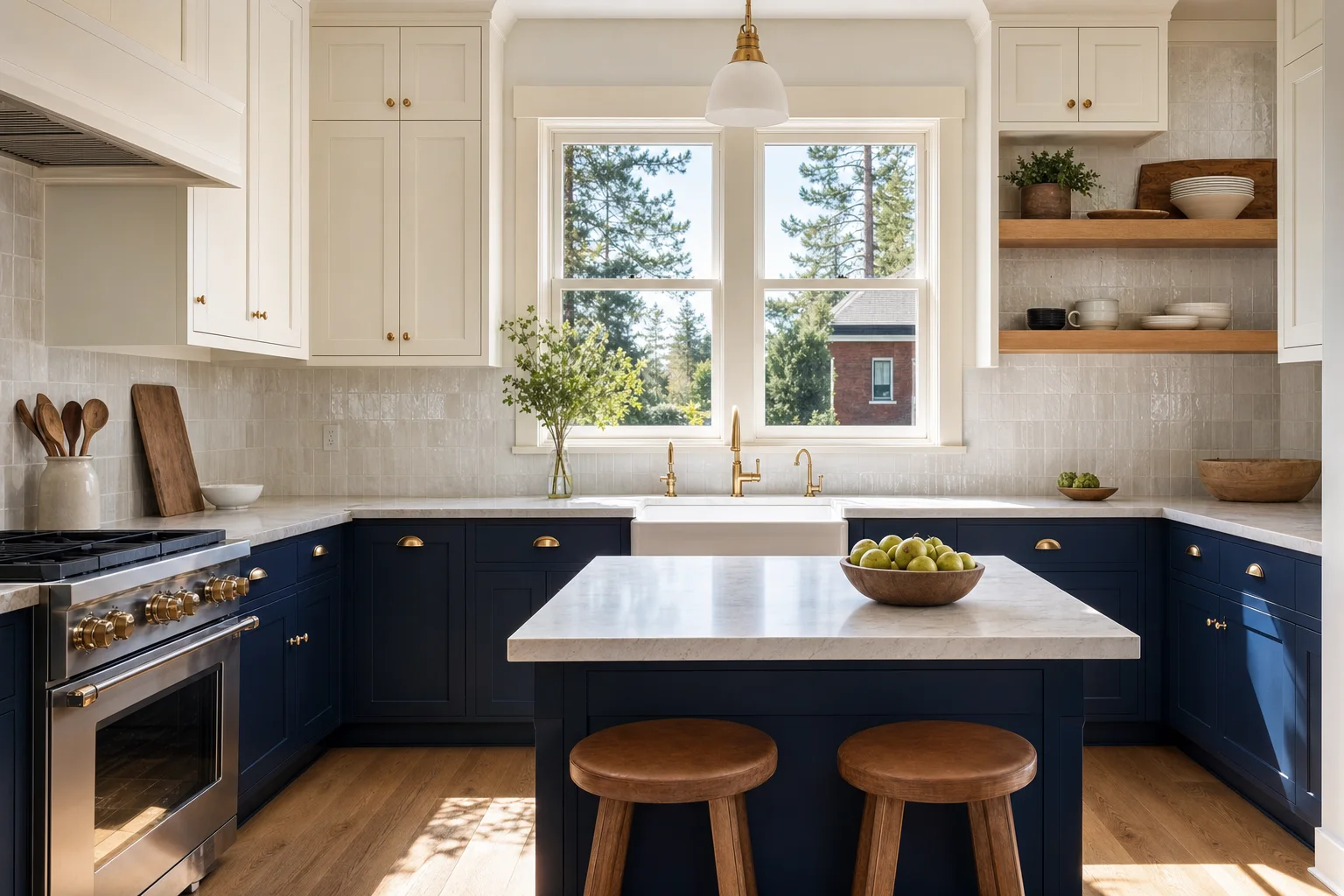
Illustrative image Kitchen Remodeling
Kitchen remodels that update the layout, cabinets, counters, lighting and finishes, planned around how you cook and use the room.
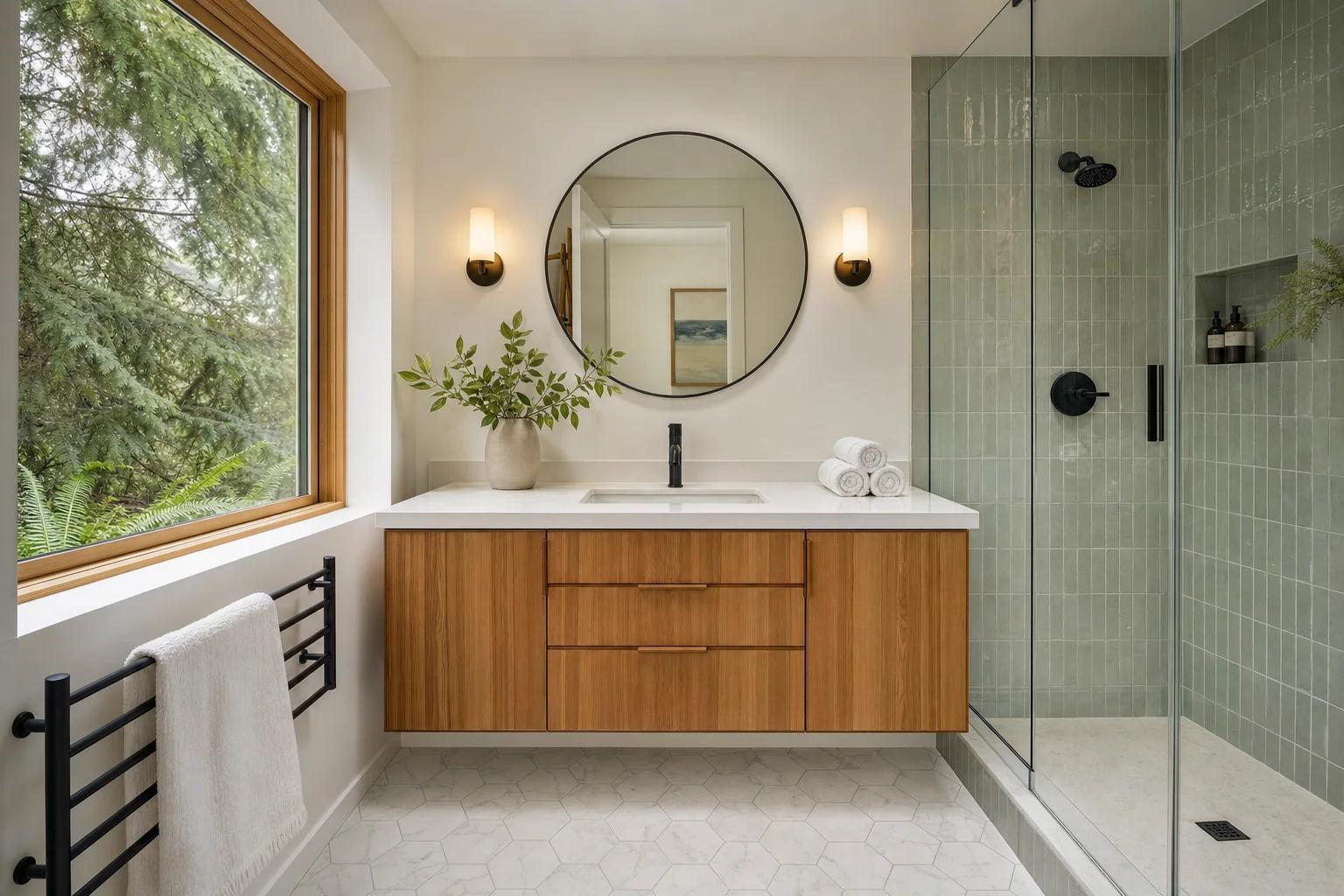
Illustrative image Bathroom Remodeling
Bathroom remodels built on sound waterproofing and ventilation, with fixtures and finishes that fit who uses the room.
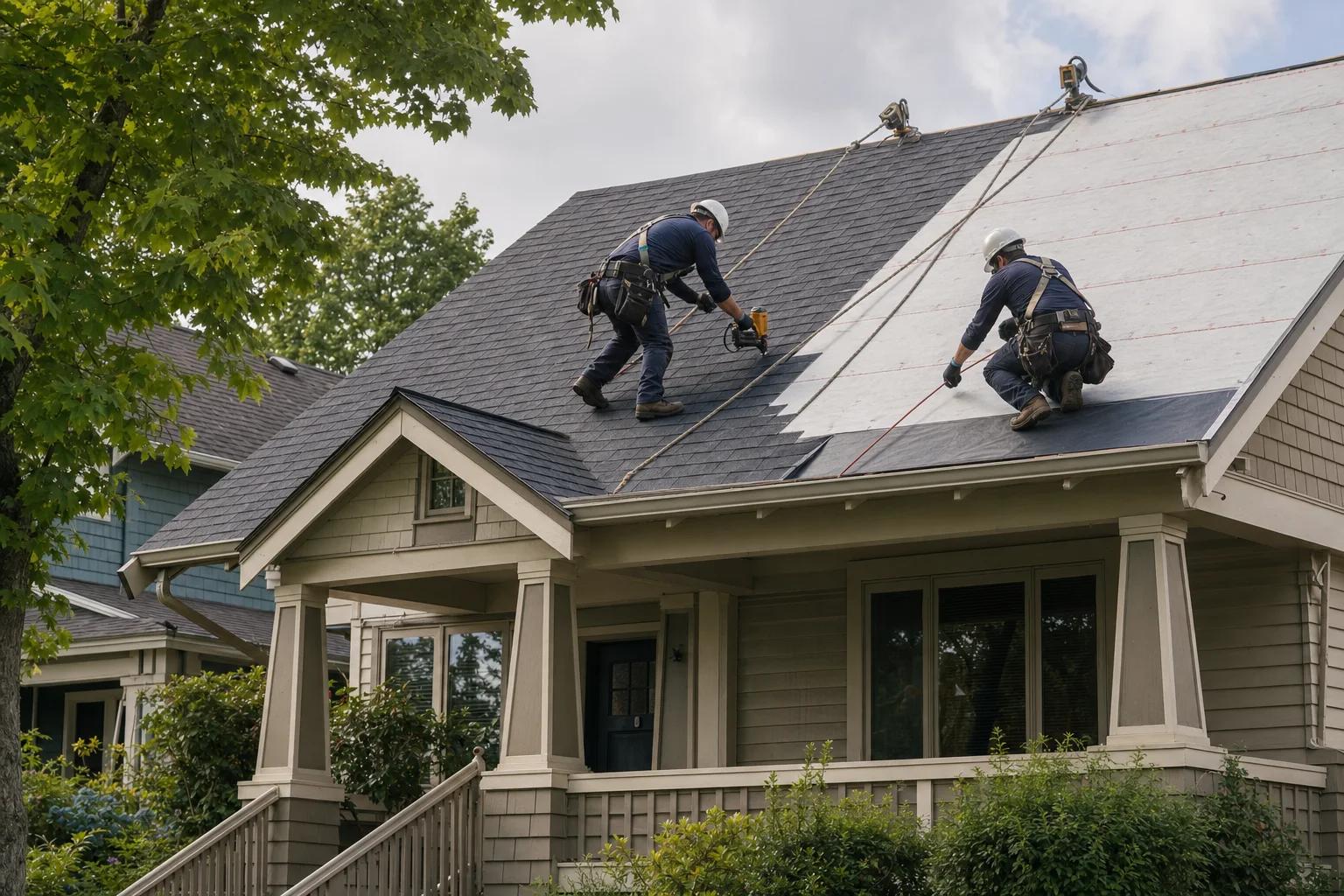
Illustrative image Repairs & Maintenance
Planned repair visits for the small and mid-size problems that build up in a home or building, from sticking doors to rotted trim and loose railings.
Inspiration
Design inspiration for Washington projects
Styles, materials and layouts suited to Washington homes and businesses, to help you picture your own project.
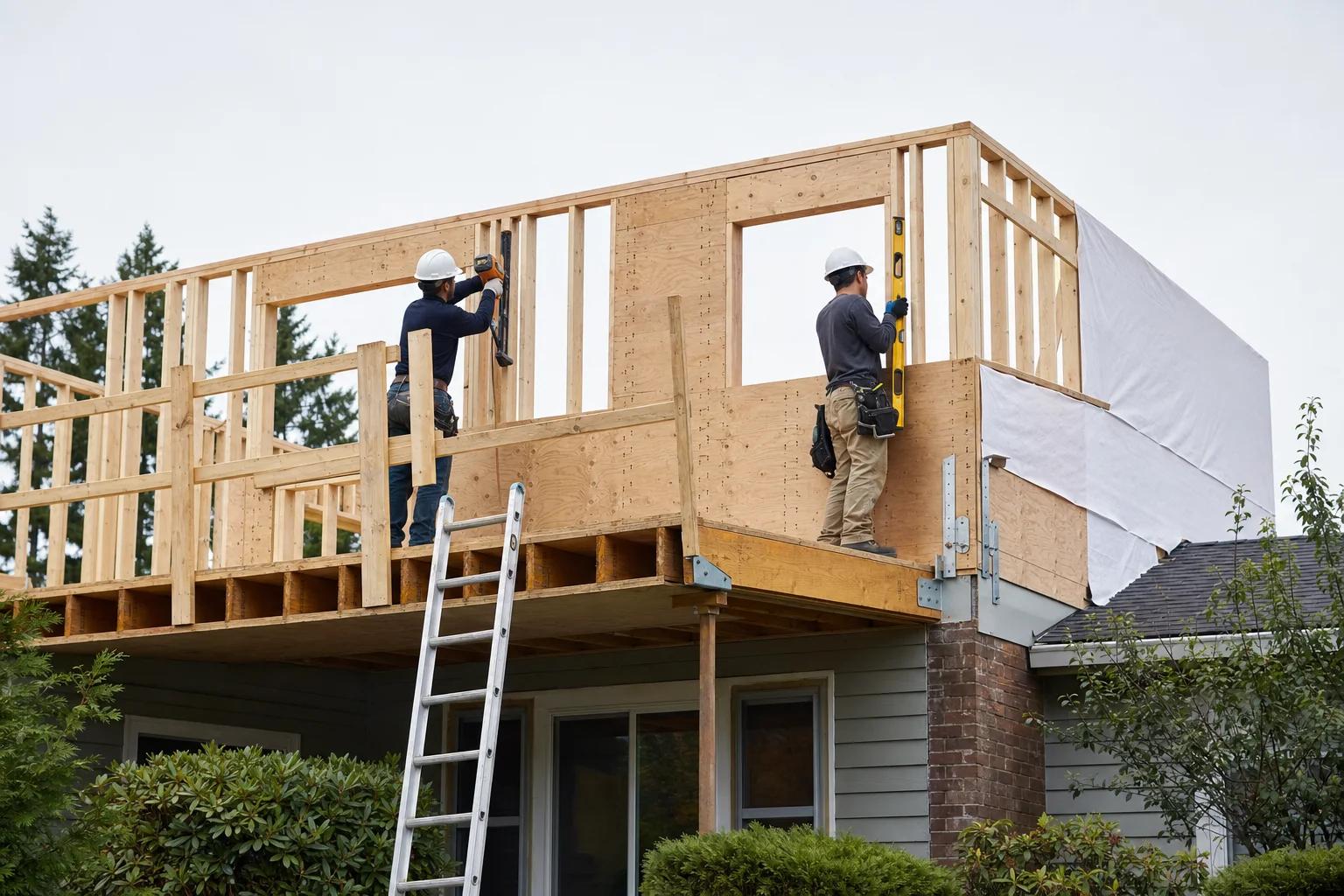
Images are illustrative and created for this website. They are not photographs of completed customer projects.
How it works
Our Simple 4-Step Process
- 1
Consult
Tell us about your project and goals. We review the location, scope and any constraints.
- 2
Plan
We define the scope in writing, confirm selections and identify permits the work may need.
- 3
Build
Work proceeds against the agreed plan, with updates when decisions or changes come up.
- 4
Enjoy
We walk through the finished work with you and hand over care and warranty information.
Questions
Washington Project FAQs
Do I need a building permit for a remodel in Washington?
It depends on the city or county, because each one enforces the state building code and can add local amendments. Some small work is exempt. Seattle, for example, lists installing kitchen cabinets as exempt, but work on load-bearing supports, changes to the building envelope and work that reduces egress, light, ventilation or fire resistance need a permit. Bellingham requires a permit for any project not on its Work Exempt from Permits handout. Permit needs for your address are confirmed during planning.
How do I check a contractor's registration in Washington?
Use L&I's Verify a Contractor, Tradesperson or Business tool. You can search by name, contractor or tradesperson license, workers' comp account or UBI number. L&I says a Verify check shows whether the contractor's registration is current and a minimum bond and liability insurance are in place. L&I also advises checking safety violations and past lawsuits, getting references and getting a written contract.
Who can do electrical and plumbing work on my house?
L&I says any employees doing electrical work on your home must be licensed electricians, and a licensed electrical contractor will make sure the work is done to code, permitted and inspected. Only licensed plumbing contractors can bid on plumbing projects and send certified plumbers to jobs. The electrical permit must be bought by the electrical contractor or by the owner who will do the work. It comes from L&I, from the city if it runs its own program, or from Tacoma Power in its service area.
Which energy code rules apply on my side of the state?
The state energy code places western counties such as King, Pierce, Clark and Whatcom in marine Zone 4C, and eastern counties such as Spokane, Yakima and Benton in dry Zone 5B. The code uses the zone to decide which energy requirements apply to a project. Inside Seattle, the city enforces the Seattle Energy Code, which largely matches the state code.
Can I build an ADU or a duplex on my lot?
It depends on your city's zoning. State law requires many Washington cities to allow middle housing, such as duplexes through sixplexes, townhouses and cottage housing, wherever detached houses are allowed. The 2023 legislature also set parameters for how ADUs are regulated. Check your city's current zoning before design starts.
What should I have ready before a planning conversation?
Bring the project address, a short description of the work, photos of the existing space and any plans or surveys you have. If you live in an HOA, bring its architectural rules, because HOA approval is separate from a city permit. Mention early if the property is in a historic district or on a steep slope, since cities like Seattle add review steps for both.
Sources (14)
- Washington State Legislature (RCW 19.27.040) · checked 2026-09-24
- Washington State Legislature (RCW 19.27.050) · checked 2026-09-24
- Washington State Legislature (WAC 51-11R-30100, State Energy Code climate zones) · checked 2026-09-24
- Washington State Department of Labor & Industries · checked 2026-09-24
- Washington State Department of Labor & Industries · checked 2026-09-24
- Washington State Department of Labor & Industries · checked 2026-09-24
- Washington State Department of Labor & Industries · checked 2026-09-24
- Washington State Department of Commerce · checked 2026-09-24
- Seattle Department of Construction and Inspections · checked 2026-09-24
- Seattle Department of Neighborhoods, Historic Preservation Program · checked 2026-09-24
- Seattle Department of Construction and Inspections · checked 2026-09-24
- Seattle Department of Construction and Inspections · checked 2026-09-24
- City of Vancouver Community Development Department · checked 2026-09-24
- City of Bellingham Planning and Community Development · checked 2026-09-24
Local resources
Planning guides for Washington
Ready to Start Your Washington Project?
Tell us what you are planning and where. We'll confirm availability for your address and follow up to talk through scope and next steps.