California Construction Pros
Construction & Remodeling Experts in California
California Construction Pros plans and builds kitchen and bathroom remodels, roofing, repairs, new homes and commercial projects for California homeowners and businesses. Work here follows the statewide California Building Standards Code, whose 2025 edition took effect on January 1, 2026, plus any amendments your city or county adopts. Wildfire hazard zones, earthquake risk and a housing stock with a median build year of 1976 all shape how a project is scoped. Service areas are still being confirmed, so every project starts with your address and a check of the local rules that apply to it.

California
Construction Pros
Kitchen, bath, roofing and repair projects for California property owners, planned around Title 24 and local permit rules.
Serving communities across California
Service areasBuilding in California
What shapes a project in California
One statewide code, with local amendments
California builds to Title 24, the California Building Standards Code. The 2025 edition took effect on January 1, 2026, and has separate parts for residential construction, energy, green building, existing buildings and the wildland-urban interface. A city or county can change these standards only after making an express finding that the change is reasonably necessary because of local climatic, geological or topographical conditions, and filing that finding with the Building Standards Commission. From October 1, 2025 through June 1, 2031, state law also has the Commission reject most new local changes to standards for residential units, with narrow exceptions such as emergency standards and home hardening. Local amendments already in place can still differ from one city to the next.
Sixteen energy code climate zones
The California Energy Code (Title 24, Part 6) divides the state into 16 building climate zones. Several efficiency standards, including those for the building envelope and for windows and doors, depend on the zone a building sits in, and the California Energy Commission offers an online search tool for finding a building's zone. The energy standards are updated every three years, and the 2025 standards took effect on January 1, 2026.
Wildfire hazard zones
CAL FIRE maps Fire Hazard Severity Zones rated moderate, high or very high, based on factors such as fuel, slope and fire weather. The zones mark where the state's defensible space standards and wildland-urban interface building codes are required, and they can be a factor in real estate disclosure. CAL FIRE's guidance notes that wind-blown embers can ignite roofs, attics through vents, and decks, and that local ordinances may require ignition-resistant construction for remodels, so the local building department confirms which rules apply.
Earthquake risk and older foundations
The California Geological Survey counts about 200 potentially hazardous faults in the state and reports that more than 70 percent of Californians live within 30 miles of a fault where high ground shaking could occur in the next 50 years. The survey also maps the potential for liquefaction and earthquake-induced landslides. For wood-frame houses built before 1980 on raised foundations, the Earthquake Brace + Bolt program describes bolting the house to its foundation and bracing cripple walls under California Existing Building Code Chapter A3.
Housing stock and building seasons
Census estimates for 2020 to 2024 put the median year California homes were built at 1976. About 57 percent of housing units are single-family detached houses, and about 44 percent of occupied homes are rented. The state has a distinct wet season, roughly October through April, and a dry season, roughly May through September. Roofing and other exterior work is easier to schedule in the dry months.
Sources (10)
- California Building Standards Commission · checked 2026-09-24
- California Legislature (Health and Safety Code Section 17958.7) · checked 2026-09-24
- California Energy Commission · checked 2026-09-24
- California Energy Commission · checked 2026-09-24
- CAL FIRE (Frequently Asked Questions About 2020 Fire Hazard Severity Zones, November 2019) · checked 2026-09-24
- California Geological Survey · checked 2026-09-24
- California Residential Mitigation Program (Earthquake Brace + Bolt) · checked 2026-09-24
- National Integrated Drought Information System (NOAA) · checked 2026-09-24
- U.S. Census Bureau, American Community Survey 2020-2024 5-year estimates, table B25035 (retrieved via Census Reporter API) · checked 2026-09-24
- U.S. Census Bureau, American Community Survey 2020-2024 5-year estimates, tables B25024 and B25003 (retrieved via Census Reporter API) · checked 2026-09-24
Licensing & permits
Verify any contractor in California
Contractor licensing
Contractors State License Board (CSLB)
California licenses contractors statewide through the Contractors State License Board (CSLB). Under Business and Professions Code Section 7048, as raised by AB 2622 on January 1, 2025, a license in the appropriate classification is required when a job's total price for labor, materials and all other items is $1,000 or more, when the work needs a building permit, or when the person doing it employs others. Home Improvement Salespersons hold a separate CSLB registration. Before you sign, look up the license or registration on CSLB's online lookup, which also shows complaint disclosures. On a home improvement contract, state law caps any down payment at $1,000 or 10 percent of the contract amount, whichever is less.
Check a contractor’s status (opens the official California site in a new tab)Building permits
Permits in California
State law directs the building department of each city or county to enforce the State Building Standards Code for housing within its jurisdiction, so the department that handles your project depends on whether the address is inside a city or in an unincorporated part of a county. Every department works from the same Title 24 code but may have local amendments, its own list of work that needs plans, and faster permit paths for simple jobs, such as express permits in Los Angeles and no-plan permits in San Diego. Where a homeowners association reviews changes, that approval is a separate step, and state law says the association's decision cannot violate a building code. Permit needs are confirmed for your address during planning, before work is scheduled.
Sources (10)
- California Building Standards Commission · checked 2026-09-24
- California Legislature (Health and Safety Code Section 17958.7) · checked 2026-09-24
- California Legislature (Health and Safety Code Section 17960) · checked 2026-09-24
- Contractors State License Board (press release CSLB #24-21, December 30, 2024) · checked 2026-09-24
- Contractors State License Board · checked 2026-09-24
- California Legislature (Business and Professions Code Section 7048) · checked 2026-09-24
- California Legislature (Business and Professions Code Section 7159.5) · checked 2026-09-24
- California Legislature (Civil Code Section 4765) · checked 2026-09-24
- Los Angeles Department of Building and Safety (Information Bulletin P/GI 2026-003, effective 01-01-2026, revised 06-10-2026) · checked 2026-09-24
- City of San Diego Development Services Department (Information Bulletin 203) · checked 2026-09-24
Our services
Construction & Remodeling Services in California

Illustrative image Kitchen Remodeling
Kitchen remodels that update the layout, cabinets, counters, lighting and finishes, planned around how you cook and use the room.

Illustrative image Bathroom Remodeling
Bathroom remodels built on sound waterproofing and ventilation, with fixtures and finishes that fit who uses the room.
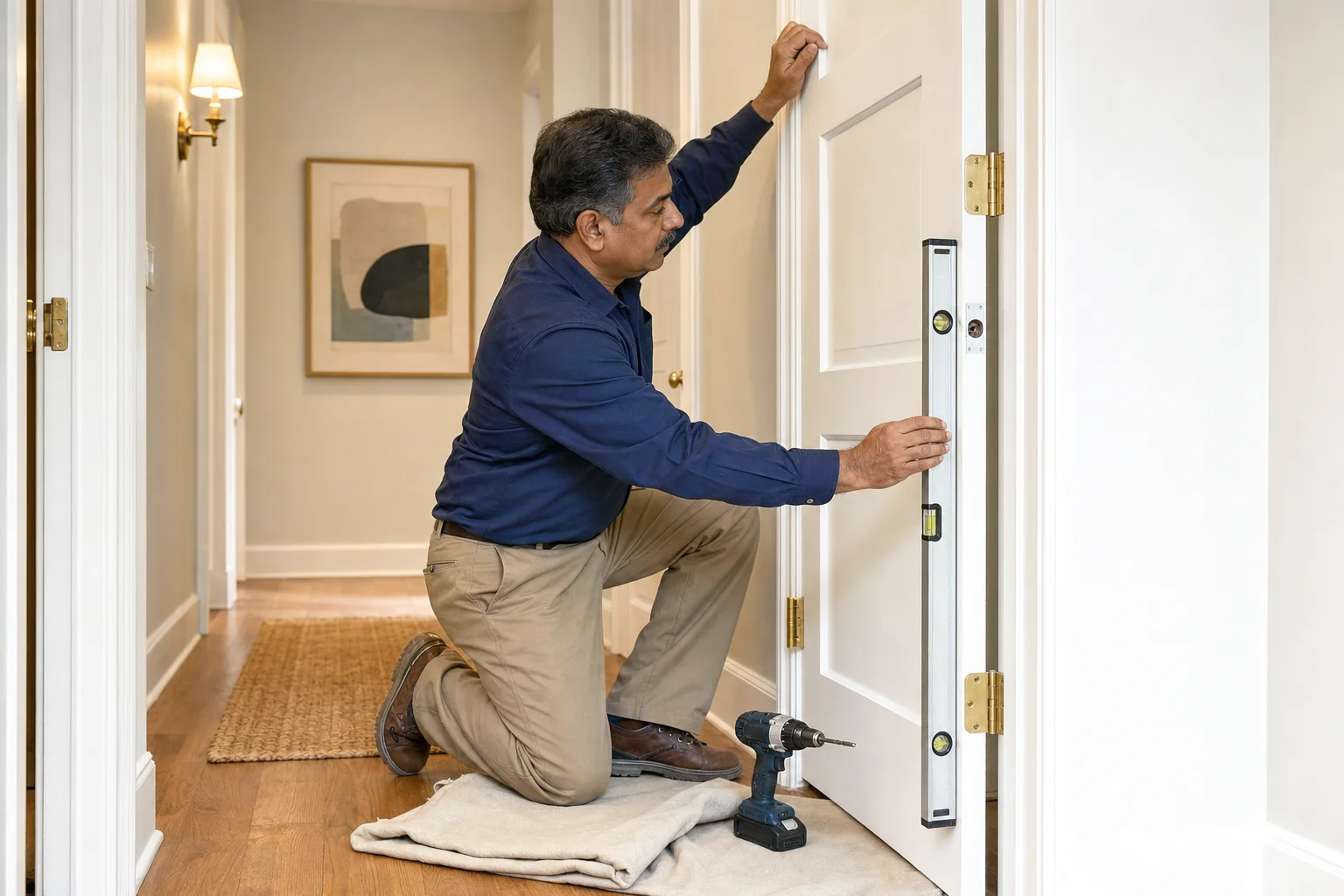
Illustrative image Repairs & Maintenance
Planned repair visits for the small and mid-size problems that build up in a home or building, from sticking doors to rotted trim and loose railings.
Inspiration
Design inspiration for California projects
Styles, materials and layouts suited to California homes and businesses, to help you picture your own project.
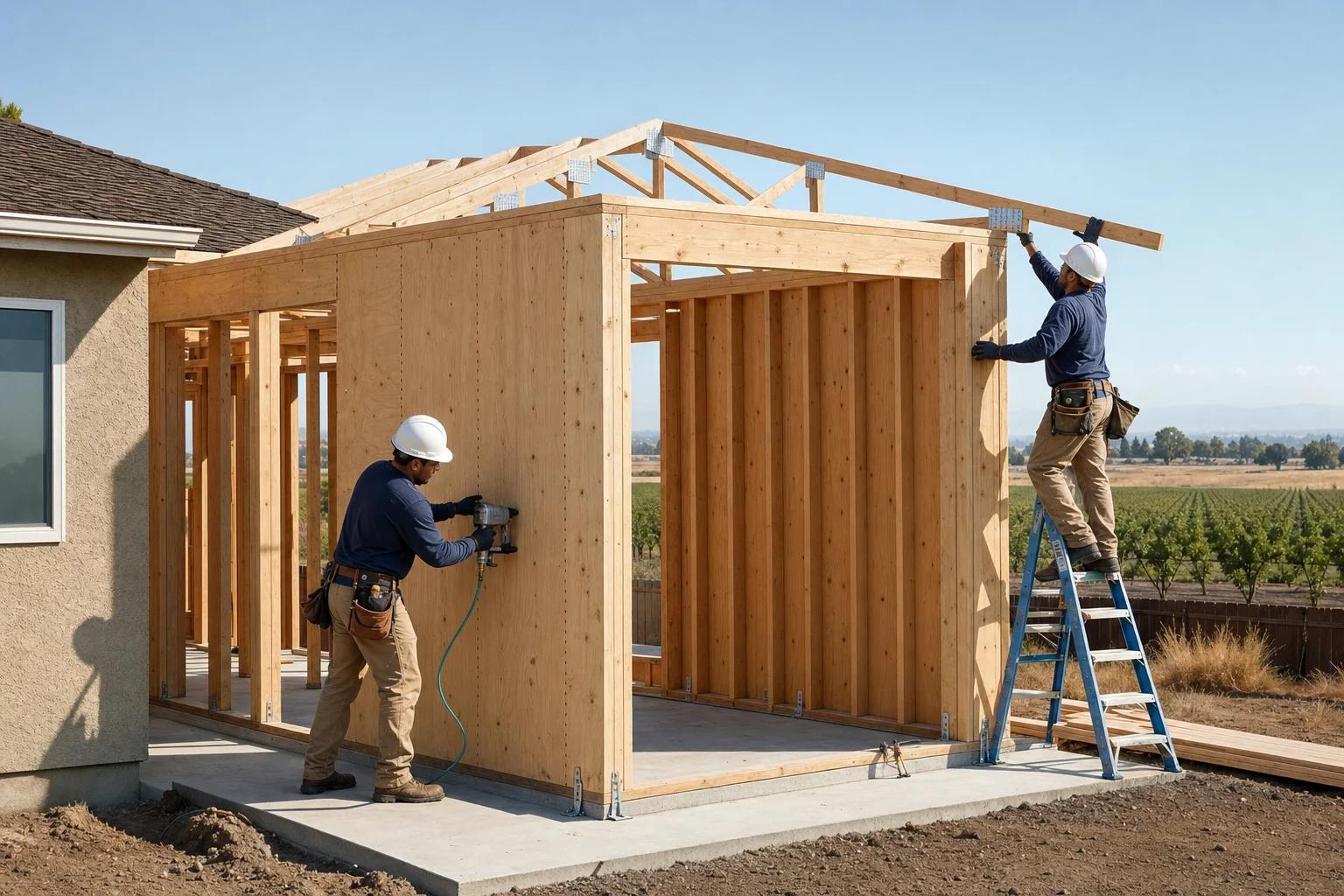
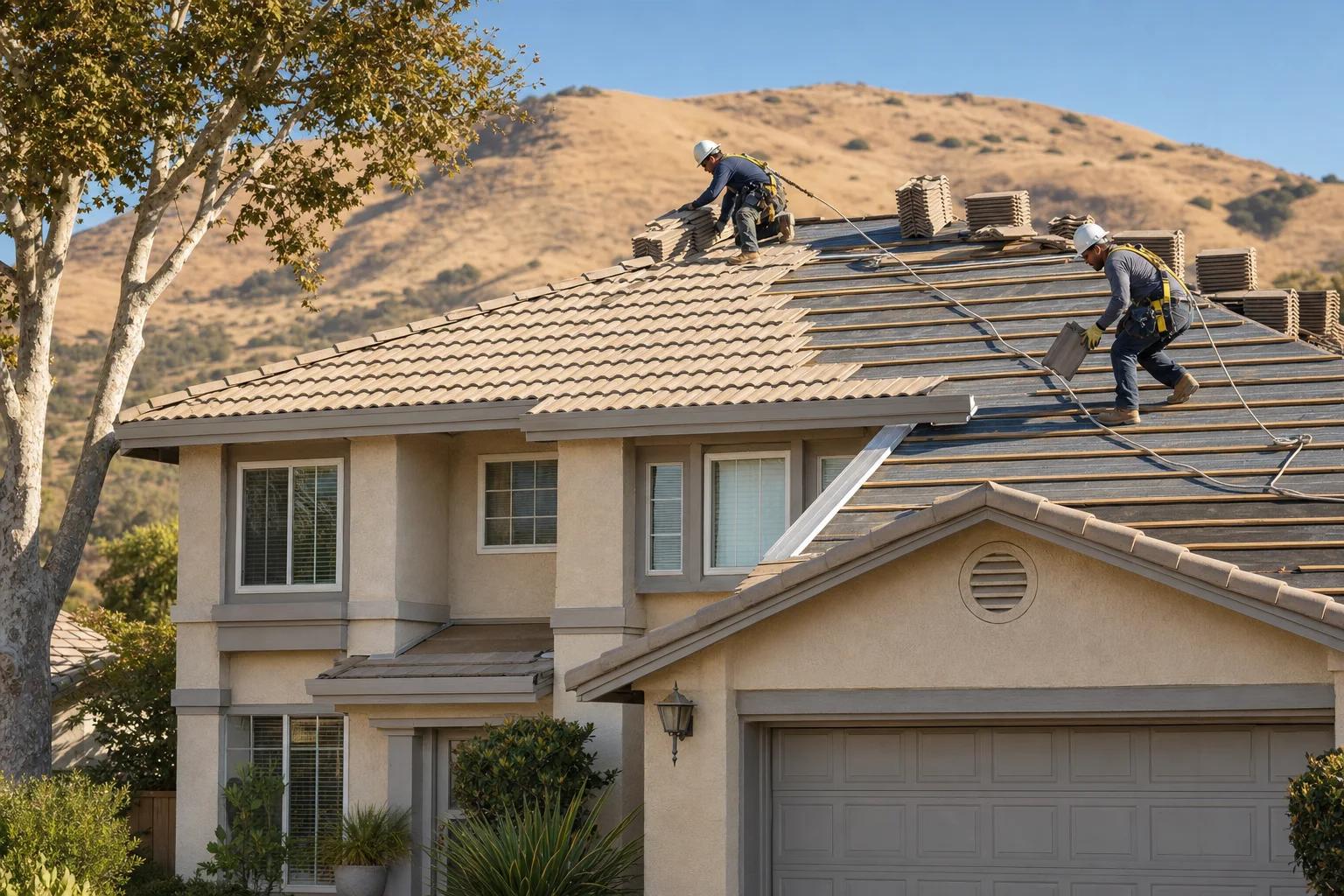
Images are illustrative and created for this website. They are not photographs of completed customer projects.
How it works
Our Simple 4-Step Process
- 1
Consult
Tell us about your project and goals. We review the location, scope and any constraints.
- 2
Plan
We define the scope in writing, confirm selections and identify permits the work may need.
- 3
Build
Work proceeds against the agreed plan, with updates when decisions or changes come up.
- 4
Enjoy
We walk through the finished work with you and hand over care and warranty information.
Questions
California Project FAQs
Do I need a building permit for my remodel in California?
It depends on the work and on your city or county. Each building department sets which jobs need plans, which qualify for simpler permits and which are exempt. For example, Los Angeles issues express permits without plan check for residential kitchen and bathroom remodels with no structural changes, and San Diego offers no-plan permits for similar work that adds no plumbing fixtures and lists permit-exempt work in its Municipal Code. Permit needs are confirmed for your address during planning.
How do I check a contractor's license in California?
Use the Contractors State License Board's online lookup. You can search by license number, business name or personnel name, and you can also look up Home Improvement Salesperson registrations. The results include complaint disclosures. A license is required for jobs with a total price of $1,000 or more, for any job that needs a building permit, and whenever the person doing the work employs others.
When is the best time of year for roofing and other exterior work?
California has a distinct wet season, roughly October through April, and a dry season, roughly May through September. Scheduling roofing, siding and other exterior work in the dry months lowers the chance of rain delays. Interior remodels can be planned any time of year.
My home is in an HOA. What approvals do I need?
If your association's rules require approval before you make a physical change, California Civil Code Section 4765 requires a fair, reasonable and expeditious review. The decision must be in writing, a disapproval must explain why, and you are entitled to reconsideration by the board at an open meeting. The decision also cannot violate a building code. Association approval and the city or county permit are separate steps, so plan for both.
How do I find out if my property is in a fire hazard zone?
CAL FIRE maps Fire Hazard Severity Zones, rated moderate, high or very high, and its FAQ points owners to an online map where a zone can be found by address. The zones mark where defensible space standards and wildland-urban interface building codes are required. Your local building department can confirm which ignition-resistant building rules apply to your project. In Los Angeles, for example, a reroof in a Very High Fire Hazard Severity Zone needs a Class A roof covering.
What energy code rules affect my project?
The California Energy Code (Title 24, Part 6) applies statewide and sets many requirements by climate zone, with 16 zones in all. The 2025 standards took effect on January 1, 2026. Newly built single-family homes generally need a solar photovoltaic system. Los Angeles permit guidance, citing Part 6, notes that replacement windows and doors in residential buildings of three stories or less must be dual-glazed and NFRC-certified.
Sources (13)
- California Legislature (Health and Safety Code Section 17960) · checked 2026-09-24
- California Energy Commission · checked 2026-09-24
- California Energy Commission · checked 2026-09-24
- California Energy Commission · checked 2026-09-24
- CAL FIRE (Frequently Asked Questions About 2020 Fire Hazard Severity Zones, November 2019) · checked 2026-09-24
- Contractors State License Board (press release CSLB #24-21, December 30, 2024) · checked 2026-09-24
- Contractors State License Board · checked 2026-09-24
- California Legislature (Business and Professions Code Section 7048) · checked 2026-09-24
- California Legislature (Civil Code Section 4765) · checked 2026-09-24
- National Integrated Drought Information System (NOAA) · checked 2026-09-24
- Los Angeles Department of Building and Safety (Information Bulletin P/GI 2026-003, effective 01-01-2026, revised 06-10-2026) · checked 2026-09-24
- City of San Diego Development Services Department · checked 2026-09-24
- City of San Diego Development Services Department (Information Bulletin 203) · checked 2026-09-24
Local resources
Planning guides for California
Ready to Start Your California Project?
Tell us what you are planning and where. We'll confirm availability for your address and follow up to talk through scope and next steps.