
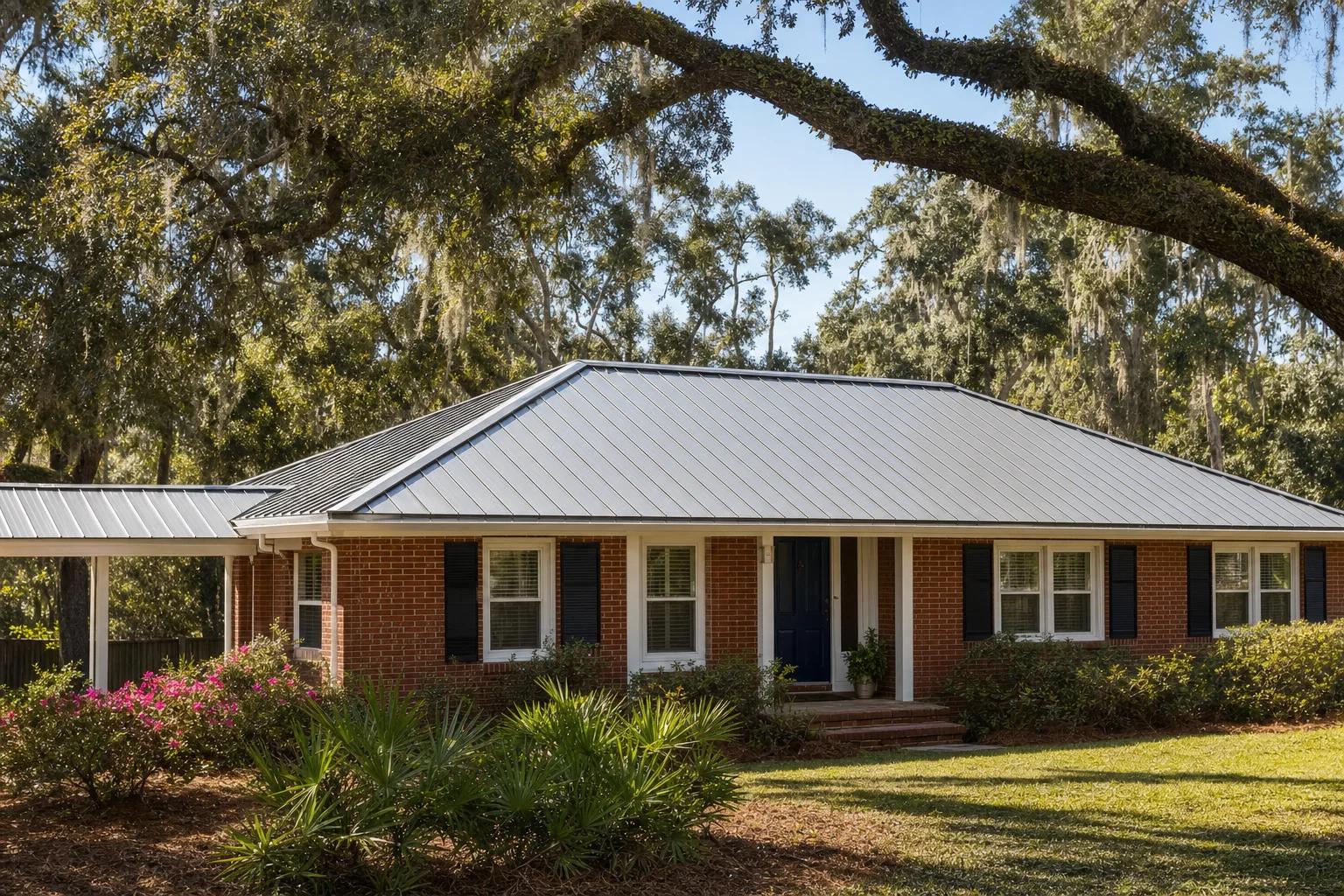
If your Florida home is in a FEMA Special Flood Hazard Area, find out early whether your project counts as a substantial improvement. That happens when the cost of the work equals or exceeds 50 percent of the structure's market value. Then the whole building must meet the local floodplain rules for new construction. Some cities, such as St. Petersburg, use a lower trigger.
What the 50 percent rule says
- Substantial improvement: FEMA defines it as any reconstruction, rehabilitation, addition or other improvement that costs 50 percent or more of the structure's market value before construction starts.
- Substantial damage: damage of any origin where restoring the building to its prior condition would cost 50 percent or more of its market value before the damage.
- Communities in the National Flood Insurance Program adopt rules for new development in Special Flood Hazard Areas. Those rules also apply to existing buildings that are substantially improved or substantially damaged.
St. Petersburg's 49 percent rule
St. Petersburg sets its trigger at 49 percent of pre-damage market value in the Special Flood Hazard Area. It counts repair, reconstruction and improvement costs cumulatively. Drywall, flooring, doors, cabinets and finishes all count, even work you do yourself or with donated materials. Past the trigger, the entire structure must meet current zoning, building and floodplain rules, which may include elevating it.
The city uses the Pinellas County Property Appraiser's value for market value. An owner who disagrees can submit an independent appraisal by a state-licensed appraiser, completed within the last 12 months.
Small-project permit exemptions stop at flood zones
Since July 1, 2026, a new state law has local governments exempt some smaller single-family projects from building permits. The exemption does not apply to property partly or entirely in a flood hazard area. It also does not cover electrical, plumbing, structural, mechanical or gas work, and projects may not be split up to fit under the limit. Orlando asks owners to verify they are not in a flood zone before requesting the exemption.
How to plan a remodel in a flood zone
- Confirm your flood zone first. Tampa, for example, links to flood maps for checking a property's zone.
- Ask the building department how it sets market value and what percentage trigger it uses.
- Track every repair and improvement cost, since some cities add them together over time.
- Get permits before work starts. St. Petersburg warns that unpermitted repairs result in a violation, and says it enforces these rules so that federally backed flood insurance and disaster assistance stay available to residents.
- If the project nears the trigger, weigh a smaller scope against the cost of full compliance, such as elevation.
After a hurricane
The Atlantic hurricane season runs from June 1 to November 30, with most activity between mid-August and mid-October. Storm repairs to a damaged home in a flood zone can trigger the substantial damage rule, so get a damage assessment and permit guidance before rebuilding. Fort Myers notes that its plan review checks flood zone requirements and hurricane provisions, and that the contractor should pull the permit in its own name.
Sources (7)
- Federal Emergency Management Agency (FEMA) · checked 2026-09-24
- City of St. Petersburg · checked 2026-09-24
- Florida Legislature, enrolled text of CS/CS/HB 803 (2026), Chapter 2026-63, amending s. 553.79 and s. 720.3035, Florida Statutes · checked 2026-09-24
- City of Orlando Permits and Inspections · checked 2026-09-24
- City of Tampa Construction Services Division · checked 2026-09-24
- NOAA National Hurricane Center · checked 2026-09-24
- City of Fort Myers Building, Permitting and Inspections · checked 2026-09-24