
Florida Construction Pros
Construction & Remodeling Experts in Florida
Florida Construction Pros plans and builds kitchen and bathroom remodels, roofing, repairs, commercial projects and new homes for Florida property owners. Work here is shaped by the statewide Florida Building Code, the Atlantic hurricane season, flood-zone rules and a housing stock that runs from homes built before 1960 to large multi-unit buildings and homes built since 2000. Each project starts by confirming the permit path, product approvals and any association or flood-zone rules that apply to your address. Service areas in Florida are still being confirmed, so availability is checked before anything is scheduled.
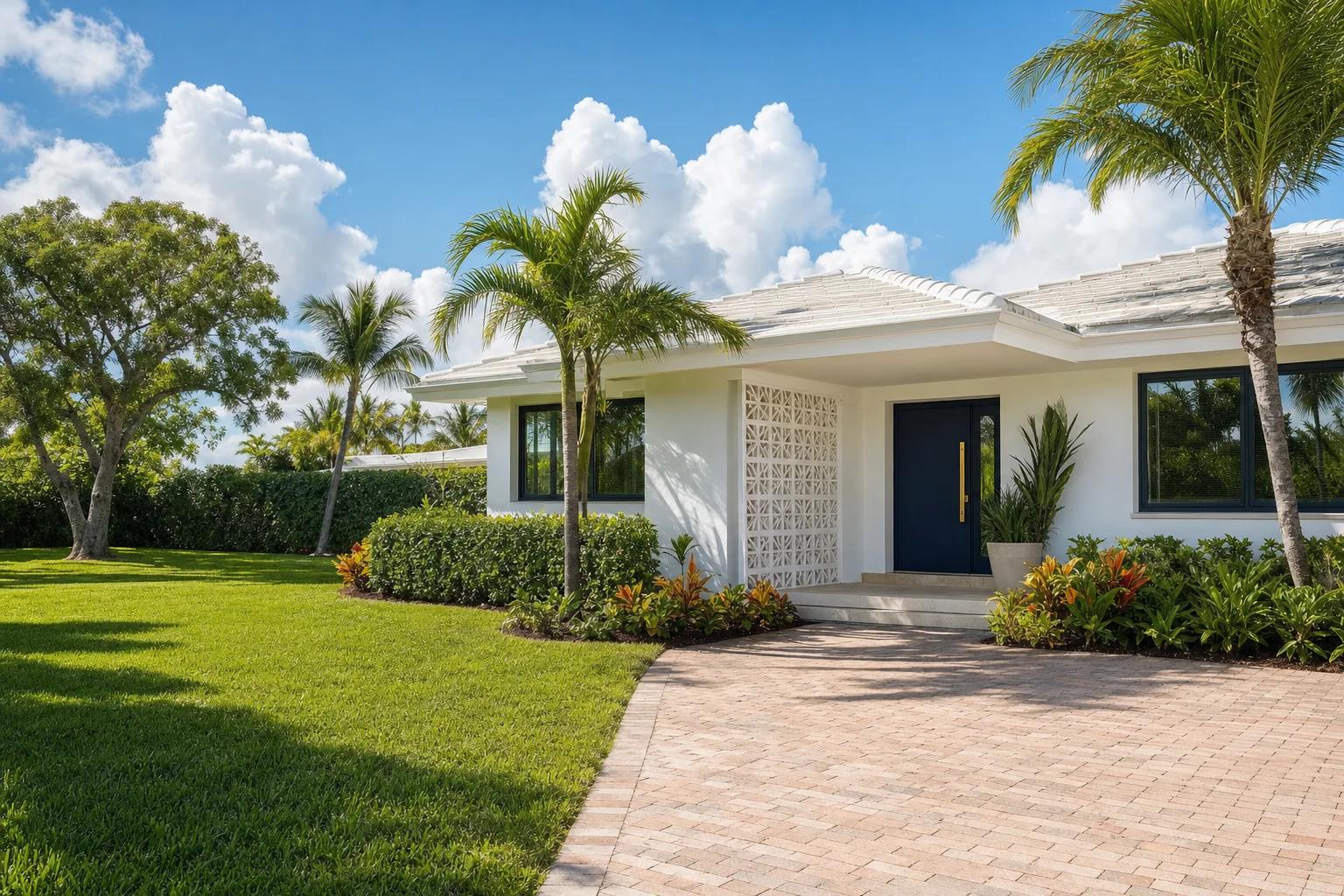
Florida
Construction Pros
Remodeling, roofing and new construction planning for Florida homes and businesses, built around wind, flood and code rules.
Serving communities across Florida
Service areasBuilding in Florida
What shapes a project in Florida
One statewide building code, updated every three years
Florida uses its own Florida Building Code. It applies statewide without each local government having to adopt it. The Florida Building Commission updates it every three years after reviewing the latest International Code Council codes and the National Electrical Code. The 8th Edition (2023) took effect on December 31, 2023. A city or county can strengthen the code with local technical amendments only after an advertised public hearing and a finding of local need, and those amendments last only until the next edition is adopted.
Energy code and climate zones 1 and 2
Florida's residential energy code is based on the 2021 IECC with state amendments and took effect on December 31, 2023. All of Florida falls in IECC climate zones 1 and 2. A study published by the Florida Building Commission uses Miami for zone 1 and Tampa and Jacksonville for zone 2. New homes must be tested for air leakage, with a limit of seven air changes per hour at 50 pascals in both zones. In zone 2, the prescriptive path does not allow electric resistance heat as the primary heating system, and complete equipment replacements face a similar ban, though many small projects can be exempted.
Hurricane season, wind rules and product approvals
The Atlantic hurricane season runs from June 1 to November 30. The peak is around September 10, and most activity falls between mid-August and mid-October. Miami-Dade County is in the High-Velocity Hurricane Zone, where doors, windows, shutters, roofing, truss connectors and prefabricated buildings need county product approval. State law also has a partial-roof rule: if a roof was built, repaired or replaced under the 2007 Florida Building Code or later, and 25 percent or more of it is being repaired, replaced or recovered, only that portion has to meet the current code.
Flood zones and the substantial improvement rule
In FEMA Special Flood Hazard Areas, a remodel, addition or repair whose cost equals or exceeds 50 percent of the structure's market value counts as a substantial improvement, or as substantial damage when a damaged building is restored. The building then has to meet the same local floodplain rules as new construction. Some Florida cities set a lower trigger. St. Petersburg uses 49 percent, counts repair and improvement costs cumulatively, and notes that compliance may include elevating the structure.
Housing stock, sinkholes and termites
The 2024 American Community Survey counted about 10.6 million housing units in Florida. About 55 percent were single-family detached homes, 30 percent were in buildings with two or more units and 8 percent were mobile homes. About 32 percent were built before 1980 and about 36 percent in 2000 or later. Much of the state sits on limestone and other carbonate rock that slightly acidic water slowly dissolves, leaving underground voids that can collapse into sinkholes. The Florida Geological Survey refers owners who want an assessment to a certified home inspector or foundation specialist. Native subterranean termites are found statewide, so older homes should be checked for settlement and wood damage before work is planned.
Sources (12)
- Florida Legislature, Florida Statutes s. 553.73 (2026) · checked 2026-09-24
- Florida Building Commission (floridabuilding.org) · checked 2026-09-24
- U.S. Department of Energy, Building Energy Codes Program · checked 2026-09-24
- Florida Solar Energy Center report published by the Florida Building Commission · checked 2026-09-24
- U.S. Census Bureau, American Community Survey 2024 1-year, tables B25024 and B25034 (via Census Reporter API) · checked 2026-09-24
- Florida Legislature, Florida Statutes s. 553.844 (2026) · checked 2026-09-24
- Florida Department of Environmental Protection, Florida Geological Survey · checked 2026-09-24
- University of Florida IFAS Extension (EDIS publication ENY-2079/IN1360) · checked 2026-09-24
- Federal Emergency Management Agency (FEMA) · checked 2026-09-24
- NOAA National Hurricane Center · checked 2026-09-24
- Miami-Dade County news release, April 30, 2025 · checked 2026-09-24
- City of St. Petersburg · checked 2026-09-24
Licensing & permits
Verify any contractor in Florida
Contractor licensing
Florida Department of Business and Professional Regulation (DBPR), Construction Industry Licensing Board
Florida licenses construction contractors at the state level through the Construction Industry Licensing Board. A certified license lets a contractor work anywhere in Florida. A registered license is limited to the local jurisdictions where the contractor met competency requirements. License categories include general, building and residential contractors, plus trades such as roofing, plumbing, air-conditioning, mechanical and pool contractors. A residential contractor is limited to one-, two- and three-family homes with no more than two habitable stories above at most one uninhabitable story. Electrical contractors are licensed by a separate state board. A narrow exemption covers minor jobs under $2,500 in total, but not work that is part of a larger job or split up to avoid licensing. Owners who personally supervise work on their own one- or two-family home for their own use can act as owner-builders after signing a disclosure statement; selling or leasing the home within a year of completion creates a presumption that the work was done for sale or lease. Before hiring any contractor, ask for the license number and check it on the DBPR license search.
Check a contractor’s status (opens the official Florida site in a new tab)Building permits
Permits in Florida
Florida law requires a permit to build, alter, repair or demolish a building unless the law provides an exemption. Permits are issued by the building department of the city or county where the property is located, such as the City of Miami Building Department or Tampa's Construction Services Division. These offices enforce the statewide Florida Building Code and any local technical amendments. Since July 1, 2026, owners of single-family homes, or their contractors, can skip the permit for work valued under $7,500 by filing a written request with a contract or other proof of the work's nature and value. The exemption does not cover electrical, plumbing, structural, mechanical or gas work, or any property partly or fully in a flood hazard area, and a project cannot be split up to fit under the limit. Some departments, such as St. Petersburg's, treat window and door replacement, roofing, soffit, fascia and siding as structural work. Many jobs also need a notice of commencement recorded and posted on site before the first inspection. Permit needs are confirmed for your address during planning.
Sources (12)
- Florida Legislature, Florida Statutes s. 553.73 (2026) · checked 2026-09-24
- Florida Legislature, Florida Statutes s. 489.103 (2026) · checked 2026-09-24
- Florida Legislature, Florida Statutes s. 489.105 · checked 2026-09-24
- Florida DBPR, Construction Industry Licensing Board · checked 2026-09-24
- Florida DBPR, Electrical Contractors' Licensing Board · checked 2026-09-24
- Florida DBPR Online Services, License Search · checked 2026-09-24
- Florida Legislature, Florida Statutes s. 713.13 (2026) · checked 2026-09-24
- The Florida Senate, CS/CS/HB 803 (2026) bill history · checked 2026-09-24
- Florida Legislature, enrolled text of CS/CS/HB 803 (2026), Chapter 2026-63, amending s. 553.79 and s. 720.3035, Florida Statutes · checked 2026-09-24
- City of Miami Building Department · checked 2026-09-24
- City of Tampa Construction Services Division · checked 2026-09-24
- City of St. Petersburg Construction Services and Permitting Division · checked 2026-09-24
Our services
Construction & Remodeling Services in Florida
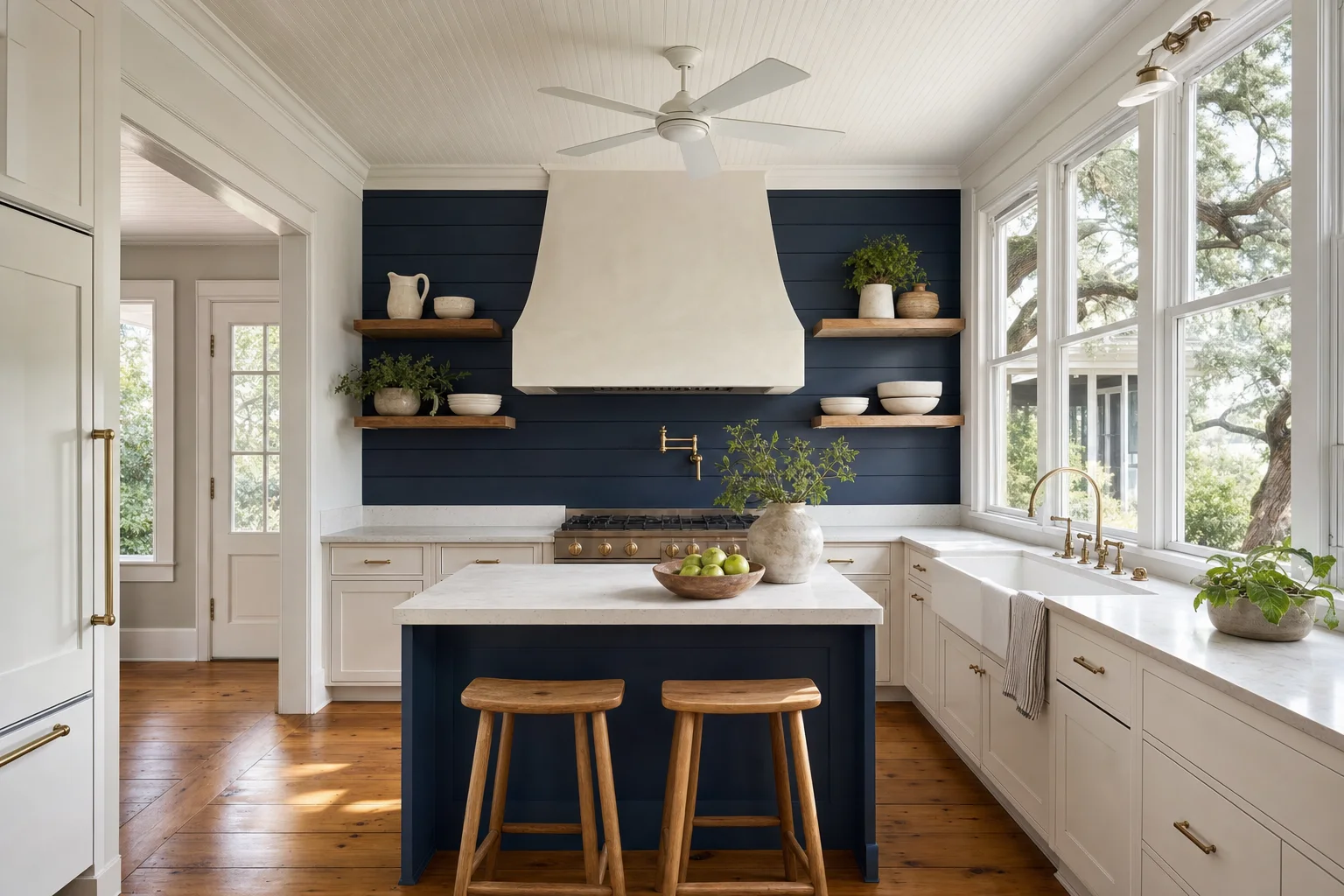
Illustrative image Kitchen Remodeling
Kitchen remodels that update the layout, cabinets, counters, lighting and finishes, planned around how you cook and use the room.
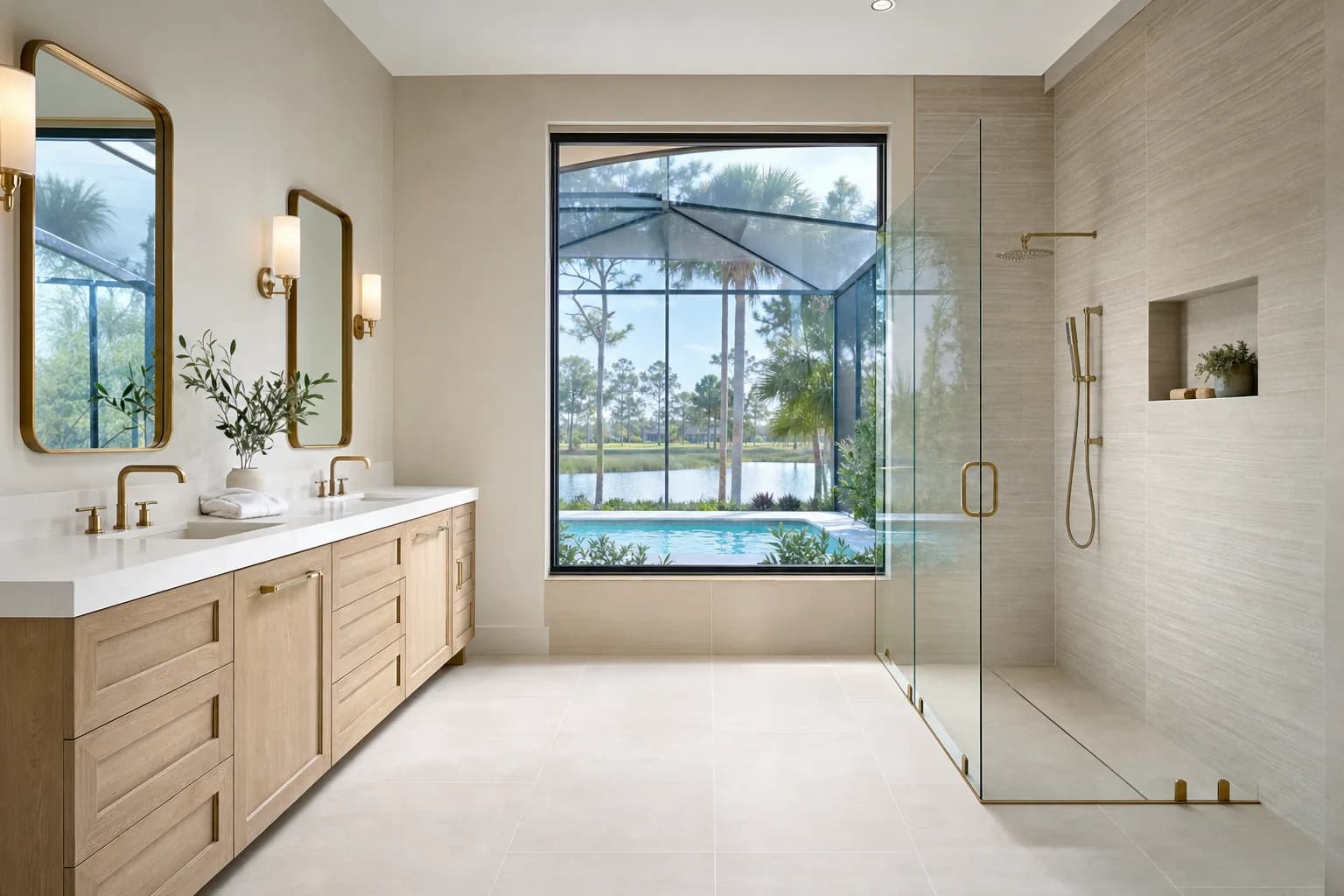
Illustrative image Bathroom Remodeling
Bathroom remodels built on sound waterproofing and ventilation, with fixtures and finishes that fit who uses the room.
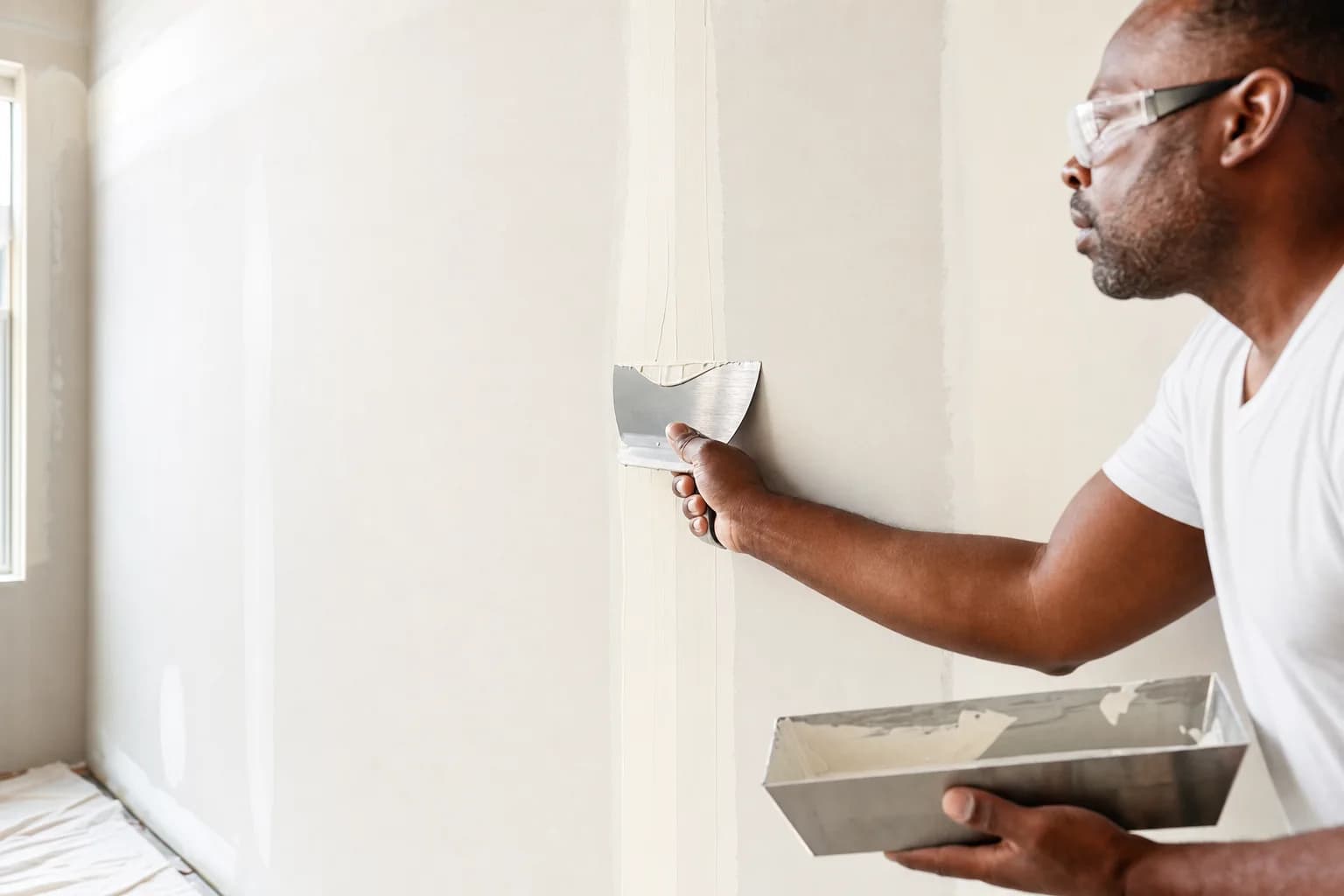
Illustrative image Repairs & Maintenance
Planned repair visits for the small and mid-size problems that build up in a home or building, from sticking doors to rotted trim and loose railings.
Inspiration
Design inspiration for Florida projects
Styles, materials and layouts suited to Florida homes and businesses, to help you picture your own project.
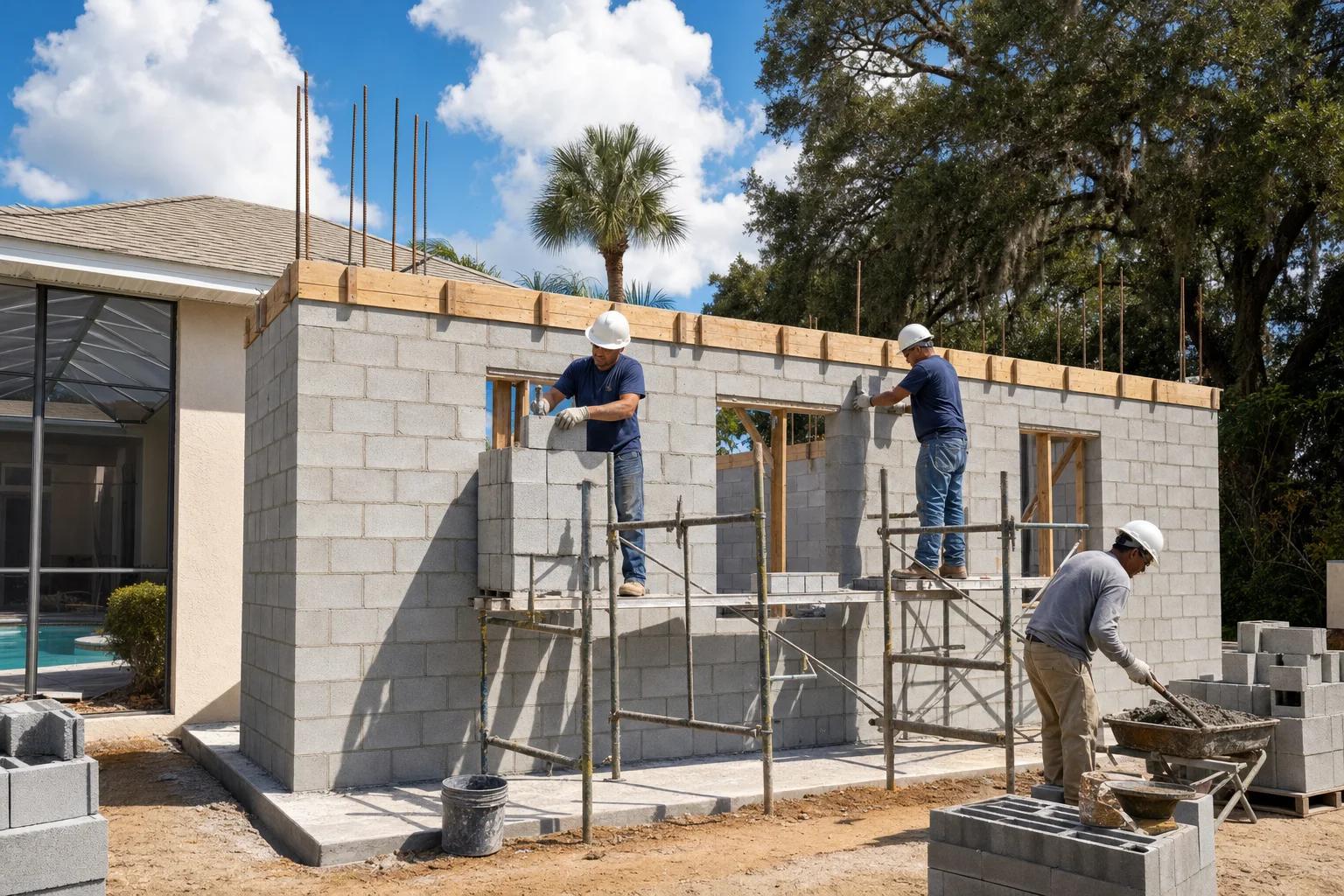
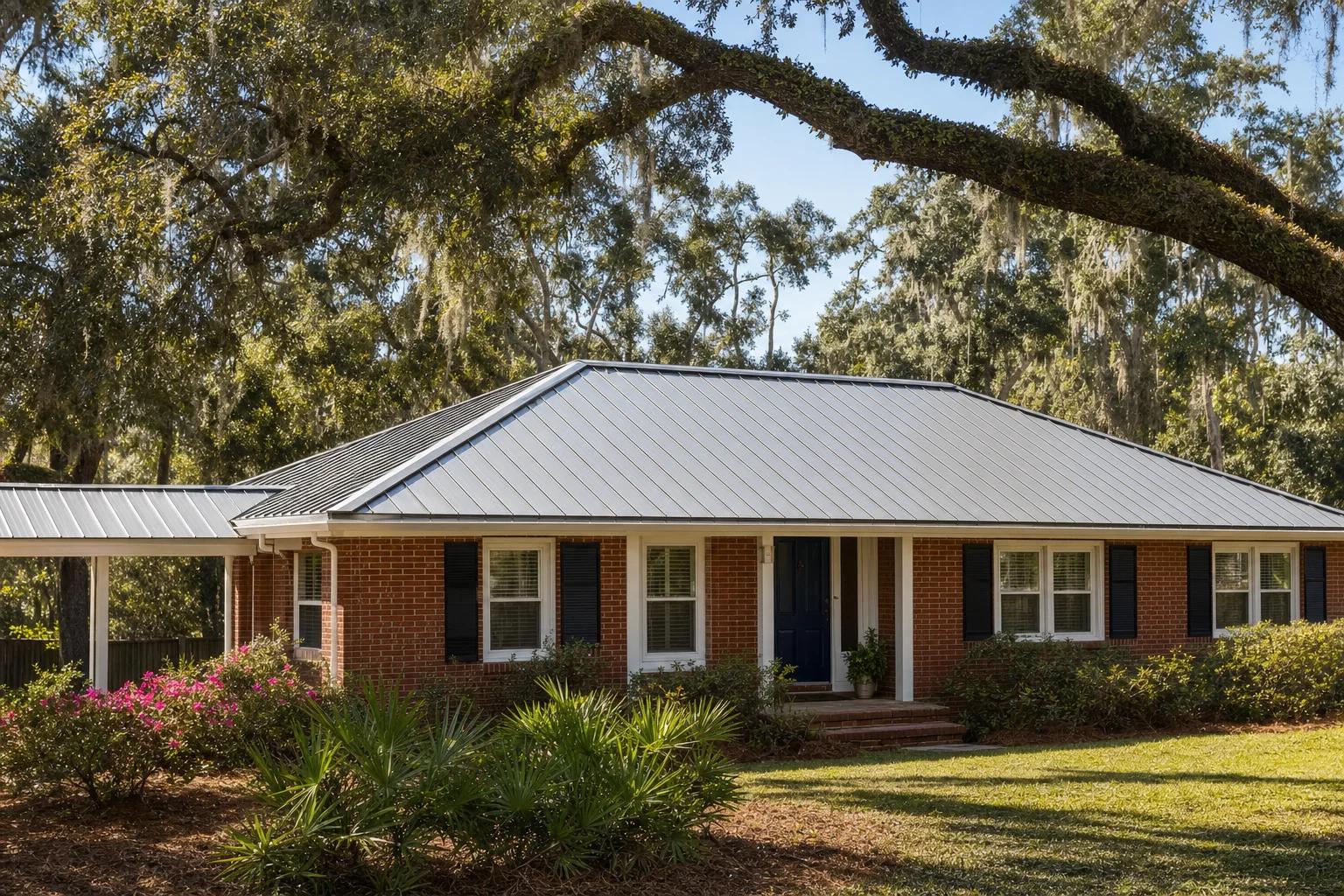
Images are illustrative and created for this website. They are not photographs of completed customer projects.
How it works
Our Simple 4-Step Process
- 1
Consult
Tell us about your project and goals. We review the location, scope and any constraints.
- 2
Plan
We define the scope in writing, confirm selections and identify permits the work may need.
- 3
Build
Work proceeds against the agreed plan, with updates when decisions or changes come up.
- 4
Enjoy
We walk through the finished work with you and hand over care and warranty information.
Questions
Florida Project FAQs
How do I check a Florida contractor's license?
Use the DBPR license search, which lets anyone look up a license by name, license number, city or county, or license type. For construction contractors, certified license codes begin with the letter C and are valid statewide. Registered license codes begin with R and are valid only in the local jurisdictions where the contractor registered, so confirm the license covers the city or county where your project is.
Do I need a permit for a small remodel in Florida?
It depends on the work and the property. Since July 1, 2026, owners of single-family homes can skip the permit for work valued under $7,500, but only after filing a written request with a contract or other proof of the work's nature and value. The exemption does not cover electrical, plumbing, structural, mechanical or gas work, or property in a flood hazard area. St. Petersburg counts window and door replacement, roofing, soffit, fascia and siding as structural work. Orlando says it reviews exemption requests within five business days. The local building department has the final say.
Can my HOA block hurricane upgrades like impact windows or a new roof?
Florida law requires homeowners' associations to adopt hurricane protection specifications, and they may not deny an application for hurricane protection that meets those specifications. Hurricane protection includes roof systems recognized by the Florida Building Code that meet ASCE 7-22 standards, permanent fixed and roll-down storm shutters, impact-resistant windows and doors, and reinforced garage doors. Since July 1, 2026, an association also may not require a building permit before it reviews your application. Read your community's declaration and submit plans early.
How does hurricane season affect exterior project timing?
The Atlantic hurricane season runs from June 1 to November 30. The peak is around September 10, and most activity falls between mid-August and mid-October. Roofing, window and other exterior work that leaves a building open is easier to plan outside that peak. If work must happen during the season, plan how the site will be secured if a storm approaches.
My home is in a flood zone. What changes for a remodel?
If the home is in a FEMA Special Flood Hazard Area and the cost of the work equals or exceeds 50 percent of the structure's market value, the building must meet the local flood rules for new construction. Some cities use a lower trigger. St. Petersburg uses 49 percent, counts costs cumulatively, and uses the county property appraiser's value unless you submit a recent independent appraisal. Check your flood zone before setting the scope.
What should I have ready before planning a project?
Have the property address, any existing plans or survey, your HOA or condominium rules, your flood zone, and photos of the areas involved. For many jobs, Florida lien law also requires the owner or the owner's authorized agent to record a notice of commencement and post it on site before the first inspection.
Sources (11)
- Florida DBPR, Construction Industry Licensing Board · checked 2026-09-24
- Florida DBPR Online Services, License Search · checked 2026-09-24
- Florida Legislature, Florida Statutes s. 713.13 (2026) · checked 2026-09-24
- Florida Legislature, Florida Statutes s. 720.3035 (2026) · checked 2026-09-24
- Federal Emergency Management Agency (FEMA) · checked 2026-09-24
- NOAA National Hurricane Center · checked 2026-09-24
- The Florida Senate, CS/CS/HB 803 (2026) bill history · checked 2026-09-24
- Florida Legislature, enrolled text of CS/CS/HB 803 (2026), Chapter 2026-63, amending s. 553.79 and s. 720.3035, Florida Statutes · checked 2026-09-24
- City of Orlando Permits and Inspections · checked 2026-09-24
- City of St. Petersburg Construction Services and Permitting Division · checked 2026-09-24
- City of St. Petersburg · checked 2026-09-24
Local resources
Planning guides for Florida
Ready to Start Your Florida Project?
Tell us what you are planning and where. We'll confirm availability for your address and follow up to talk through scope and next steps.