
Oregon Construction Pros
Repairs & Maintenance in Oregon
Oregon context
Planning repairs & maintenance in Oregon
One statewide code for every city
Homes are built to the 2023 Oregon Residential Specialty Code, which is based on the 2021 International Residential Code and became mandatory on April 1, 2024. Commercial buildings follow the 2025 Oregon Structural Specialty Code, based on the 2024 International Building Code, which became mandatory on April 1, 2026. State law makes the building code uniform statewide, and a city or county cannot enforce different requirements on the same matters unless the state's building codes director authorizes it.
Wet west, dry east, two climate zones
West of the Cascades, rain falls often from October to May, while the eastern side of the state is much drier. The U.S. Department of Energy's county guide places western counties such as Multnomah, Marion, Lane, Benton and Jackson in marine climate zone 4C, and Deschutes and the other eastern counties in cold zone 5B. Residential energy rules are part of the state residential code, which the Department of Energy rates as equivalent to the 2021 IECC. Commercial energy rules follow ASHRAE 90.1-2022.
Cascadia earthquake risk
The Cascadia Subduction Zone is a 700-mile fault about 70 to 100 miles off the Pacific coast, and its last major earthquake struck on January 26, 1700. The Oregon Department of Emergency Management estimates about a 37 percent chance of a magnitude 7.1 or larger earthquake on this fault in the next 50 years. Foundation anchoring and wall bracing are worth reviewing on new construction and major remodels.
Sources (8)
- Oregon Building Codes Division · checked 2026-09-24
- Oregon Building Codes Division · checked 2026-09-24
- Oregon Building Codes Division · checked 2026-09-24
- Oregon State Legislature · checked 2026-09-24
- U.S. Department of Energy, Building Energy Codes Program · checked 2026-09-24
- U.S. Department of Energy, Building America · checked 2026-09-24
- Oregon Department of Emergency Management · checked 2026-09-24
- NOAA National Centers for Environmental Information / NCICS State Climate Summaries · checked 2026-09-24
Permits
Small like-for-like repairs, such as replacing trim, patching drywall or rehanging a door, often do not need a permit. Work that changes structure, rebuilds a significant part of a deck or stair, or alters electrical, plumbing, gas or mechanical systems commonly does. Requirements vary by city and county, and the local building department confirms what applies. Any required permit should be in place before that work starts.
Contractor licensing
Oregon Construction Contractors Board (CCB)
Oregon requires a Construction Contractors Board license for anyone paid to do construction work that improves real property, including roofing, siding, painting, carpentry, flooring, concrete, heating and cooling, and handyman work. Licensing requires at least 16 hours of pre-license training and a passed exam, a surety bond, liability insurance, and workers' compensation insurance if the business has employees. Only contractors licensed for lead-based paint renovation may bid or work on homes built before 1978, and electrical and plumbing licenses are issued separately by the state Building Codes Division. Before you hire anyone, look up the license on the CCB search. The CCB says a license check shows whether the contractor is actively licensed and bonded and whether proof of liability insurance was submitted.
Check a contractor’s status (opens the official Oregon site in a new tab)Building permits
Permits in Oregon
Building permits in Oregon come from local building departments. Cities that run their own program issue permits inside city limits, the county building department serves most unincorporated areas, and the state steps in where no local program exists. Every department enforces the same statewide specialty codes, but zoning, land-use and project-specific permit questions are handled locally, and some jurisdictions have adopted optional provisions such as the wildfire standards. Permit needs vary by jurisdiction and by project, so they are confirmed for your address during planning, before work is scheduled.
Sources (8)
- Oregon State Legislature · checked 2026-09-24
- Oregon Building Codes Division · checked 2026-09-24
- Oregon Building Codes Division · checked 2026-09-24
- Oregon Construction Contractors Board · checked 2026-09-24
- Oregon Construction Contractors Board · checked 2026-09-24
- Oregon Construction Contractors Board · checked 2026-09-24
- Oregon Construction Contractors Board · checked 2026-09-24
- Oregon Building Codes Division · checked 2026-09-24
What’s included
Repairs & Maintenance in Oregon: scope and options
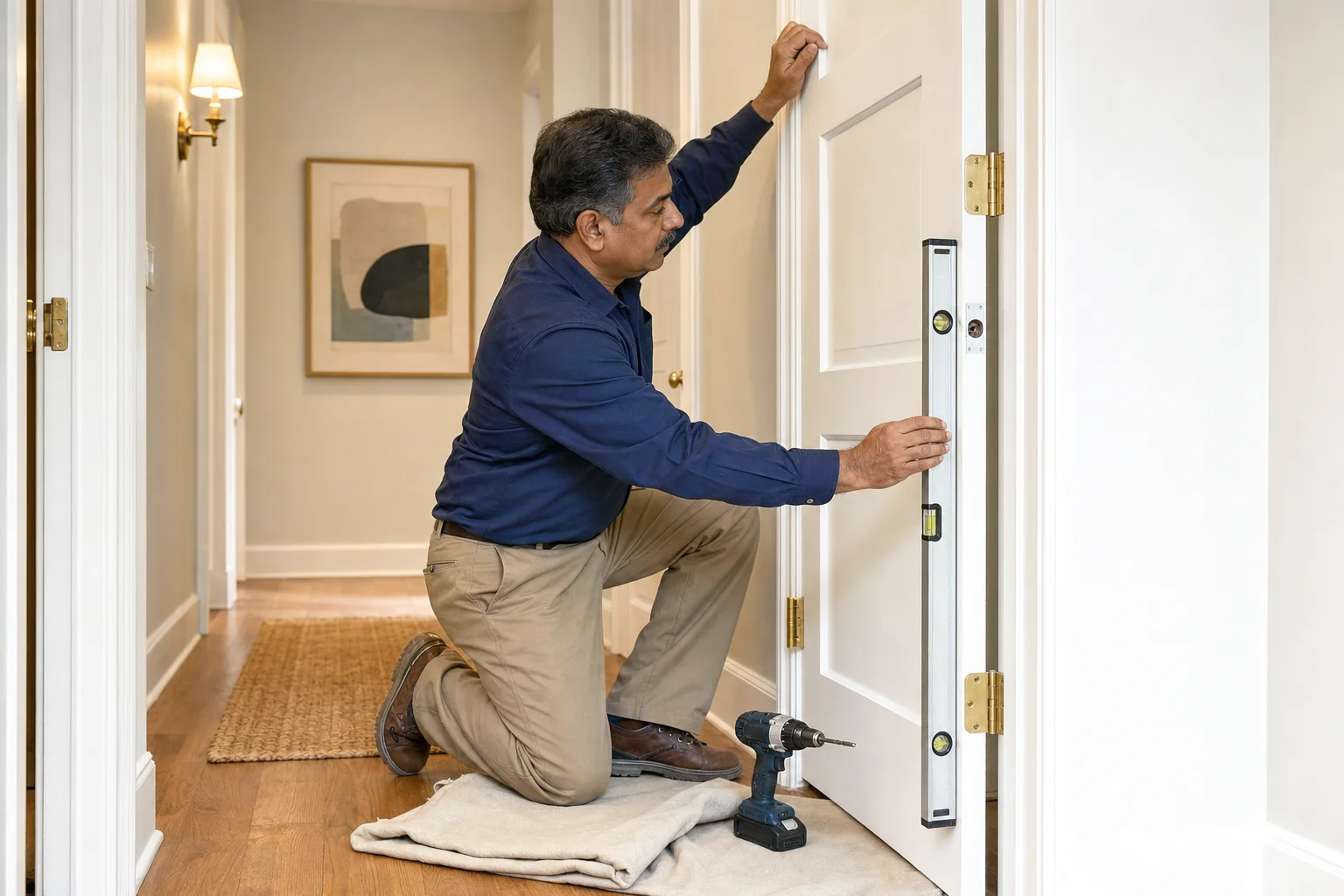
- Interior and exterior door repair: sticking doors, latches, hinges, strike plates, thresholds and weatherstripping
- Trim, baseboard and casing repair or replacement
- Small drywall and plaster patches, ready for paint
- Exterior wood repair: rotted fascia, trim, window sills and siding boards replaced, primed and sealed
- Deck and stair repair: loose boards, treads, railings, balusters and fasteners
- Caulking and sealing around tubs, showers, windows and exterior wall penetrations
- Like-for-like replacement of towel bars, shelving, cabinet hardware and closet systems
- Seasonal walk-arounds covering the exterior, gutters and downspouts, sealants and moving parts
Common options
- Single repair visit
- One defined problem, such as a failed door threshold or a cracked stair tread, scoped and fixed in one trip when the parts are on hand.
- Repair list visit
- You send a list, we review it with photos or a walk-through, group items by area and material, and plan one or more visits to work through it in order.
- Seasonal maintenance plan
- A recurring spring and fall check of the exterior, wet areas and moving parts, with a written list of what needs attention now and what can wait.
- Pre-sale or move-in punch list
- Repairs drawn from a home inspection report or a walk-through before listing or moving in, ordered by safety first and then by what buyers or occupants will notice.
- Rental or commercial turnover repairs
- Wall, door, trim and fixture repairs between tenants, planned around move-out and move-in dates.
What this service does not cover
- Electrical, plumbing, gas and HVAC repairs beyond simple like-for-like fixture swaps, which are handled by appropriately licensed trades.
- Emergency response to active leaks, fire or storm damage. Stop the source if it is safe to do so and contact your insurer first.
- Testing or removal of lead-based paint, asbestos or mold, which is done by certified specialists.
- Structural repairs to foundations, beams or load-bearing walls without an engineer's assessment when one is needed.
- Items that are not on the agreed list. New findings are written up and approved by you before any added work.
Budget planning
What affects cost
Number and spread of items
Several repairs in one area take less setup and cleanup than the same number spread across the house and exterior.
Access
Second-story trim, crawlspaces and tight attics need ladders, staging or extra protection, which adds time.
Hidden damage
Rot, water staining and insect damage often run past what is visible. Once a board or panel is opened, the scope can change, and we confirm with you before going further.
Matching existing materials
Older trim profiles, discontinued siding and custom hardware can take longer to source, or may need to be milled or adapted to fit.
Replacement material
Replacing a rotted board with primed wood, PVC or composite trim changes both the material cost and how long the repair holds up.
Finish level
Leaving repairs primed costs less than full painting and color matching, which can also need return trips for drying time.
Age of the building
In homes built before 1978, work that disturbs painted surfaces calls for lead-safe work practices, which add setup, containment and cleanup.
Scheduling
What affects the schedule
- How many items are on the list and whether they need different materials
- Special-order parts, custom trim profiles or hard-to-match materials
- Weather for exterior repairs, since sealants and paint need dry conditions and suitable temperatures to cure
- Drying time for patching compound, wood filler, primer and paint between coats
- Occupied rooms, tenants or business hours that limit when work can happen
- Whether a repair uncovers damage that needs its own scope
How to prepare
- Write down every item, even small ones, with its room or location. Photos help.
- Share any home inspection report, product manuals or paint colors you have on file.
- Clear a path to each repair and move fragile items and furniture away from the work area.
- Know where your main water shutoff and electrical panel are in case a fixture swap needs them turned off.
- Keep pets and children away from work areas while tools are in use.
- Tell us if the building was built before 1978, since that changes how painted surfaces are handled.
Process
How Repairs & Maintenance Projects Work
- 1
Consult
You send your list, photos or inspection report. We walk the items with you, flag anything that points to a larger problem, and separate urgent repairs from ones that can wait.
- 2
Plan
We group items by area and material, confirm what gets replaced and what gets patched, order parts, and give you a written scope that lists each item.
- 3
Build
Repairs are completed in the agreed order with floors and furniture protected. If opening a wall or board shows more damage, we stop, show you, and agree on the change before continuing.
- 4
Enjoy
We go through the list with you item by item, leave the work areas clean, and note anything worth watching at the next seasonal check.
Questions
Repairs & Maintenance FAQs
What counts as a repair instead of a remodel?
A repair restores something to working order with similar materials, such as replacing a rotted sill or rehanging a door. A remodel changes the layout, function or finishes of a room. If your list starts to change how a space works, we will say so and scope it as a remodel instead.
Can you handle a long list of small repairs at once?
Yes. A full list is the most efficient way to use a repair visit. Send every item with photos. We group items by area and material, and a longer list may be split into more than one visit so parts and drying time line up.
Do repair visits include plumbing and electrical work?
Simple like-for-like swaps may fit into a repair visit where local rules allow. Anything that changes wiring, circuits, supply lines, drains or gas lines is handled by appropriately licensed trades and often needs a permit.
What happens if you find more damage than expected?
We stop, show you what we found with photos, explain the options, and write up the added work. Nothing outside the agreed list is done without your approval.
Is there anything different about repairs in an older home?
Yes. Homes built before 1978 may contain lead-based paint, and EPA requires anyone paid to disturb painted surfaces in those homes to be certified and to use lead-safe work practices. EPA also notes that older textured paints and patching compounds on walls and ceilings may contain asbestos.
Is seasonal maintenance worth scheduling?
Small problems like failed caulk, a clogged downspout or a split trim board let water in. Water damage is usually more involved to repair than the gap that caused it. A spring and fall check catches these problems while they are still small.
Ready to Plan Repairs & Maintenance in Oregon?
Share the scope and the address. We'll confirm availability and follow up to talk through options and next steps.