
Tennessee Construction Pros
Construction & Remodeling Experts in Tennessee
Tennessee Construction Pros plans and builds kitchen and bathroom remodels, roofing, repairs, commercial projects and new homes for Tennessee homeowners and businesses. Conditions change across the state: West Tennessee faces earthquake risk from the New Madrid seismic zone, Nashville has seen record two-day rainfall and a tornado with the longest path on record in Middle Tennessee, and in Memphis and Knoxville more than half of homes were built before 1980. Each project is planned to the code edition your local building department enforces, which can differ from city to city. Service in your area is still being confirmed, so we check your project address before anything is scheduled.
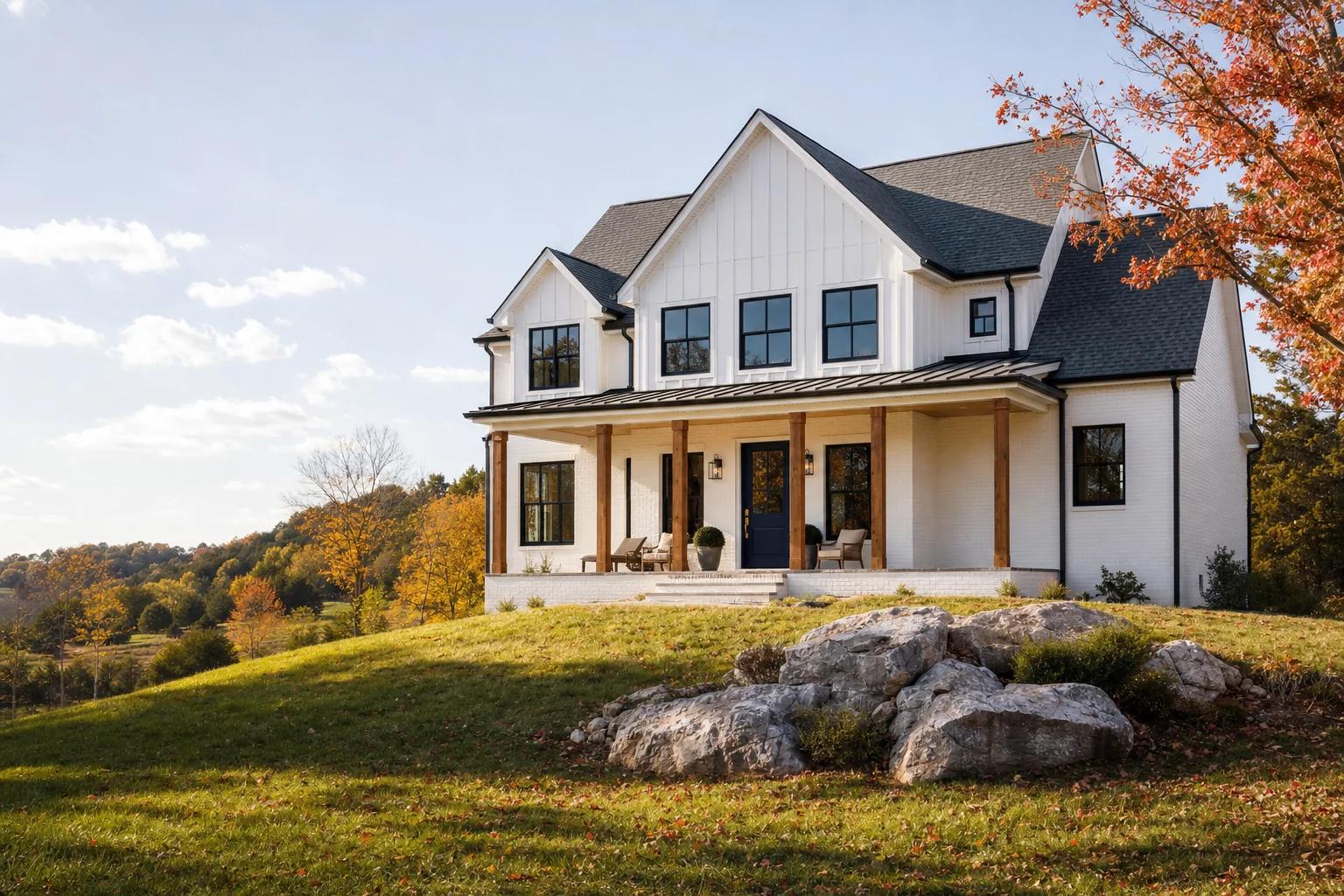
Tennessee
Construction Pros
Remodeling, roofing, repairs and new construction planned around Tennessee's local codes, storms and housing stock.
Serving communities across Tennessee
Service areasBuilding in Tennessee
What shapes a project in Tennessee
State minimum codes, local enforcement in larger cities
Tennessee's State Fire Marshal's Office sets statewide minimum codes. On April 17, 2025, the state moved to the 2021 International Building Code with state amendments, while homes remain under the 2018 International Residential Code. Cities approved as exempt jurisdictions, including Nashville, Memphis, Knoxville, Chattanooga, Clarksville, Murfreesboro, Jackson and Johnson City, do their own plan review and inspections for buildings that would otherwise need State Fire Marshal approval. They must adopt codes within seven years of the most current published edition, so the edition in force varies by city. Metro Nashville lists the 2024 International Codes, while Chattanooga, Clarksville and Johnson City list 2018 editions.
Energy code and climate zones
For homes, Tennessee's statewide energy code is the 2018 IECC with state amendments, in effect since July 16, 2020, and the commercial energy code moved to the 2021 IECC on April 17, 2025. On the 2018 map, 14 West Tennessee counties, including Shelby and Madison, are in climate zone 3A and the rest of the state is in zone 4A. The 2021 map moved 21 counties, including Davidson, Rutherford, Williamson and Hamilton, from zone 4A to 3A. Confirm the edition and zone your local building department applies before insulation, window and HVAC choices are made.
Tornadoes and flash flooding
On March 3, 2020, a tornado with a 60-mile path, the longest in Middle Tennessee since records began in 1950, reached EF-3 strength in East Nashville. In May 2010, 13.57 inches of rain fell at Nashville over two days and the Cumberland River crested at 52.55 feet. Plan roofing, windows and site drainage with storm exposure in mind, and check your address on FEMA's flood maps before planning additions, lower-level rooms or equipment locations.
Earthquake design in West Tennessee
The U.S. Geological Survey says many structures in Memphis and other central Mississippi River Valley communities are vulnerable to severe ground shaking from the New Madrid seismic zone. Local design values reflect this: the City of Jackson's construction guide lists Seismic Design Category D1 for homes, along with a 13-inch frost line and moderate-to-heavy termite exposure. Additions, new homes and major structural changes in West Tennessee should be designed with these values in mind.
Housing age and type
Census estimates for 2024 show about 39% of Tennessee homes were built before 1980, and about 7.5% are mobile homes. In homes, child care facilities and kindergartens built before 1978, firms that disturb painted surfaces must be EPA- or state-certified and follow lead-safe work practices. Plan time and budget for conditions found once walls, floors or ceilings are opened.
Sources (16)
- Tennessee Department of Commerce & Insurance, State Fire Marshal's Office · checked 2026-09-24
- Tennessee Department of Commerce & Insurance, State Fire Marshal's Office · checked 2026-09-24
- U.S. Department of Energy, Building Energy Codes Program · checked 2026-09-24
- Pacific Northwest National Laboratory for the U.S. Department of Energy · checked 2026-09-24
- U.S. Geological Survey · checked 2026-09-24
- National Weather Service, Nashville · checked 2026-09-24
- National Weather Service, Nashville · checked 2026-09-24
- Federal Emergency Management Agency · checked 2026-09-24
- U.S. Environmental Protection Agency · checked 2026-09-24
- U.S. Census Bureau, American Community Survey 2024 1-year (table B25034, via Census Reporter) · checked 2026-09-24
- U.S. Census Bureau, American Community Survey 2024 1-year (table B25024, via Census Reporter) · checked 2026-09-24
- Metro Nashville Department of Codes & Building Safety · checked 2026-09-24
- City of Chattanooga Land Development Office · checked 2026-09-24
- City of Clarksville Building & Codes Department · checked 2026-09-24
- City of Jackson Building and Housing Codes Department · checked 2026-09-24
- City of Johnson City Building Division · checked 2026-09-24
Licensing & permits
Verify any contractor in Tennessee
Contractor licensing
Tennessee Board for Licensing Contractors (Tennessee Department of Commerce & Insurance)
Tennessee licenses contractors through the Board for Licensing Contractors, which also regulates home improvement contractors and limited licensed electricians and plumbers. A state contractor license is required for prime contractors on projects of $25,000 or more, for electrical, mechanical, plumbing, HVAC and roofing subcontractors doing $25,000 or more of work, and for masonry subcontractors when the masonry portion is $100,000 or more. Each license has a monetary limit per project, and projects may not be split into phases to get around the law. In Bradley, Davidson, Hamilton, Haywood, Knox, Marion, Robertson, Rutherford and Shelby counties, residential remodeling projects from $3,000 to $24,999 require a home improvement license. Some cities add their own contractor licensing, such as Metro Nashville. Before hiring anyone, look up the contractor's license and classification at verify.tn.gov and ask your local building department what it requires.
Check a contractor’s status (opens the official Tennessee site in a new tab)Building permits
Permits in Tennessee
Building permits in Tennessee come from local building departments or, where there is no local program, the State Fire Marshal's Office. The state residential permit program covers one- and two-family homes and townhouses in areas that have not opted out or been exempted; it applies to new construction and additions over 30 square feet, and renovations do not need a state permit. Larger cities, including Nashville, Memphis, Chattanooga, Clarksville, Jackson and Johnson City, issue permits through their own building departments under the code editions they have adopted. Their rules can reach further than the state program: Metro Nashville and Clarksville, for example, also permit renovation work. What needs a permit depends on the jurisdiction and the scope of work, so Tennessee Construction Pros confirms the permit path with the local office during planning, before work is scheduled.
Sources (13)
- Tennessee Department of Commerce & Insurance, State Fire Marshal's Office · checked 2026-09-24
- Tennessee Department of Commerce & Insurance, State Fire Marshal's Office · checked 2026-09-24
- Tennessee Department of Commerce & Insurance, State Fire Marshal's Office · checked 2026-09-24
- Tennessee Board for Licensing Contractors · checked 2026-09-24
- Tennessee Board for Licensing Contractors · checked 2026-09-24
- Tennessee Board for Licensing Contractors · checked 2026-09-24
- Metro Nashville Department of Codes & Building Safety · checked 2026-09-24
- Metro Nashville Department of Codes & Building Safety · checked 2026-09-24
- Memphis and Shelby County Division of Planning and Development · checked 2026-09-24
- City of Chattanooga · checked 2026-09-24
- City of Clarksville Building & Codes Department · checked 2026-09-24
- City of Jackson Building and Housing Codes Department · checked 2026-09-24
- City of Johnson City Building Division · checked 2026-09-24
Our services
Construction & Remodeling Services in Tennessee
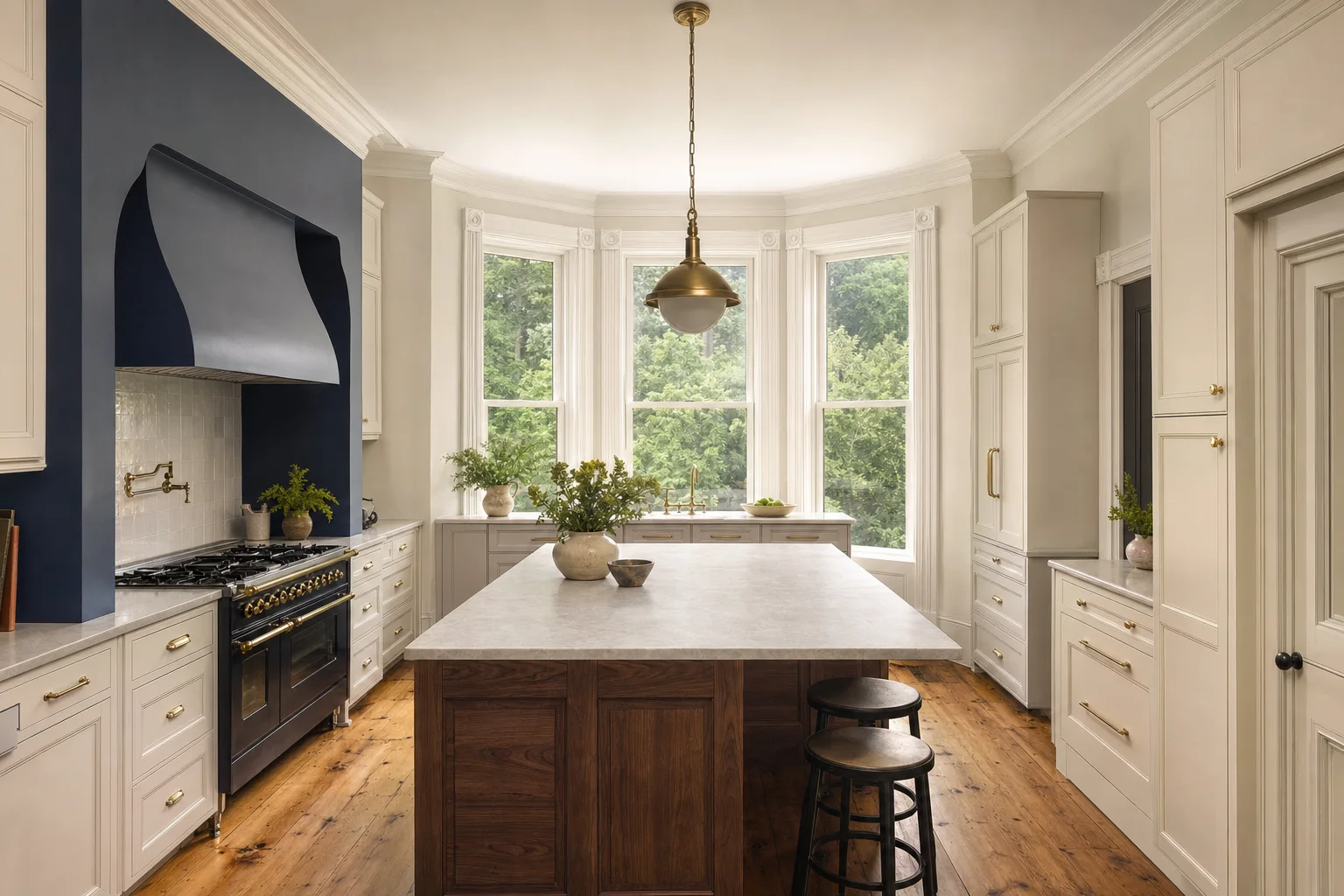
Illustrative image Kitchen Remodeling
Kitchen remodels that update the layout, cabinets, counters, lighting and finishes, planned around how you cook and use the room.
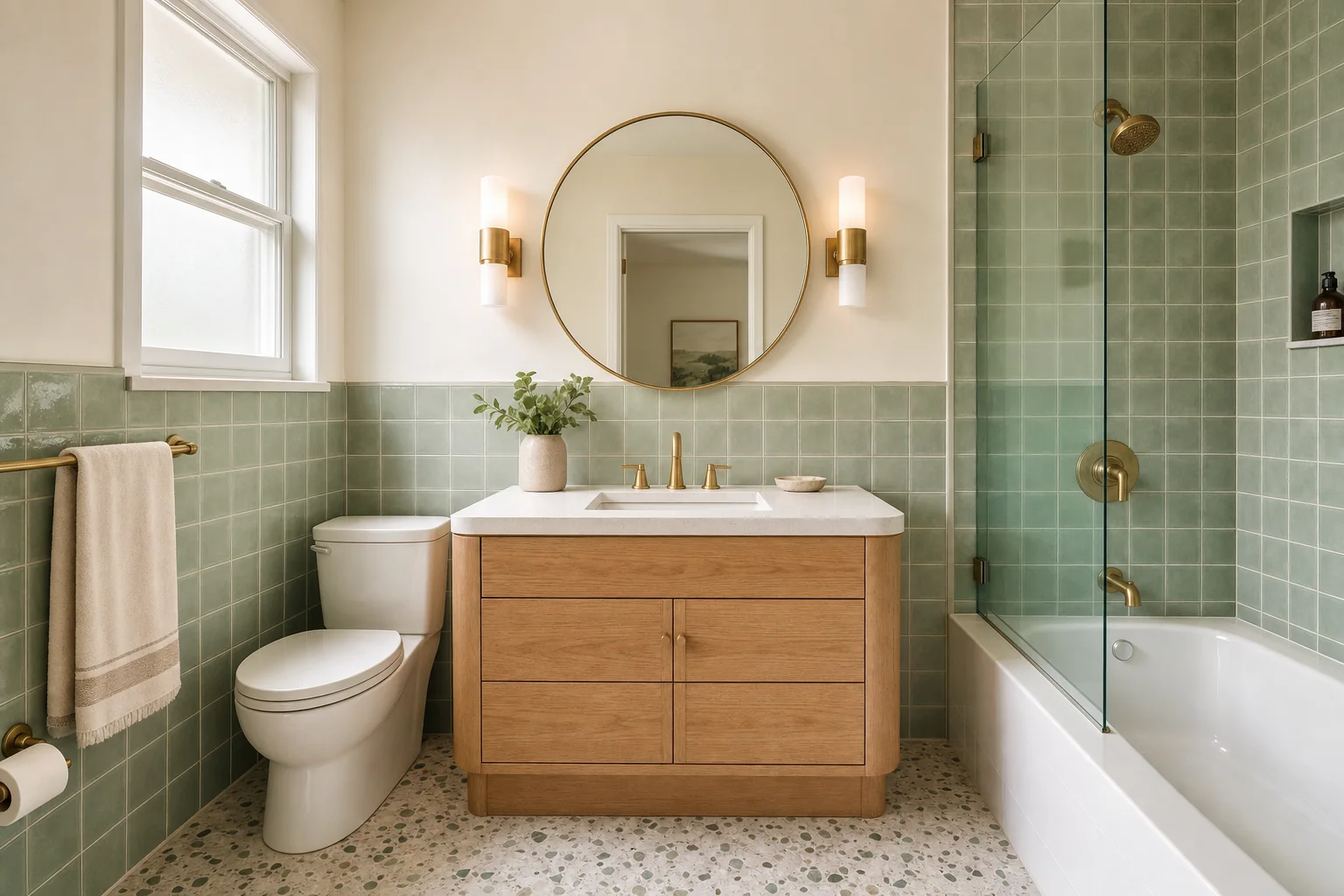
Illustrative image Bathroom Remodeling
Bathroom remodels built on sound waterproofing and ventilation, with fixtures and finishes that fit who uses the room.
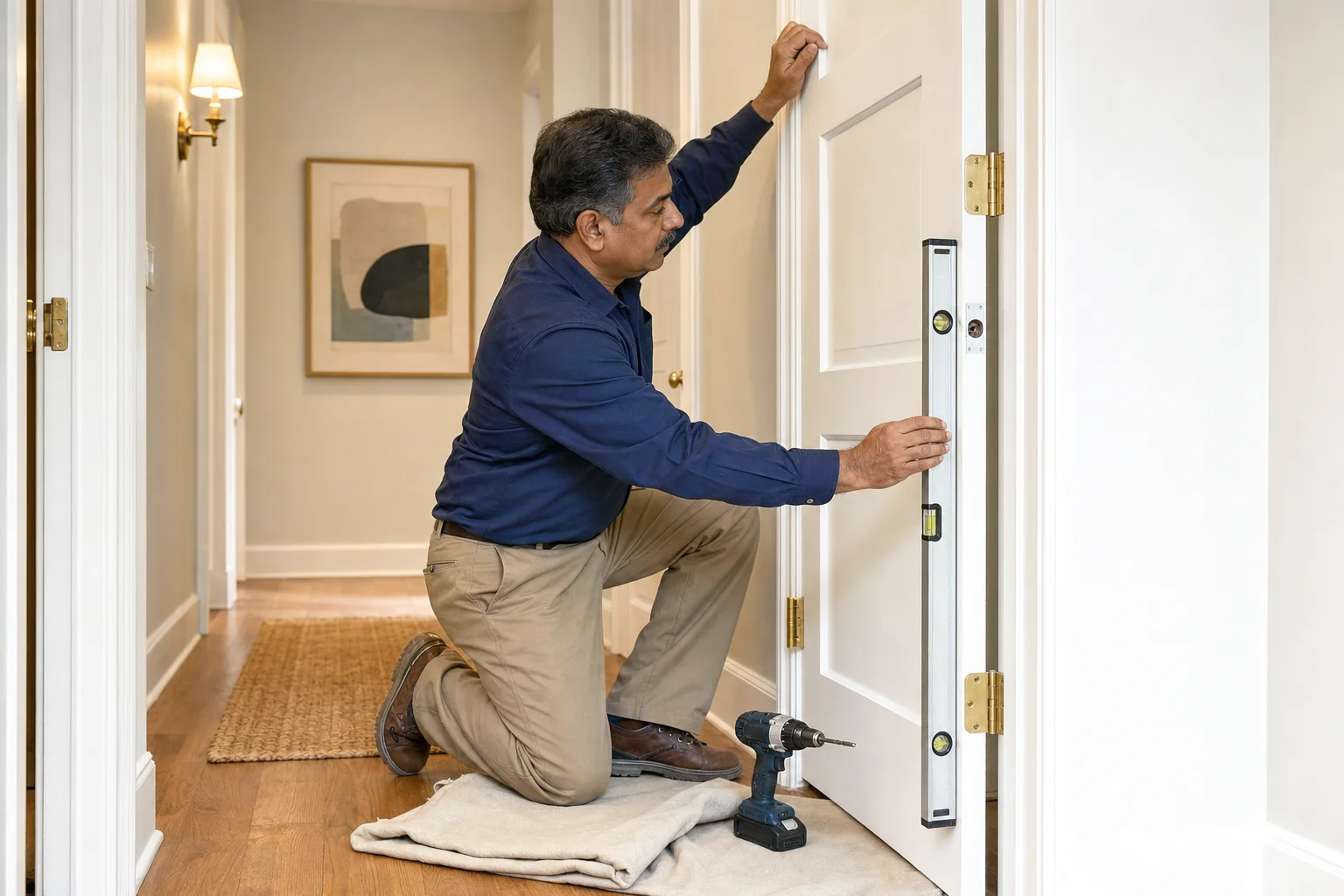
Illustrative image Repairs & Maintenance
Planned repair visits for the small and mid-size problems that build up in a home or building, from sticking doors to rotted trim and loose railings.
Inspiration
Design inspiration for Tennessee projects
Styles, materials and layouts suited to Tennessee homes and businesses, to help you picture your own project.
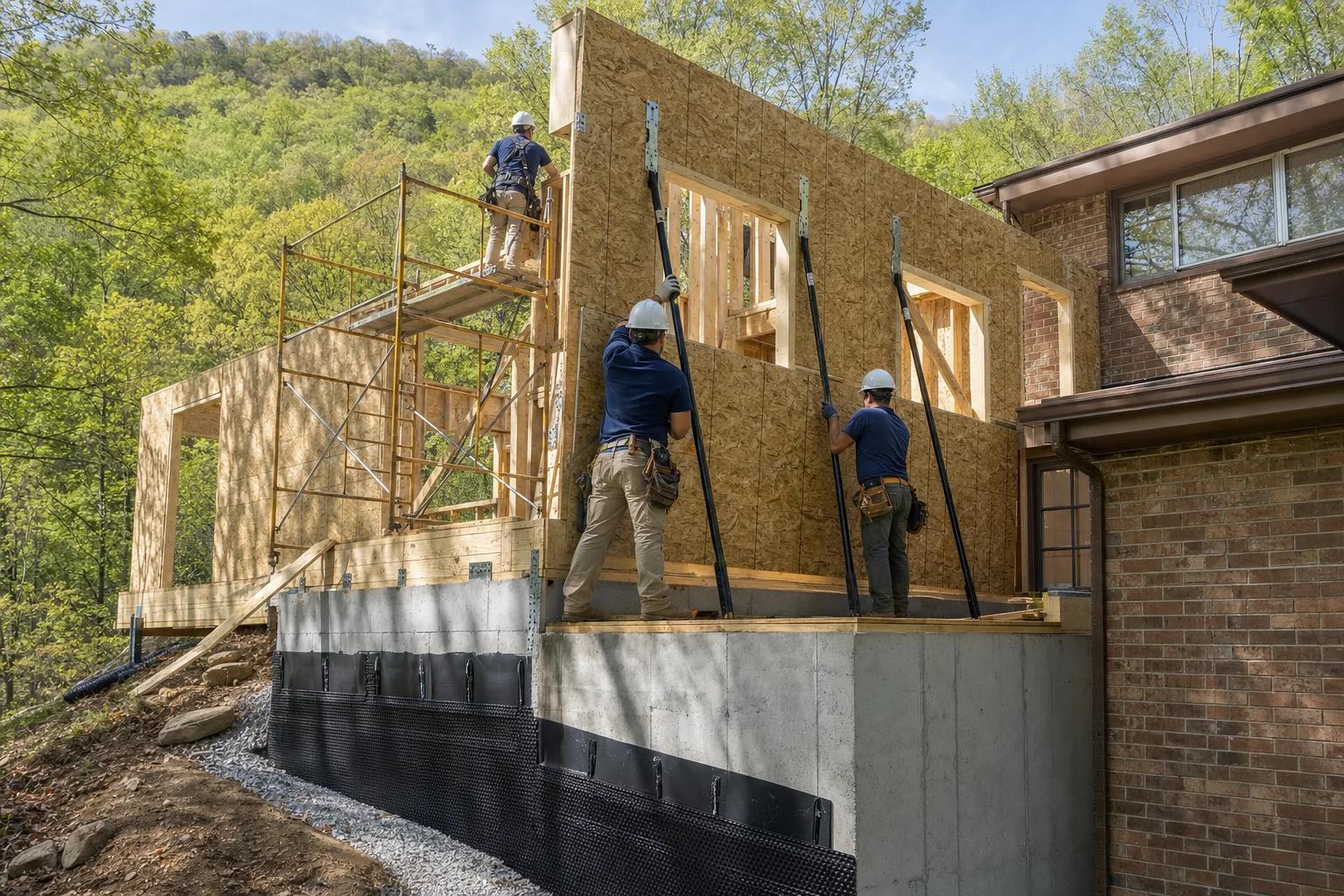
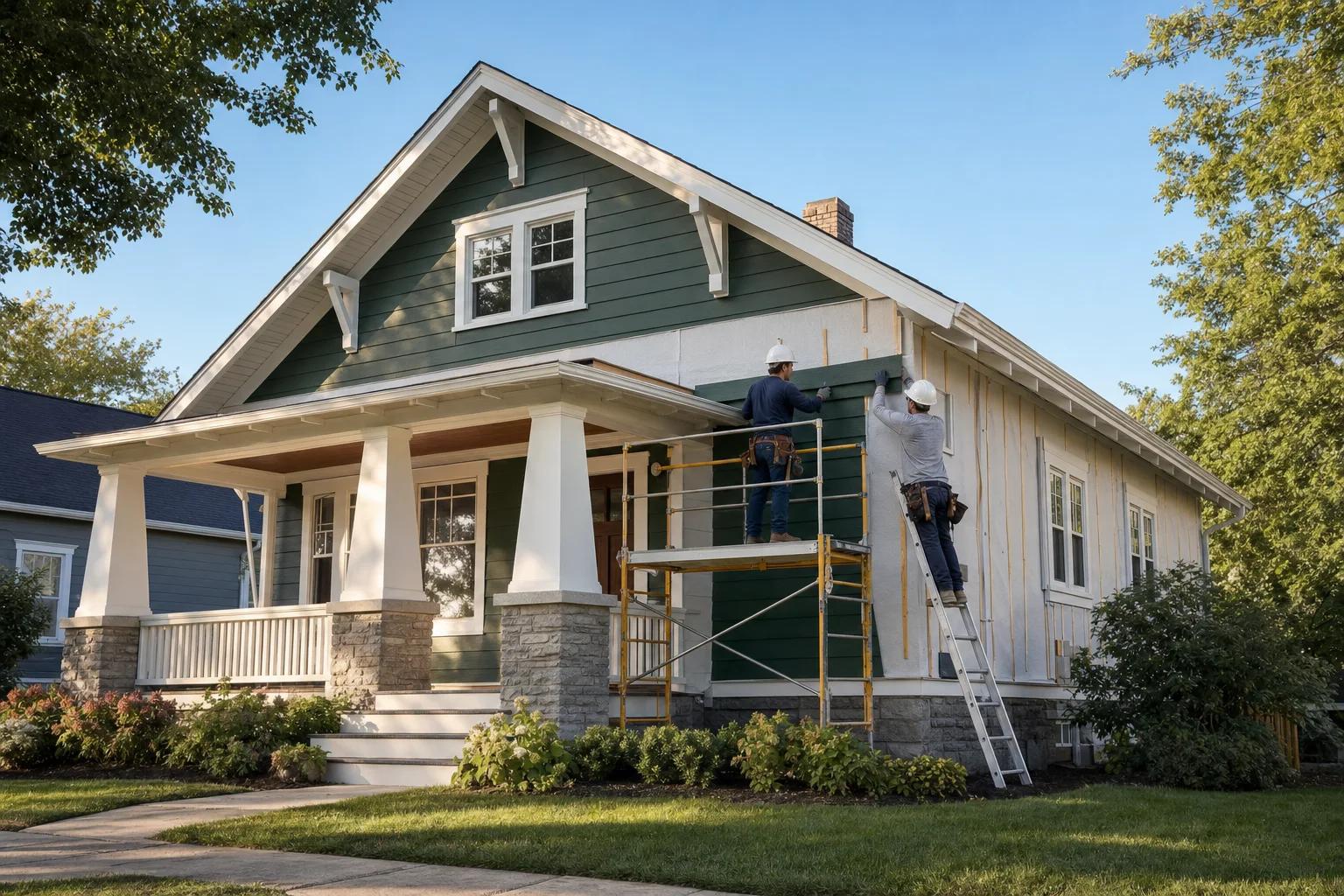
Images are illustrative and created for this website. They are not photographs of completed customer projects.
How it works
Our Simple 4-Step Process
- 1
Consult
Tell us about your project and goals. We review the location, scope and any constraints.
- 2
Plan
We define the scope in writing, confirm selections and identify permits the work may need.
- 3
Build
Work proceeds against the agreed plan, with updates when decisions or changes come up.
- 4
Enjoy
We walk through the finished work with you and hand over care and warranty information.
Questions
Tennessee Project FAQs
Do I need a building permit for my project in Tennessee?
It depends on where the property is and what the work involves. In areas under the state residential program, permits cover new homes and additions over 30 square feet, and renovations do not need a state permit. Cities with their own programs set broader rules: Metro Nashville requires permits for additions, new garages, decks and porches, siding, roofing, and turning a garage, basement or attic into living space, and Clarksville issues permits for new construction, renovations and additions. We confirm the permit path for your address during planning.
How do I check a Tennessee contractor's license?
Search the contractor at verify.tn.gov, the state's public license lookup. Check that the license is active and that its classification and monetary limit fit your project. A state license is required for projects of $25,000 or more, and nine counties, including Davidson, Shelby, Knox, Hamilton and Rutherford, also require a home improvement license for residential remodeling from $3,000 to $24,999.
Can I pull my own permit as a homeowner?
Often, with limits. State rules let an owner build one residence every two years for their own use, not for sale, lease or rent, without a contractor license. Chattanooga uses a similar 24-month rule, Metro Nashville lets owner-occupants of single-family homes get a self permit, and Clarksville does not let homeowners pull plumbing or mechanical/gas permits. In Nashville and Clarksville, the owner who pulls the permit takes responsibility for meeting code.
Which energy code applies to my home project?
Statewide, homes follow the 2018 IECC with Tennessee amendments. Cities that enforce their own codes may use a different edition: Metro Nashville lists the 2024 IECC, Chattanooga, Clarksville and Johnson City list the 2018 IECC, and Jackson lists the 2012 IECC. The edition and climate zone set insulation, window and air-sealing targets, so we confirm both with the local building department early in design.
Does a historic district affect my project?
It can. Nashville's Historic Zoning Commission reviews work on properties in historic overlays, Memphis has 19 local historic districts reviewed by the Landmarks Commission, Knoxville-Knox County Planning lists 11 city historic and conservation districts, and Chattanooga has four local historic districts. Exterior changes, additions, demolition and new construction are the usual triggers, so check your address before design starts.
What should I have ready before planning a project?
Have the project address, any existing plans or surveys, photos of the areas to be changed, and any HOA rules that apply. It also helps to check the address on FEMA's flood maps and to know whether the home was built before 1978, since that brings in federal lead-safe work rules for painted surfaces. We use this to confirm service availability, permits and scope before scheduling.
Sources (19)
- Tennessee Department of Commerce & Insurance, State Fire Marshal's Office · checked 2026-09-24
- U.S. Department of Energy, Building Energy Codes Program · checked 2026-09-24
- Tennessee Board for Licensing Contractors · checked 2026-09-24
- Tennessee Board for Licensing Contractors · checked 2026-09-24
- Federal Emergency Management Agency · checked 2026-09-24
- U.S. Environmental Protection Agency · checked 2026-09-24
- Metro Nashville Department of Codes & Building Safety · checked 2026-09-24
- Metro Nashville Department of Codes & Building Safety · checked 2026-09-24
- Metro Nashville Planning Department, Historic Zoning Commission · checked 2026-09-24
- Memphis Landmarks Commission · checked 2026-09-24
- Memphis and Shelby County Division of Planning and Development · checked 2026-09-24
- Knoxville-Knox County Planning · checked 2026-09-24
- City of Chattanooga Land Development Office · checked 2026-09-24
- City of Chattanooga · checked 2026-09-24
- Chattanooga Historic Zoning Commission · checked 2026-09-24
- City of Clarksville Building & Codes Department · checked 2026-09-24
- City of Clarksville Building & Codes Department · checked 2026-09-24
- City of Jackson · checked 2026-09-24
- City of Johnson City Building Division · checked 2026-09-24
Local resources
Planning guides for Tennessee
Ready to Start Your Tennessee Project?
Tell us what you are planning and where. We'll confirm availability for your address and follow up to talk through scope and next steps.